Eight KP Districts Declared Vulnerable as Heavy Rain and Snowfall Threaten Winter Roads
By Ahmed Khan | 14 November 2026 | Updated: 14 November 2026 Khyber Pakhtunkhwa’s Provincial Disaster Management Authority (PDMA) has declared eight upper districts of the province vulnerable to heavy rain and snowfall this winter, warning that above-normal rain and snow could close roads and trigger weather emergencies in the mountains. The districts named are…
By Ahmed Khan | 14 November 2026 | Updated: 14 November 2026
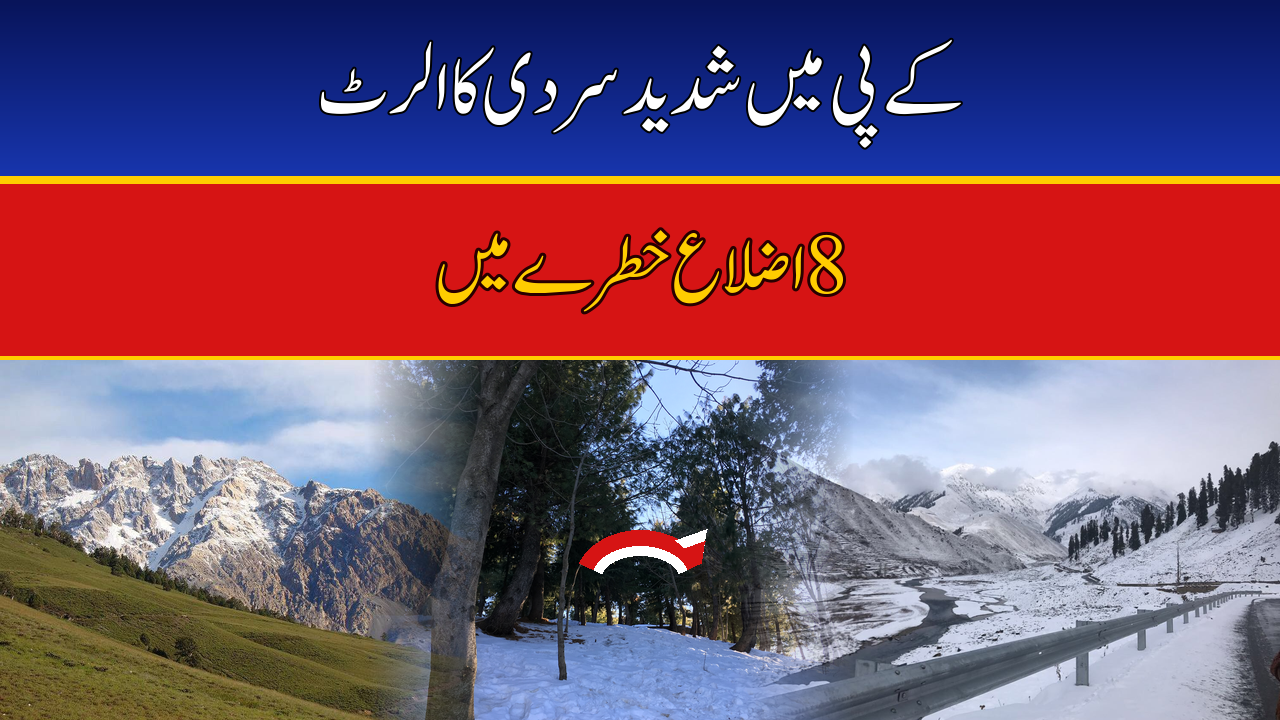
Khyber Pakhtunkhwa’s Provincial Disaster Management Authority (PDMA) has declared eight upper districts of the province vulnerable to heavy rain and snowfall this winter, warning that above-normal rain and snow could close roads and trigger weather emergencies in the mountains. The districts named are Upper Chitral, Lower Chitral, Upper Dir, Lower Dir, Buner, Swat, Upper Kohistan and Lower Kohistan, and the authority says it has drawn up a comprehensive winter contingency plan and started precautionary measures.
The announcement, reported on 14 November 2026, is a season-long warning rather than a forecast for a single storm. The PDMA expects the upper districts to receive more rain and snow than usual, and it is telling departments and residents to prepare now.

Eight Districts Declared Vulnerable
The eight districts cover the high, mountainous belt of northern Khyber Pakhtunkhwa. Chitral accounts for two — Upper and Lower Chitral — the remote north, where winter snow routinely isolates valleys. Dir contributes Upper and Lower Dir, while Swat and Buner, both popular with winter visitors, are also listed. The final two are Upper and Lower Kohistan, the rugged districts along the mountain routes to Gilgit-Baltistan.
What ties all eight together is altitude and exposure. These are the districts where heavy snow settles first, stays longest and does the most damage to road links. The PDMA Director General confirmed the upper districts are expected to receive higher-than-normal rainfall and snowfall this winter.
Key Facts at a Glance
| Detail | What We Know |
|---|---|
| Districts declared vulnerable | 8 upper districts of Khyber Pakhtunkhwa |
| Authority | Provincial Disaster Management Authority (PDMA), Khyber Pakhtunkhwa |
| Date of declaration | 14 November 2026 |
| Winter outlook | Above-normal rainfall and snowfall expected in the upper districts |
| Main risk | Road closures from heavy snow accumulation; weather-related emergencies |
| Response | Comprehensive winter contingency plan formulated; precautionary measures initiated |
| Departments | All relevant departments directed to remain on alert throughout the winter |
| Relief readiness | Advance arrangements completed for relief and rescue in snowfall-hit areas |
| PDMA helpline | 1700 (Emergency Operations Centre fully operational) |
The Eight Vulnerable Districts
| District | Risk and Notes |
|---|---|
| Upper Chitral | High-altitude mountain district; heavy snowfall and road closures likely |
| Lower Chitral | Mountain district; heavy snowfall and road closures likely |
| Upper Dir | Upper mountain district; heavy rain and snowfall expected |
| Lower Dir | Mountain district; heavy rain and snowfall expected |
| Buner | Upper district; above-normal rain and snowfall expected |
| Swat | Popular winter tourist district; heavy snowfall and road disruption risk |
| Upper Kohistan | Rugged mountain district; heavy snowfall and road closures likely |
| Lower Kohistan | Mountain district; heavy snowfall and road closures likely |
Why This Winter Is Different
Not every winter gets a formal vulnerability declaration, and that is what makes this one worth attention. The PDMA’s warning is built on a forecast of above-normal rain and snow — not just a cold winter, but a wetter one. Rain at lower elevations can loosen slopes and swell streams, while snow higher up piles on roads and roofs.
People in the eight districts know this pattern well. A heavy winter in Chitral or Kohistan does not just mean cold mornings; it means the road to the next town may not open for days and a medical emergency becomes a much harder journey. In Swat and Dir, the same snowfall that draws tourists can strand them if the weather turns on the road. The declaration has also come in mid-November, before the heart of winter — exactly when a contingency plan is useful.

What the Winter Contingency Plan Covers
The PDMA says it has formulated a comprehensive winter contingency plan and initiated precautionary measures. According to the Director General, advance arrangements have been completed to facilitate relief and rescue operations in areas likely to experience heavy snowfall, so help can reach affected communities without delay. All relevant departments have been directed to remain on alert throughout the winter, and the authority has stressed that protecting residents and providing timely emergency assistance will remain a priority.
What the plan does not do is put a number on the snow. No snowfall totals, no dates for specific road closures and no casualty figures have been announced, and none should be assumed.
The November 10–14 Spell: Background to the Warning
The winter declaration did not arrive out of nowhere. Days earlier, the same authority was warning of a shorter spell: a shallow westerly wave that the Pakistan Meteorological Department (PMD) said would bring rain, thunderstorms and hail to northern Pakistan from 10 to 14 November, with snowfall over the hills and daytime temperatures down 2 to 4 degrees Celsius. The system strengthened around 12 November and was expected to continue until the morning of 14 November.
The PDMA warned then of landslides, told tourists to avoid unnecessary travel, and put Rescue 1122 teams on alert, with its Emergency Operations Centre fully operational and helpline 1700 open for reports. The two warnings are different — the first was a dated forecast for four days, the second a season-long warning with a plan — but the first was a preview of the second. Readers in Islamabad and Rawalpindi saw the same system arrive as the season’s first winter rain, and further north the early snow has already closed Babusar Top and stranded passengers and cargo at Khunjerab Pass.
Road-Closure and Landslide Risks
The clearest risk is also the most practical: roads. Heavy snow accumulation can close mountain roads, and in districts like Upper Chitral, Kohistan and Dir, a closed road is not an inconvenience — it is the only link to markets, hospitals and the rest of the province.

Landslides are the second risk, and they travel with the rain rather than the snow. The PDMA’s November advisory warned that rainfall could trigger landslides in mountainous areas, and the same warning applies across a wetter-than-normal winter. Fog adds a third hazard in the plains after rain, cutting visibility for drivers.
Safety Advice for Travellers and Residents
For residents of the eight districts, the most useful step is the simplest: take the warning seriously now, while the weather is still manageable. Keep enough food, fuel, medicines and warm clothing at home for several days in case a road closes. Check on elderly neighbours, charge phones, and keep a torch and spare batteries ready.
Travellers should think twice before heading into the mountains during a forecast spell. The PDMA’s standing advice is to avoid unnecessary travel during adverse weather: check the forecast and roads before leaving, keep the vehicle fuelled, carry warm clothing, food, water and a charged phone, and tell someone your route. If snow starts falling heavily on a mountain road, the safest choice is usually to stop at the nearest town rather than press on. If something goes wrong, call the PDMA helpline on 1700 — the Emergency Operations Centre is fully operational and Rescue 1122 teams are on standby.
For the latest on how the season is unfolding, read our earlier coverage of the first winter rain in Islamabad and Rawalpindi, the closure of Babusar Top after heavy snowfall, and the snowfall that stranded passengers and cargo at Khunjerab Pass.
Frequently Asked Questions
Which eight districts has the PDMA declared vulnerable this winter?
Upper Chitral, Lower Chitral, Upper Dir, Lower Dir, Buner, Swat, Upper Kohistan and Lower Kohistan — all upper districts of Khyber Pakhtunkhwa.
What does “above-normal rainfall and snowfall” mean?
According to the PDMA Director General, the upper districts are expected to receive more rain and snow than usual this winter. No specific snowfall totals have been published.
What is the main risk from the heavy snow?
Road closures from heavy snow accumulation. The PDMA has warned that road connectivity in the mountain districts could be disrupted, cutting communities off from markets, hospitals and supplies.
What has the PDMA done to prepare?
It has formulated a comprehensive winter contingency plan, started precautionary measures, completed advance arrangements for relief and rescue in snowfall-hit areas, and directed all relevant departments to remain on alert all winter.
How is this different from the November 10–14 weather spell?
The November 10–14 spell was a short forecast — a shallow westerly wave bringing rain, thunderstorms, hail and hill snow over four days, with temperatures down 2 to 4 degrees Celsius. The 14 November declaration is a season-long warning for the whole winter, with a contingency plan behind it.
Who should I call in a winter emergency in Khyber Pakhtunkhwa?
Call the PDMA helpline on 1700 — the Emergency Operations Centre is fully operational. Rescue 1122 teams have also been directed to remain prepared.