Second Round of Govt-Opposition Talks Ends in Deadlock Over Imran Khan Meeting, KP Security
The second round of talks between Pakistan’s government and the opposition ended in deadlock after hours of negotiations at Parliament House on Saturday, with both sides failing to resolve key differences ahead of the PTI’s planned march on Islamabad. The session began around 4:45 pm after a nearly three-hour delay and continued late into the…
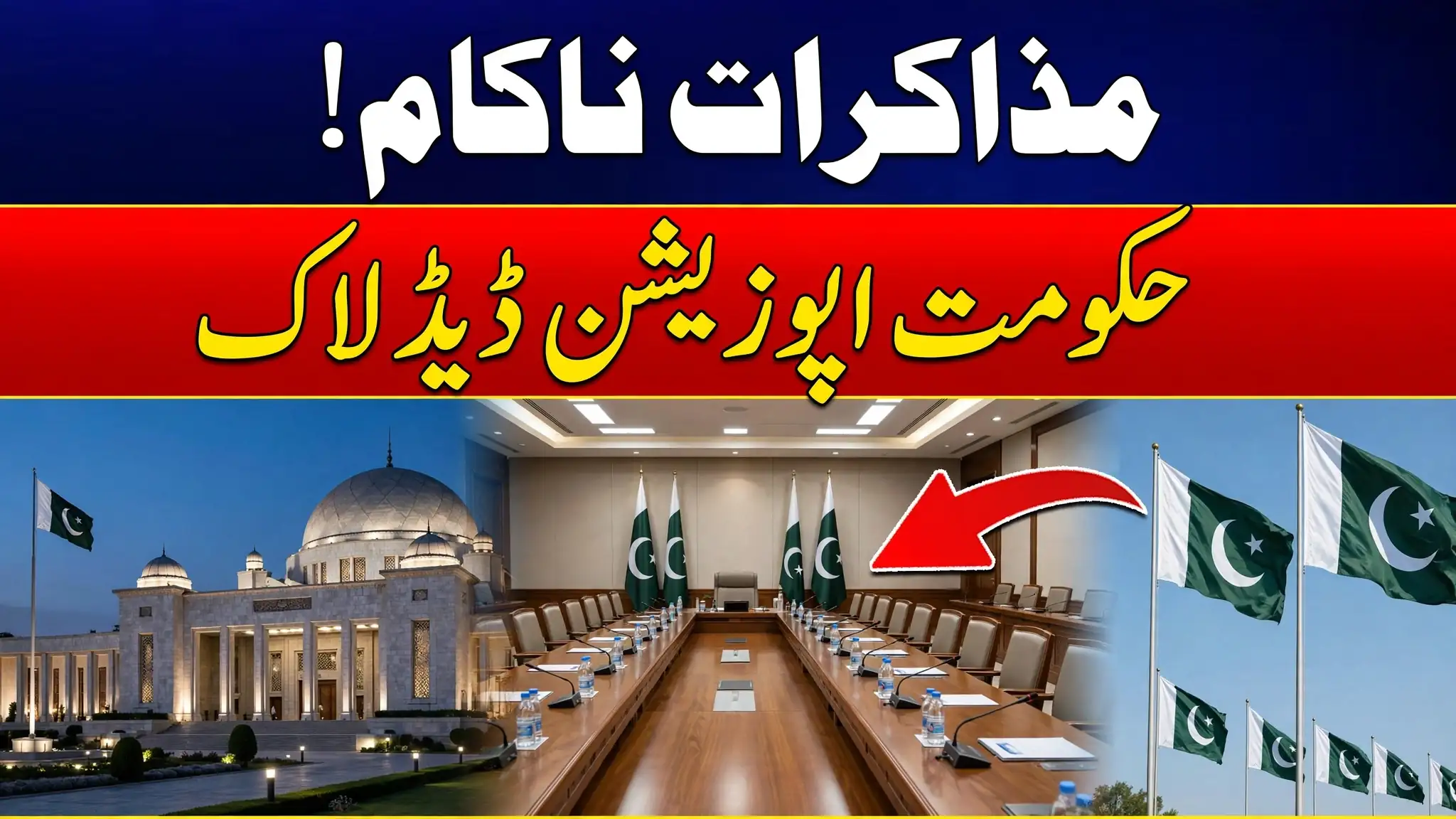
The second round of talks between Pakistan’s government and the opposition ended in deadlock after hours of negotiations at Parliament House on Saturday, with both sides failing to resolve key differences ahead of the PTI’s planned march on Islamabad. The session began around 4:45 pm after a nearly three-hour delay and continued late into the night.
The deadlock persists on two main fronts: the opposition’s demand for a meeting with Imran Khan and access to his personal physicians, and disagreements over a military operation in Khyber Pakhtunkhwa and the respective roles of the province and the federation in counterterrorism.
What broke down
Senate Opposition Leader Raja Nasir Abbas, who was part of the opposition team, told the media that the government responded to the request for a meeting with the jailed former prime minister by saying “not now, but it can be arranged later on.” On the question of a military operation in KP and the province’s role, he said no understanding could be reached.
Interior Minister Mohsin Naqvi said the KP government had agreed to sign a written agreement covering the reconsideration of the Police Act 2026, preventing terrorists from finding safe havens in the province, unequivocal condemnation of the Pakistani and Afghan Taliban, support for the national Afghan refugee policy, substantial funding for counterterrorism operations and implementation of the National Action Plan — but backed out of the commitments in the final phase of negotiations. “Security must not be politicised while the province is at war,” Naqvi said.
State Minister for Interior Tallal Chaudhry added that the talks failed primarily because the PTI-led provincial government did not want to implement the National Action Plan against militancy, and that the PTI delegation left the venue “extremely disappointed.”
The KP government’s position
KP Chief Minister Sohail Afridi hit back at the federal government, blaming its “failed policies” for the province’s security crisis. He said terrorism had been imposed on Khyber Pakhtunkhwa and that innocent people were losing their lives in military operations and drone strikes.
Federal ministers have meanwhile raised the possibility of governor’s rule in KP, which would place provincial functions under federal control — though no decision has been announced.
Why the talks were held
- The first round of talks took place on Friday, 2 October, a day after President Asif Ali Zardari and Prime Minister Shehbaz Sharif reviewed the political and security situation and expressed concern over conditions in KP.
- The PTI’s October 4 march on Islamabad, called to press for Imran Khan’s release, provided the immediate pressure. The party had postponed the march from September 27 after authorities blocked routes toward the capital.
- KP has witnessed a sharp surge in militant attacks in recent months, with dozens of security personnel, law enforcers and civilians killed or injured.
- Islamabad accuses Afghanistan of harbouring TTP militants who launch attacks inside Pakistan — a charge Kabul denies.
What happens next
With the deadlock unresolved, the PTI proceeded with its October 4 march plans while the government weighs its options, including tighter security around the capital and continued pressure on the KP administration over counterterrorism cooperation. Another round of talks remains possible, but the gap between the two sides — particularly on Imran Khan’s access and KP’s security policy — shows no sign of closing.
FAQs
Why did the second round of govt-opposition talks fail?
The talks deadlocked over the opposition’s demand for a meeting with Imran Khan and his access to personal physicians, and over disagreements on a military operation in Khyber Pakhtunkhwa and counterterrorism policy.
What did the government accuse the KP government of?
Interior Minister Mohsin Naqvi said the KP government agreed to sign a written agreement on counterterrorism commitments but backed out in the final phase of negotiations.
What was the PTI’s October 4 march about?
The PTI planned a march on Islamabad to press for the release of Imran Khan. The party had postponed it from September 27 after authorities blocked routes toward the capital.
Is governor’s rule being considered for KP?
Federal ministers have raised the possibility of governor’s rule in Khyber Pakhtunkhwa, which would place provincial government functions under federal control, though no decision has been announced.