Punjab’s 750-Member Pollution Squad Races to Douse Stubble Fires as Lahore Chokes on Smog
By Ahmed Khan | 14 November 2026 Punjab has formed a new 750-member Environmental Protection Force, split into 67 rapid-response units across the province’s main rice-growing districts, to douse the crop-stubble fires that help choke Lahore in smog every winter. In a single 24-hour period this week the department received 679 field-fire reports from across…
By Ahmed Khan | 14 November 2026
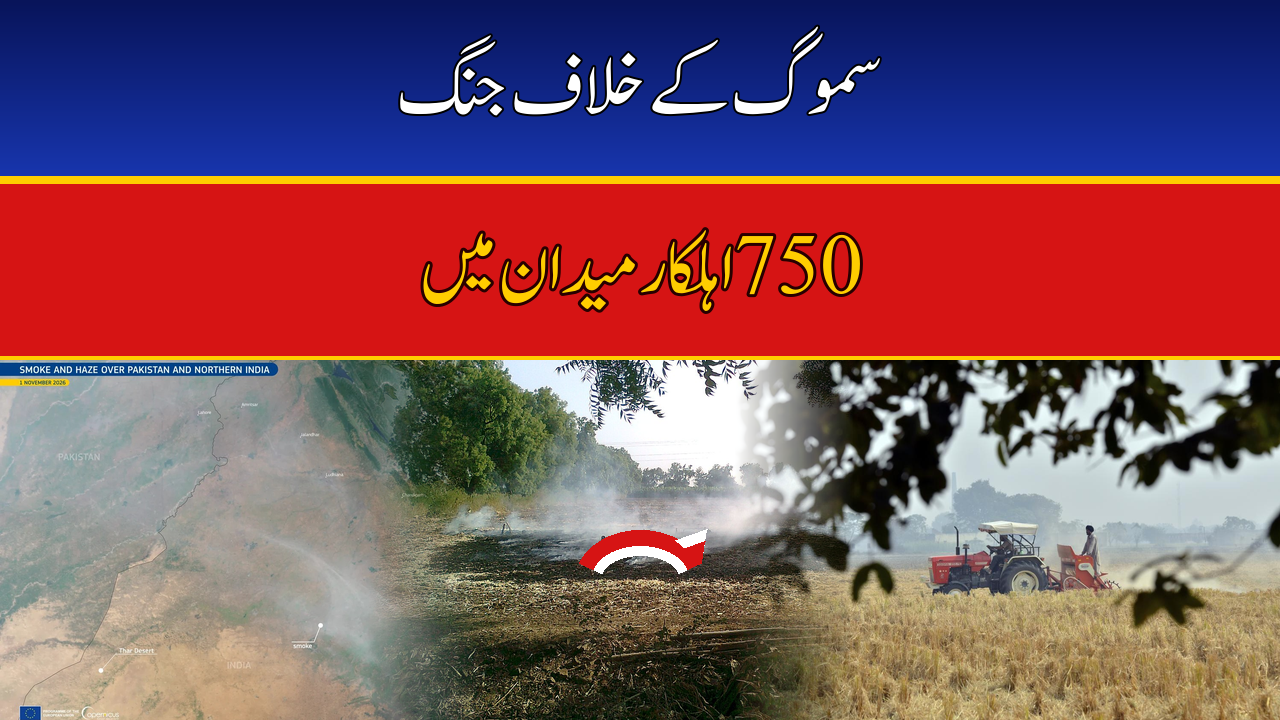
Punjab has formed a new 750-member Environmental Protection Force, split into 67 rapid-response units across the province’s main rice-growing districts, to douse the crop-stubble fires that help choke Lahore in smog every winter. In a single 24-hour period this week the department received 679 field-fire reports from across Punjab and said it had extinguished 650 of them, while Lahore’s air quality index climbed to 244 early on Saturday, leaving the city once again among the most polluted in the world.
Officials say it is the first force of its kind in Pakistan dedicated to fighting pollution. Whether Lahore’s residents, who woke up to another grey, throat-burning morning, agree is another matter.

A squad that races the smoke
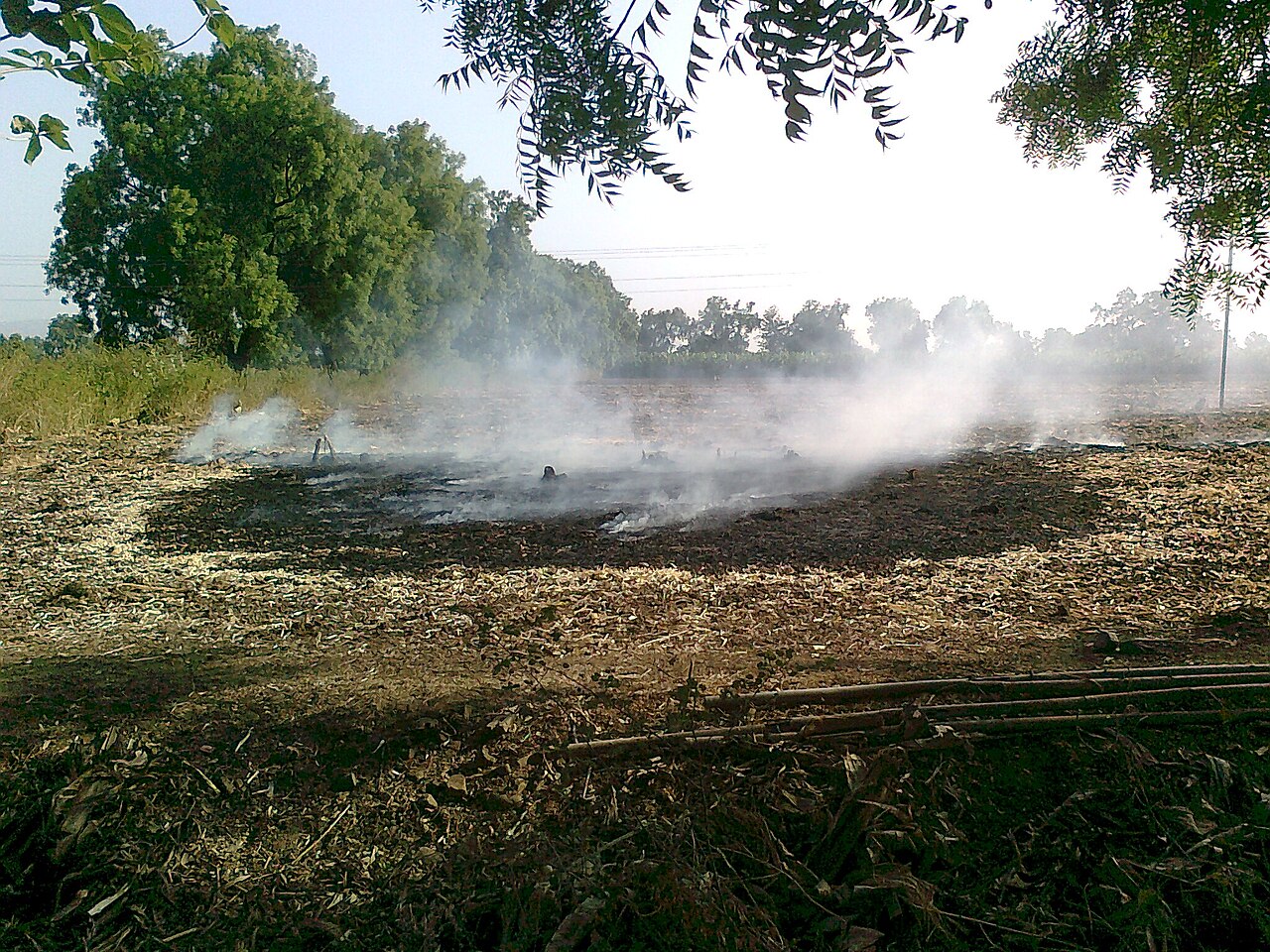
On Thursday, officers of a new quick-response unit swung off their vehicles at a paddy field on the edge of Lahore. Smoke curled low over the stubble, and the crew had the fire under control within minutes, keeping it from adding to the haze over a city IQAir had rated “very unhealthy” earlier in the week.
That is the idea: a team is supposed to reach a reported field fire within 10 to 15 minutes, instead of waiting for it to burn itself out. The units also patrol paddy areas, and complaints can be lodged locally.
“We receive complaints through multiple channels and respond to them in the shortest possible time,” said Ashfaq Hussain, a deputy director of the force. Silwat Saeed, chief of Punjab’s Environment Protection and Climate Change Department, said the government formed the force this year, spread across the major rice-growing districts.
| Key fact | Detail |
|---|---|
| Force size | 750 members |
| Rapid-response units | 67, across major rice-growing districts |
| Response target | 10 to 15 minutes to a reported fire |
| Field fires reported in 24 hours | 679 across Punjab |
| Fires extinguished in that period | 650 (about 96% of reports) |
| Fine for stubble burning | Rs15,000 per acre (about $54) |
| Subsidised super seeders given out | 10,000+; government pays 60% |
| Lahore AQI, early Saturday 14 November | 244, among the world’s worst |
679 fires in a day
The numbers from a single 24-hour period this week show the scale of the problem and the pace of the response. The department received 679 field-fire reports and said it extinguished 650, roughly 96 in every 100, a strike rate it now cites as proof the model works.
Farmers commonly set leftover rice residue alight after the October harvest. It is the cheapest and fastest way to clear a field, and that simple economics is what every anti-smog campaign in Punjab has run up against. The smoke feeds a mix of industrial emissions, vehicle exhaust and construction dust that lingers under cold winter air.
The fine, and the carrot
Punjab’s campaign works on two tracks: punish the burning, and pay for the alternative. Farmers caught burning stubble face fines of Rs15,000 per acre, about $54, said Muhammad Farooq, an assistant director of the Punjab Agriculture Department. Those who fail to pay can also face prosecution and up to six months in jail.
The government has also distributed more than 10,000 subsidised super seeders, paying 60% of the cost while farmers pay 40%. A super seeder lets a farmer sow wheat directly into residue-covered fields, removing the main reason to set it on fire.
For some farmers, the switch has paid off. Muhammad Ismail, who farms 50 acres, said moving to a subsidised super seeder had significantly boosted his wheat yield per acre. But adoption is far from universal: Saleem Abbas, another farmer who has stopped burning, said many still favour the practice as the cheapest and fastest way to clear fields.
Why Lahore chokes every November
The fires arrive at the worst moment: the rice harvest ends in October, the burning peaks just as winter sets in, and cold, still air traps everything close to the ground. Saeed said the challenge is huge for both countries and that Pakistan has raised it with India at international forums; India’s foreign ministry did not respond to a request for comment.
Delhi overtook Lahore as the world’s most polluted city on Friday, its AQI reaching 334, rated hazardous by IQAir, before falling back to 208 by late morning. Lahore, which had topped the ranking for several days, sat seventh then with an AQI of 155. By early Saturday, Lahore was back near the top at 244, up 135 points on the previous day, while Multan Road recorded the worst reading at 500. Readings swing sharply through the day, which is why the ranking changes hands so often.
For the longer trend, read our earlier report on Delhi overtaking Lahore as the world’s most polluted city, and our coverage of Lahore’s AQI hitting 358 on 12 November.
| Reading | What it showed |
|---|---|
| Lahore AQI, early Saturday 14 Nov | 244 overall; Multan Road worst at 500 |
| Lahore AQI, Thursday 12 Nov | 358 overall, after topping the global ranking |
| IQAir rating earlier this week | “Very unhealthy” for Lahore |
| Delhi AQI, Friday 13 Nov | 334 (“hazardous”), easing to 208 by late morning |
| Smog-related throat hospitalisations, October 2026 | 69% of the October 2025 level |
| Satellite burned-area reading | Less than the historical average |
The health toll is still filling hospitals
Behind the AQI numbers are crowded hospital corridors. Abdullah Nayyar, director general of the Punjab Environment Protection Department, said health department data show smog-related throat hospitalisations last month were only 69% of the level recorded in October 2025, which the department presents as evidence the campaign is easing the burden.
At Lahore’s Sir Ganga Ram Hospital, Ahmed Abubakar, a heart patient who has had a bypass and is diabetic, said smog had brought on breathing problems and eye infections. Mohammad Niaz Butt, whose nose and throat blocked up, put it bluntly: “They are burning it, and nothing is done about it.”
A 31% drop in throat hospitalisations is meaningful, and so is a hospital corridor full of people struggling to breathe. Hospitals have also reported a surge in flu-like illness this smog season, as covered in our report on 35,000 flu-like patients at Lahore hospitals.
Is the campaign actually working?
Punjab officials say yes: the 650-out-of-679 day, satellite data showing less burned area than usual, hospital figures below last October’s level, and more than 10,000 super seeders in farmers’ hands. The force is new, visible and fast, and its 10-to-15-minute response target is a promise residents can judge for themselves.
The scepticism is just as concrete. Many locals say they struggle to notice any improvement, and the AQI readings back them up: 358 on Thursday, 244 early Saturday, 500 on Multan Road. What has changed is the approach: previous crackdowns leaned on fines and announcements, while this year Punjab has paired enforcement with machinery, patrols and a dedicated force whose only job is pollution. If farmers decide the fine is still cheaper than the machine, the fires will be back every October.

What Lahore residents can do right now
Until the air improves, the practical advice has not changed. Check the AQI before going out, and treat readings above 200 as a reason to stay indoors. If you must go out, wear a proper N95-style mask rather than a cloth one, which does little against the fine particles that make smog dangerous. Keep windows shut during the worst morning and evening hours, and avoid outdoor exercise when the haze is thickest.
Children, elderly people and anyone with asthma, heart disease or diabetes should be extra careful, and should seek medical help early if breathing becomes difficult. The Meteorological Department forecasts no rainfall in Lahore over the coming days, so no washout is coming to clear the air.
The bottom line
Punjab’s 750-member squad is a serious answer to a problem Lahore has lived with for years: fast teams, real fines and subsidised machines, aimed at the fires that light up the province after the rice harvest. The early numbers suggest the campaign is biting. But Saturday morning’s AQI of 244 is a reminder that biting is not the same as winning. Lahore will judge this force the way it judges every smog promise: by what the air feels like tomorrow morning.
What is Punjab’s new Environmental Protection Force?
It is a 750-member force in 67 rapid-response units across Punjab’s major rice-growing districts. Its job is to reach reported crop-stubble fires within 10 to 15 minutes, patrol paddy areas, and act on complaints lodged locally. Officials say it is the first force of its kind in Pakistan dedicated to fighting pollution.
How many stubble fires did the force put out in a day?
In a single 24-hour period this week, the department received 679 field-fire reports and said it extinguished 650 of them, roughly 96%.
What is the fine for burning stubble in Punjab?
Farmers caught burning stubble face fines of Rs15,000 per acre, about $54. Those who fail to pay can also face prosecution and a possible jail term of up to six months, according to the Punjab Agriculture Department.
What is Lahore’s AQI today, 14 November 2026?
Early on Saturday 14 November, Lahore’s overall AQI was recorded at 244, with Multan Road worst at 500.
Why do farmers burn stubble after the rice harvest?
Burning is the cheapest and fastest way to clear a field for the next wheat crop, and the sowing window is short. The government is countering with more than 10,000 subsidised super seeders, paying 60% of the cost, which let farmers sow wheat directly into residue-covered fields.
Is Lahore’s smog getting better or worse?
The picture is mixed. Officials point to fewer fires, less burned area than the historical average, and throat hospitalisations in October at 69% of last year’s level. But Lahore’s AQI still hit 358 on 12 November and 244 early on 14 November, hospitals remain crowded, and no rain is forecast to clear the air.