Petrol Price in Pakistan: Rs114 of Every Litre Is Tax — Petroleum Levy, Climate Levy and Duties Explained
Petrol Price in Pakistan: Rs114 of Every Litre Is Tax — Petroleum Levy, Climate Levy and Duties Explained By Bilal Ahmed | Published: 10 November 2026 | Category: Business Of the Rs346 you pay for a litre of petrol in Pakistan today, about Rs114 is tax — roughly one rupee in every three at the…
Petrol Price in Pakistan: Rs114 of Every Litre Is Tax — Petroleum Levy, Climate Levy and Duties Explained
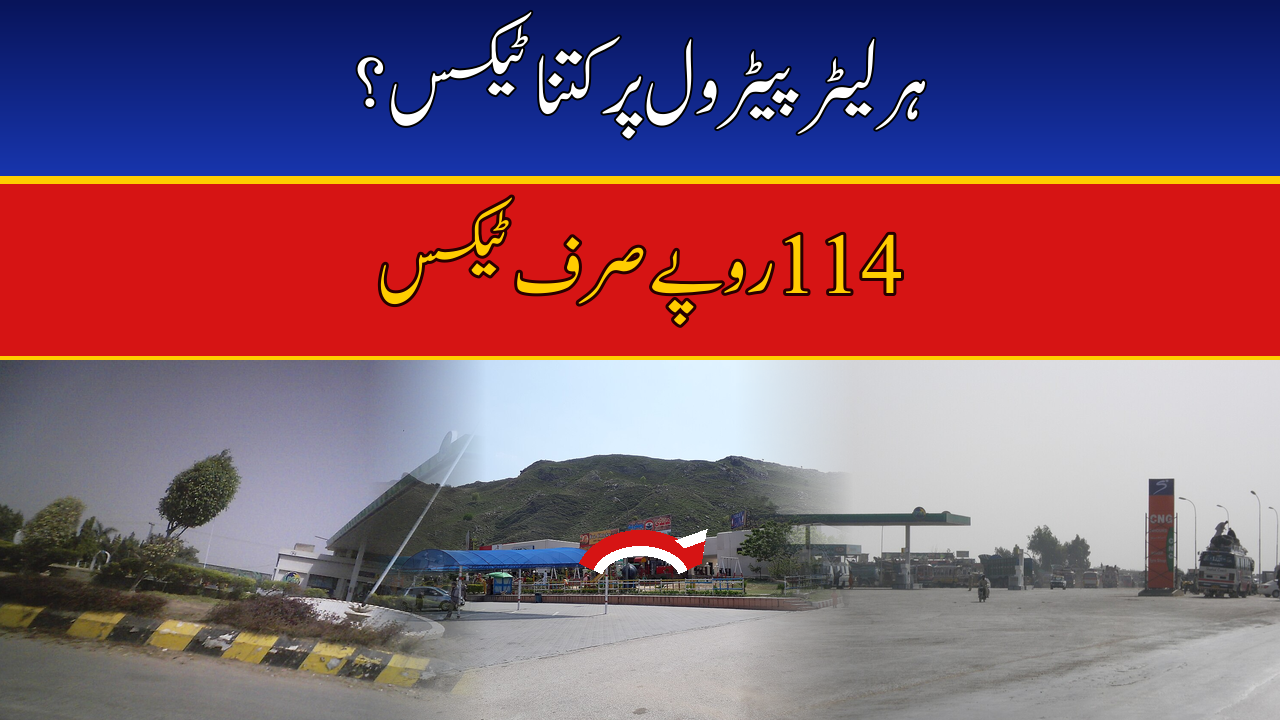
Of the Rs346 you pay for a litre of petrol in Pakistan today, about Rs114 is tax — roughly one rupee in every three at the pump going to the government, not to the refinery, the transporter or the dealer. The single biggest item is the petroleum levy, charged at Rs80 a litre, followed by a Rs5 climate levy and Rs20.56 in customs duty. The rest is the fuel itself, freight, and the margins of oil marketing companies and dealers. Here is where your money goes, why the levy is now the centre of a political fight, and what the government–Jamaat-e-Islami talks could change.
The timing matters. Petrol is currently priced at Rs346 a litre and high-speed diesel at Rs378 a litre, under the revision announced on 6 November that runs from 7 to 10 November 2026. A fresh revision is due this evening, Tuesday 10 November, and the same day the government and Jamaat-e-Islami (JI) are due to present a joint working paper on gradually eliminating the petroleum levy. Nothing about that working paper’s outcome had been reported by this morning, and no agreement to abolish the levy has been confirmed.
Key Facts
| Detail | What we know |
|---|---|
| Petrol price | Rs346 per litre (7–10 November 2026; OGRA revision of 6 November; next revision due evening of Tuesday 10 November) |
| High-speed diesel price | Rs378 per litre |
| Total taxes and duties on petrol | About Rs114 per litre (Business Recorder, 3 November 2026) |
| Total taxes and duties on diesel | About Rs100 per litre (Business Recorder, 3 November 2026) |
| Petroleum levy | Rs80 per litre on petrol and diesel |
| Climate Support Levy | Rs5 per litre (Rs2.50 from 1 July 2025, doubled to Rs5.00 on 1 July 2026) |
| Customs duty (petrol) | Rs20.56 per litre |
| Levy collected in FY2025-26 | Rs1,567 billion (reported by Bloom Pakistan, 14 August 2026) |
| Levy collected over four years | Rs4.4 trillion, against a cumulative target of about Rs4.2 trillion |
| Govt–JI working paper | Joint working paper on gradual elimination of the levy due Tuesday 10 November 2026 |
| Fuel relief scheme | Rolled out 17 September 2026 for motorcycles, rickshaws and vehicles up to 800cc; Rs27 billion disbursed, about 15 million registered beneficiaries |
What Is the Petroleum Levy?
The petroleum levy is a federal charge collected on every litre of petrol and diesel sold in Pakistan. Unlike general sales tax, which is shared with the provinces, the levy goes straight to the federal government — which is why it has become such a large and reliable source of revenue. At Rs80 a litre, it is the single largest line in the price of a litre of petrol.
The scale of the collection explains why governments have been reluctant to cut it. The levy brought in Rs1,567 billion in FY2025-26, according to Bloom Pakistan on 14 August 2026, and Rs4.4 trillion over four years against a cumulative target of about Rs4.2 trillion, according to a report drawing on the petroleum minister’s reply in the National Assembly. That is also why it sits at the centre of the current political debate: Jamaat-e-Islami has made its abolition a headline demand, and the government has agreed to discuss a gradual elimination rather than an overnight cut. For now, though, the levy remains Rs80 a litre.
The Per-Litre Breakdown: Where Your Rs346 Goes
The Business Recorder reported on 3 November 2026 that total taxes and duties come to about Rs114 on a litre of petrol and about Rs100 on a litre of diesel. The reported components, as published by the Business Recorder and the fuel-price tracker eklitre.pk, are set out below. One important note: these components are reported figures and should not be read as an arithmetic sum that adds up to exactly Rs114 — the reported total is the figure to rely on.
| Component (per litre, petrol) | Amount |
|---|---|
| Petroleum levy | Rs80.00 |
| Climate Support Levy | Rs5.00 |
| Customs duty | Rs20.56 |
| Dealer margin | Rs9.98 |
| Oil marketing company margin | Rs7.87 |
| Inland Freight Equalisation Margin | Rs7.51 |
| Reported total taxes and duties | About Rs114 |
The levy, the climate levy and customs duty alone add up to Rs105.56 a litre — so before a single rupee of dealer or company margin is counted, more than Rs105 of the pump price is already government charges. The Climate Support Levy is the newest of the three: it started at Rs2.50 a litre on 1 July 2025 and was doubled to Rs5.00 on 1 July 2026. The dealer margin of Rs9.98 and the oil marketing company margin of Rs7.87 are what the pump owner and the marketing company keep, while the Inland Freight Equalisation Margin of Rs7.51 a litre on petrol (Rs5.08 on diesel) keeps fuel prices uniform across the country.
Put another way, a motorist buying 10 litres of petrol pays about Rs1,140 in taxes and duties — more than the cost of three litres of the fuel itself. Diesel carries a slightly lighter load at about Rs100 a litre, but the Rs80 petroleum levy applies to diesel exactly as it does to petrol. For the current petrol price of Rs346 a litre, the tax share is just under a third of what you hand over at the pump — and it is the reason pump prices stay high even when international oil prices fall.
The Refinery Mechanism: Who Actually Pays the Levy?
Behind the headline Rs80 levy sits an unusual arrangement that began at the end of October. On 30 October 2026, the federal cabinet directed domestic refineries to deposit about Rs49 a litre into the petroleum levy account, to offset a Rs14.71-a-litre cut in the levy. The mechanism runs for 30 days, and the Petroleum Division issued a letter on 30 October setting it out, although the full text has not been published.
The Rs49-a-litre figure is the industry’s own estimate, as reported by KhabarWire. Petroleum Minister Ali Pervaiz Malik said on 3 November that refineries would carry a burden of about Rs15 billion over the month. Since 31 October, refineries have been paying Rs14.71 of every litre of petrol’s levy, so Rs65.29 of the Rs80 levy is charged directly while the refineries absorb the rest — keeping the pump price where it is while shifting part of the levy off the consumer and onto the refiners.
For drivers, the practical effect is simple: the levy you see in the price build-up is not quite the levy the government collects from you — part of it is being paid by the refineries instead, for 30 days at least. But it is a temporary arrangement, not a cut: the Rs80 levy itself has not been reduced, and what happens when the 30 days run out is one of the questions the government–JI talks are supposed to address.
The Government–JI Talks: What Could Change
The political pressure on the levy comes from Jamaat-e-Islami. On Tuesday 3 November, Deputy Prime Minister Ishaq Dar met a JI delegation led by Vice Emir Liaqat Baloch. The JI side presented six proposals, including abolishing the petroleum levy, a relief package, lower public-transport fares, and relief for vehicles above 800cc and for agriculture. The government agreed to relief for agriculture and for owners of vehicles up to 1,000cc, and both sides agreed to prepare working papers on the gradual elimination of the levy.
The timetable was set out clearly: the government would complete its work on refinery profits and the levy on Monday 9 November, and a joint working paper would be presented on Tuesday 10 November — today. JI Emir Hafiz Naeemur Rehman is to review the draft agreement, and JI has warned it will resume its postponed Multan–Islamabad march in mid-November if the relief is inadequate. The talks were reported on 3 November by Dawn, The News, Pakistan Today and UrduPoint.
One thing must be stated plainly: the Foreign Office statement on the talks did not confirm any agreement to abolish the levy. The levy has not been abolished, and no outcome of today’s working paper had been reported as of this morning. What is on the table is a phased, gradual elimination — not an overnight removal — and any relief will have to be weighed against the Rs1,567 billion the levy raised last year alone.
There is already one relief scheme in place. A fuel relief scheme rolled out on 17 September 2026 covers motorcycles, rickshaws and vehicles up to 800cc, and Rs27 billion has been disbursed to about 15 million registered beneficiaries, according to The Pakistan Daily on 3 November 2026. Extending relief to vehicles up to 1,000cc would widen that net for small-car owners just above the current cut-off. The new auto policy’s cheaper cars and EV duty cuts are a separate track, but they point in the same direction. The government has also ended the LPG monopoly and abolished the quota system — but the petroleum levy, at Rs80 a litre, remains the biggest single reason a litre of petrol costs Rs346.
FAQs
How much tax is in a litre of petrol in Pakistan?
About Rs114 per litre, according to the Business Recorder (3 November 2026). That includes the Rs80 petroleum levy, the Rs5 Climate Support Levy and Rs20.56 in customs duty, which together come to Rs105.56, plus other duties. On a litre priced at Rs346, tax is just under a third of the pump price.
What is the petroleum levy and how much is it?
The petroleum levy is a federal charge on every litre of petrol and diesel sold in Pakistan, currently Rs80 per litre on both fuels. It goes directly to the federal government and collected Rs1,567 billion in FY2025-26. It is the single largest component of the petrol price.
What is the Climate Support Levy on petrol?
The Climate Support Levy is charged at Rs5 per litre on petrol. It started at Rs2.50 per litre on 1 July 2025 and was doubled to Rs5.00 on 1 July 2026.
Has the petroleum levy been abolished?
No. The levy has not been abolished. The government and Jamaat-e-Islami agreed to prepare working papers on its gradual elimination, with a joint working paper due on Tuesday 10 November 2026, but the Foreign Office statement did not confirm any agreement to abolish it, and no outcome had been reported as of this morning.
Why are refineries paying part of the levy?
On 30 October 2026 the federal cabinet directed domestic refineries to deposit about Rs49 a litre into the petroleum levy account to offset a Rs14.71-a-litre cut in the levy, for 30 days. Since 31 October, refineries pay Rs14.71 of petrol’s levy, so Rs65.29 is charged directly. Petroleum Minister Ali Pervaiz Malik said on 3 November that refineries would carry a burden of about Rs15 billion over the month.
When is the next petrol price revision?
The next revision is due on the evening of Tuesday 10 November 2026. The current prices — petrol Rs346 and high-speed diesel Rs378 a litre — were set in the OGRA revision of 6 November and are valid from 7 to 10 November 2026.
The number to remember is Rs114. Every time you buy a litre of petrol at Rs346, about Rs114 of it is tax — an Rs80 levy, a Rs5 climate levy and Rs20.56 in customs duty at its core. Whether that changes depends on two things happening today: the joint government–JI working paper on gradually eliminating the levy, and the petrol price revision due this evening. Until either lands, the levy stands. Check back this evening for the revised prices and the working paper’s outcome.