Pakistan Climbs 17 Places to 119th in UN E-Government Index 2026
Pakistan has climbed 17 places to 119th out of 194 countries in the United Nations E-Government Development Index (EGDI) 2026, its best position on record. The result, announced on 20 November 2026 by Federal IT Minister Shaza Fatima Khawaja, lifts Pakistan’s overall score by 23 percent to 0.6264, up from 0.5096 in 2024. The country…
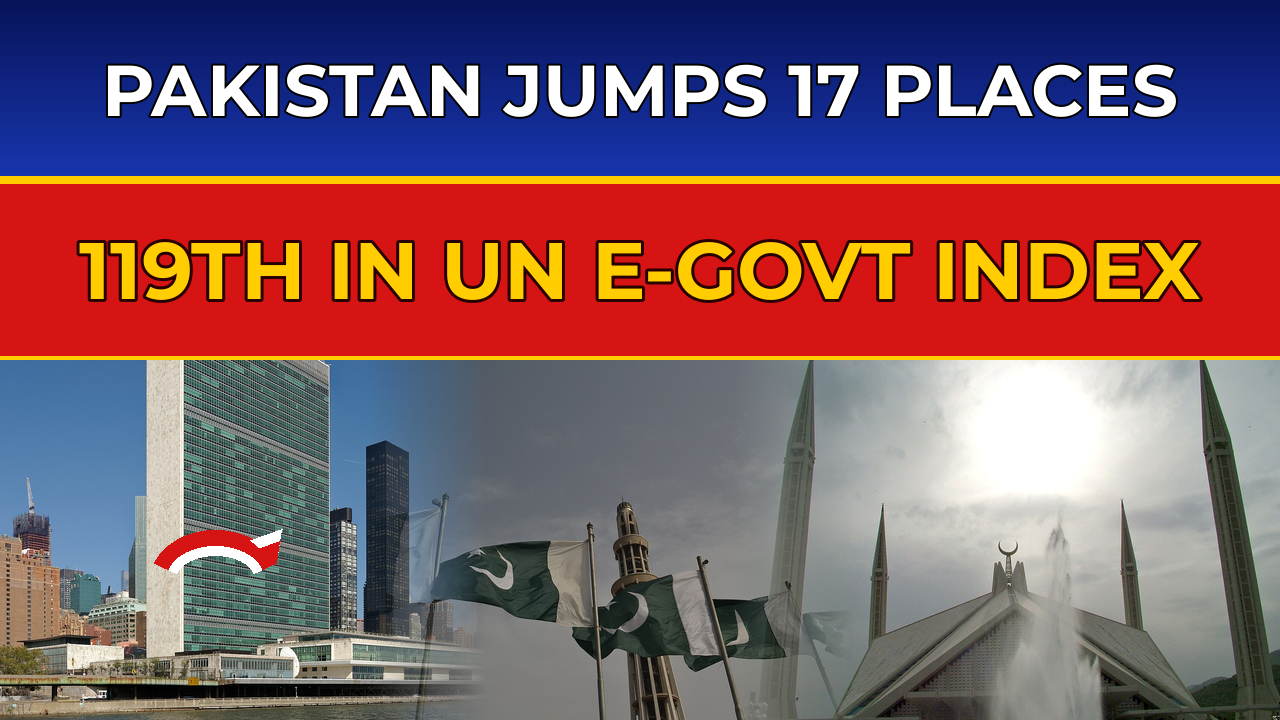
Pakistan has climbed 17 places to 119th out of 194 countries in the United Nations E-Government Development Index (EGDI) 2026, its best position on record. The result, announced on 20 November 2026 by Federal IT Minister Shaza Fatima Khawaja, lifts Pakistan’s overall score by 23 percent to 0.6264, up from 0.5096 in 2024. The country has now gained 31 places in four years.
The results were published in the UN E-Government Survey 2026, the UN benchmark that measures how well governments deliver services to citizens online. It is Pakistan’s second straight improvement, and the UN singled the country out as one of the largest gainers in Southern Asia.
| Key fact | Pakistan in EGDI 2026 |
|---|---|
| Global rank | 119th of 194 countries (up 17 places from 136th in 2024) |
| Overall EGDI score | 0.6264, up from 0.5096 in 2024 (up 23 percent) |
| Four-year gain | 31 places (150th in 2022 to 119th in 2026) |
| EGDI group | High EGDI group (entered in 2024, after the Middle group in 2022) |
| Announced | 20 November 2026, by Federal IT Minister Shaza Fatima Khawaja |
What the EGDI measures
The E-Government Development Index is the simple average of three sub-indices, each carrying equal weight: online services, telecommunications infrastructure, and human capital. Together they measure whether a government can deliver services online, whether citizens can connect, and whether people have the skills to use them.
This year’s survey is titled “From Digital Government to Agentic Government”. It examines how AI is starting to change public administration, while warning that gaps in connectivity, skills and capacity limit the benefits. The 2026 total is 194 countries, up from 193 after the State of Palestine was added, according to the Pakistan Digital Authority chairperson.
Where Pakistan improved
All three parts moved up, but at very different speeds: online services carried the result, telecom made the biggest jump, and human capital barely moved.
| Sub-index | 2024 score | 2026 score | Change |
|---|---|---|---|
| Online Services Index | 0.7042 | 0.8422 | Up 20 percent; Very High range, second-highest in Southern Asia |
| Telecommunications Infrastructure Index | 0.4745 | 0.6590 | Up 39 percent, the largest gain of the three |
| Human Capital Index | 0.3500 | 0.3778 | Up 8 percent; the weakest of the three pillars |
Pakistan also recorded the highest score in Southern Asia for online participation and engagement, at 0.9655 — a measure of how far citizens can take part in government through online consultations, feedback channels and access to public information.
Four years of climbing
The 2026 result continues a steady upward run. Pakistan stood at 150th in 2022, moved to 136th in 2024, and has now reached 119th — its best position on record.
| Survey year | Global rank | EGDI score |
|---|---|---|
| 2020 | 153rd | Not stated in the sources checked |
| 2022 | 150th | 0.4238 |
| 2024 | 136th | 0.5096 |
| 2026 | 119th | 0.6264 |
The 2022 score of 0.4238 comes from a January 2026 Pakistan Institute of Development Economics paper, compiled from the UN Knowledgebase. The 2020 rank of 153rd comes from the Pakistan Digital Authority’s chart, as reported by CW Pakistan.

Why Pakistan improved
The UN survey itself links Pakistan’s progress to the Digital Nation Pakistan Act, 2025, describing it as a key reform that set up a more formal governance architecture for digital transformation. The Act created the Pakistan Digital Authority to coordinate digital transformation across federal and provincial governments.
That link needs care. As the Pakistan Digital Authority’s chairperson, Dr Sohail Munir, notes, the UN says the improvement coincides with the Act — it does not say the Act caused it. Much of what the UN measured was built over years by institutions that predate it, including NADRA’s identity system and the State Bank’s Raast payment rail. ProPakistani reports that the minister credited the gain to Prime Minister Shehbaz Sharif’s Digital Nation vision.
Announcing the result, the minister called the jump “a milestone, not the finish line”, and said the next phase would extend digital services, connectivity and skills to every part of the country. The ministry says more than a million tech trainings and certifications were announced and acted on this year, through programmes such as DigiSkills, ICT for Girls, semiconductor design and AI training.
What it means for citizens
For ordinary users, the online services score matters most. It means more government business can now be done online — from checking a K-Electric bill online or using the Sui Gas bill checker to newer city services such as Islamabad’s new digital parking plaza.
But the same survey is honest about the gap. Pakistan’s online services score runs 0.216 points ahead of its overall score — the third-widest such gap in the survey — which means what the state has built has outrun many citizens’ means to reach and use it. The human capital score of 0.3778 is less than half the services score, and the world average EGDI of 0.6675 and Asian average of 0.7191 cited by the PDA chairperson are both still above Pakistan’s 0.6264.
Connectivity is still the fragile link. The telecom score jumped 39 percent, yet the submarine cable fault that slowed internet across Pakistan this month showed how quickly access can break. The PTA’s in-flight internet licensing framework is part of the push to widen access. Google’s Gemini 4 Neon launch shows how fast the AI frontier behind the survey’s agentic-government theme is moving.

Confirmed vs reported
Confirmed by two or more independent sources: the 119th rank, the 17-place climb, the 0.6264 score and its 23 percent rise, all three sub-index scores, the 150th-to-119th climb over four years, the UN’s recognition of the Digital Nation Pakistan Act, and the 20 November announcement by the IT minister.
Reported, from a single source, and attributed in this article: the world average of 0.6675 and Asian average of 0.7191, the lift from rating class H1 to H2, and the claim that South Korea tops the 2026 ranking, followed by Denmark and Singapore. These come from the PDA chairperson’s analysis and from UrduPoint’s reading of the survey.
What is not yet known
The full survey annex for Pakistan has not been published in detail yet, so the exact tables behind the averages and rating classes are still unconfirmed. The UN Knowledgebase, the primary source for the data, was under maintenance when we checked. Whether Pakistan holds this gain will be settled by the next survey, due in 2028. We will update this article when the full survey data is released. Checked on 21 November 2026.
Frequently asked questions
What is Pakistan’s rank in the UN E-Government Index 2026?
Pakistan ranks 119th out of 194 countries in the UN E-Government Development Index 2026, up 17 places from 136th in 2024. It is the country’s best position on record.
What is Pakistan’s EGDI score in 2026?
Pakistan’s overall EGDI score is 0.6264, up 23 percent from 0.5096 in 2024. The score is the average of three sub-indices: online services, telecommunications infrastructure and human capital.
What does the EGDI measure?
The E-Government Development Index measures how well governments deliver services to citizens online. It combines online services, telecom infrastructure and human capital, each carrying equal weight, and is published every two years by the UN Department of Economic and Social Affairs.
Why did Pakistan’s ranking improve?
Online services rose 20 percent to 0.8422 and telecom infrastructure jumped 39 percent to 0.6590. The UN survey also links the progress to the Digital Nation Pakistan Act, 2025, which created the Pakistan Digital Authority and a formal framework for digital transformation.
Where does Pakistan still lag?
Human capital is the weak spot, at 0.3778 against 0.8422 for online services. The PDA chairperson, citing the survey annex, puts the world average EGDI at 0.6675 and the Asian average at 0.7191, both above Pakistan’s 0.6264.
When is the next UN E-Government Survey?
The survey is published every two years, so the next edition is due in 2028, according to the Pakistan Digital Authority chairperson. That edition will show whether Pakistan holds this gain.