NADRA’s New Chatbot Tells Families Exactly Which Papers They Need for a Succession Certificate
By Fatima Raza | 13 November 2026 NADRA’s New Chatbot Tells Families Exactly Which Papers They Need for a Succession Certificate Families dealing with an inheritance can now find out the exact process and document list for their case from an automated chatbot, launched on NADRA’s revamped succession website. The chatbot, called “ID”, works in…
NADRA’s New Chatbot Tells Families Exactly Which Papers They Need for a Succession Certificate
Families dealing with an inheritance can now find out the exact process and document list for their case from an automated chatbot, launched on NADRA’s revamped succession website. The chatbot, called “ID”, works in Urdu and English on any phone or computer, asks a few simple questions about the deceased, the heirs and the assets, and then builds a checklist of only the documents that particular case needs — without asking for a CNIC number or any personal details.

The National Database and Registration Authority introduced the chatbot on its succession website, succession.nadra.gov.pk, and the launch was reported by Dawn on 11 November 2026 and ProPakistani on 12 November. It is the first time NADRA has put step-by-step succession guidance online, and it arrives for a process almost every family in Pakistan goes through at some point — yet one whose requirements change from case to case.
That variation is the problem the chatbot solves. The law differs with the faith and sect of the deceased, and the procedure changes from province to province. Sindh, for instance, requires three newspaper advertisements, while other jurisdictions require two. Until now, most applicants learned such details only at a NADRA counter — often after travelling from another city.
How the chatbot works
The chatbot runs entirely online through a series of questions and answers, with no NADRA official involved in the exchange. It asks a few simple questions about the deceased, the legal heirs and the assets, and then generates on its own the steps to follow and a checklist of only those documents that the particular case needs.
Privacy is built into the design. NADRA spokesman Syed Shabahat Ali said the chatbot does not ask for CNIC numbers or other personal details at any point. Heirs living abroad are guided to complete their biometric verification online through the Pak ID facility, rather than having to travel to Pakistan for that step.
The chatbot also tells users which office can take up their case, and it warns them early if the matter will have to go to court — for example, when an heir is a minor or the heirs are in dispute. That early warning matters, because families otherwise discover the problem only after preparing a full application.
One limit is worth knowing. The chatbot’s own interface advises the public to use it as a reference tool only, and to “always confirm final requirements” with the nearest NADRA registration centre before filing. It is guidance, not a guarantee — the centre makes the final call.
Who can get a succession certificate from NADRA
NADRA can issue a succession certificate or a letter of administration only in uncontested cases. That means all legal heirs agree and have no dispute among them, no heir is a minor or mentally disabled, and the matter is neither pending before a court nor already decided by one. If any of those conditions fails, NADRA does not issue the certificate and the family has to approach the court.
There are other conditions too. The deceased must be in NADRA’s records and the heirs must be registered in the Family Registration Certificate (FRC), while the applicant must hold a valid CNIC, NADRA card or Pakistan Origin Card (POC) — the old manual NIC is no longer accepted.
A legal heir has to visit a NADRA centre in person, except in Sindh and Balochistan, where a lawyer can appear on his behalf. The authority has been issuing succession certificates and letters of administration in uncontested cases since 2021; the chatbot is guidance offered before the applicant reaches a NADRA office with a formal application.
The documents you will need
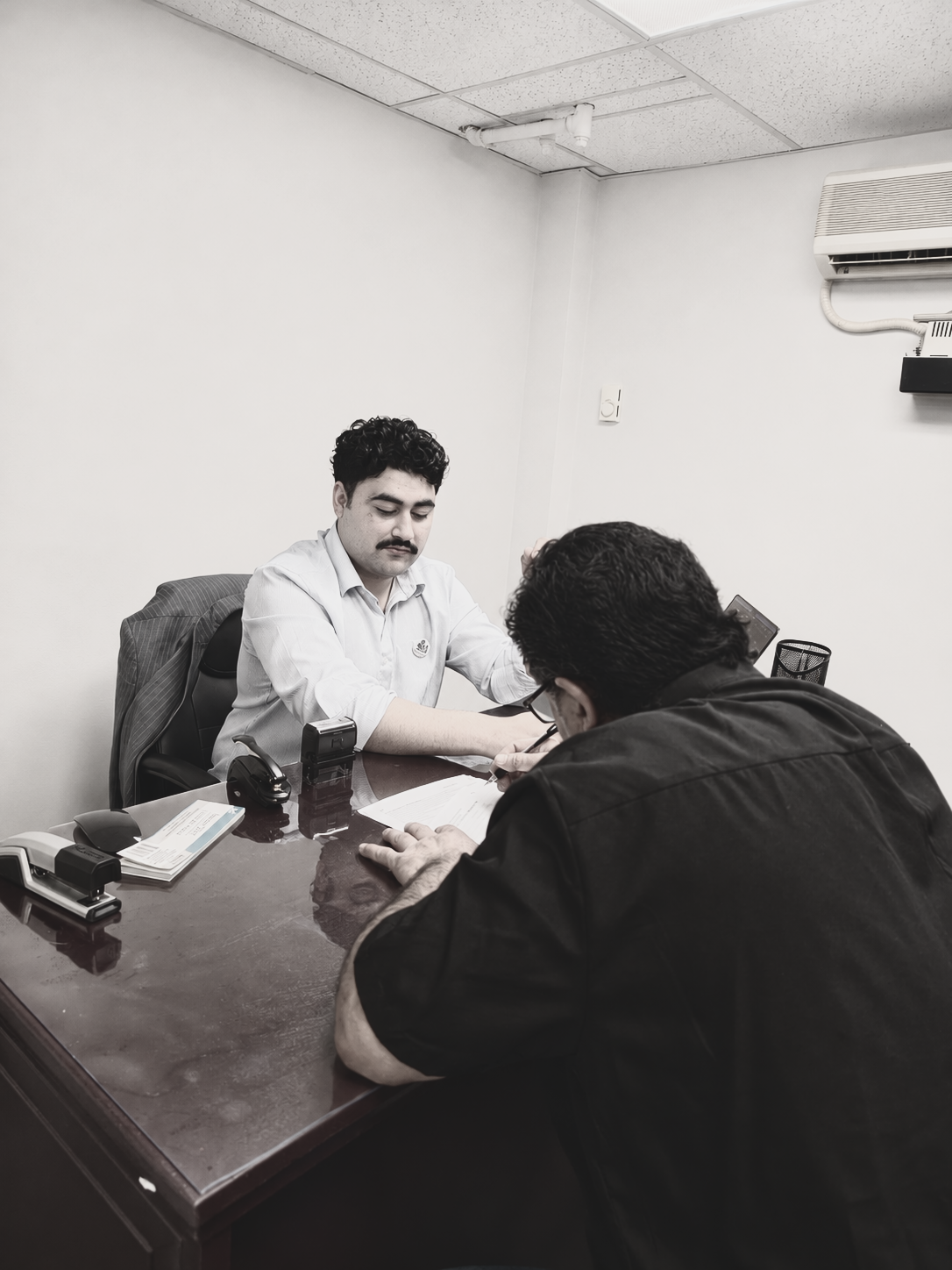
For an application to be accepted, the family has to produce the death certificate of the deceased issued by the relevant union council, municipal authority or cantonment board, along with the receipt of cancellation of the deceased’s CNIC, the FRC, and copies of the CNICs of all legal heirs.
They also need a Schedule-I letter of authorisation attested by an oath commissioner, and the original property documents — photocopies are not accepted. In some cases, additional documents are required. For immovable property in Sindh, a search certificate has to be obtained, while in Sindh and Balochistan a wakalatnama (power of attorney) is also required if the application is filed through a lawyer. If the deceased was a government or private employee, a letter from the concerned department about pension or service dues is also needed.
The fee for a succession certificate or letter of administration is Rs10,000 where total assets are less than Rs100,000, and Rs20,000 where assets are Rs100,000 or more — except in Sindh, where it is Rs22,000. A duplicate certificate costs Rs5,000.
When the case has to go to court instead
The chatbot’s early warning is one of its most useful features, because the court route is slower and more expensive. If the heirs disagree, if any heir is a minor or mentally disabled, or if the matter is already before a court or has been decided by one, NADRA cannot issue the certificate at all.
The same applies when the basic records do not line up — if the deceased is not in NADRA’s records, or the heirs are not registered in the Family Registration Certificate. In those situations the chatbot will flag the problem before the family spends time and money assembling documents for an application NADRA cannot accept.
For families whose case is straightforward, though, the chatbot removes the guesswork that has defined this process for years. Instead of a wasted trip to a NADRA counter in another city, they can now arrive knowing the exact papers their case needs — and which office to take them to.
Frequently Asked Questions
What is NADRA’s succession certificate chatbot?
It is an automated chatbot called “ID” on NADRA’s revamped succession website, succession.nadra.gov.pk. It asks a few questions about the deceased, the legal heirs and the assets, then gives the steps to follow and a checklist of only the documents that particular case needs. It works in Urdu and English on any phone or computer.
Does the chatbot ask for my CNIC number?
No. NADRA spokesman Syed Shabahat Ali said the chatbot runs entirely online through questions and answers without asking for CNIC numbers or other personal details. Heirs living abroad are guided to complete biometric verification online through the Pak ID facility.
What documents are needed for a succession certificate?
The death certificate of the deceased, the receipt of cancellation of the deceased’s CNIC, the Family Registration Certificate, copies of all legal heirs’ CNICs, a Schedule-I letter of authorisation attested by an oath commissioner, and the original property documents. Extra documents may be needed in some cases, such as a search certificate for immovable property in Sindh.
How much does a succession certificate cost?
Rs10,000 where total assets are less than Rs100,000, and Rs20,000 where assets are Rs100,000 or more — except in Sindh, where the fee is Rs22,000. A duplicate certificate costs Rs5,000.
When can NADRA not issue a succession certificate?
Only in uncontested cases. If the heirs disagree, any heir is a minor or mentally disabled, or the matter is pending before a court or already decided by one, NADRA does not issue the certificate and the family must approach the court. The chatbot warns about this early.
Is the chatbot’s guidance final?
No. The chatbot advises users to treat its guidance as a reference tool only and to “always confirm final requirements” with the nearest NADRA registration centre before filing a formal application.
Related: NADRA CNIC Renewal Online 2026 — step by step tarika | 8171 PMT Score Check 2026 by CNIC — BISP eligibility status | Pakistan Post revises pensioners’ proof-of-life SOP — NADRA verification every six months