IMF Asks Pakistan to Phase Out Fuel Subsidy — What Happens to Your Rs500 Petrol Token?
By Bilal Ahmed | 16 November 2026 | Business The International Monetary Fund has told Pakistan to phase out its fuel subsidy scheme. An IMF spokesperson told Arab News on Saturday 14 November 2026 that, in the words of the 7 October staff-level agreement, “the fuel support scheme should be phased out, given its broad…
By Bilal Ahmed | 16 November 2026 | Business
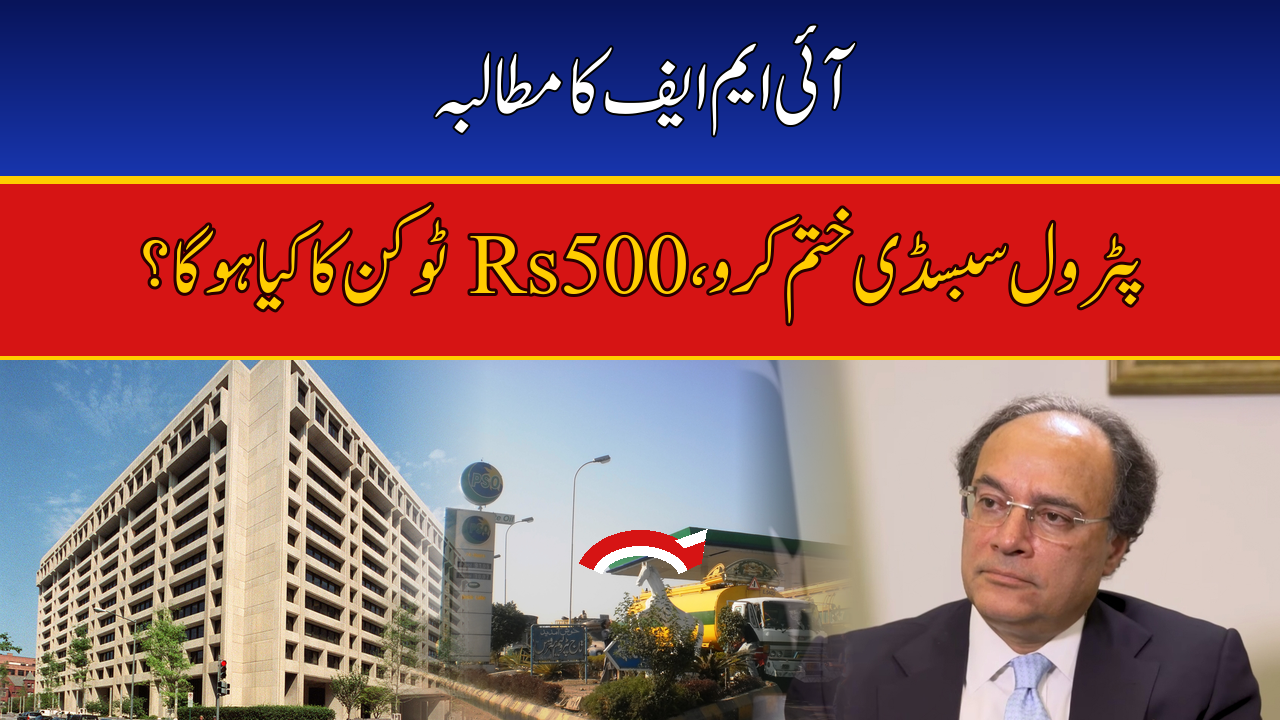
The International Monetary Fund has told Pakistan to phase out its fuel subsidy scheme. An IMF spokesperson told Arab News on Saturday 14 November 2026 that, in the words of the 7 October staff-level agreement, “the fuel support scheme should be phased out, given its broad targeting” — and that any future fuel support, if oil prices surprise on the upside, must be limited, timebound, targeted through established social assistance programmes and accommodated within the FY27 budget envelope. For the millions of motorists using the scheme, the practical question is simple: what happens to the Rs500 weekly petrol token, and to the Rs100-a-litre discount for small cars?
Nothing has been switched off yet. No end date has been announced, and the government has not said whether the scheme will be extended. The IMF first called for a prompt phase-out in its statement last month; now it has repeated the demand more firmly and set strict conditions on anything that might replace the scheme.
IMF fuel subsidy decision at a glance
| Detail | Fuel subsidy scheme |
|---|---|
| IMF position | Phase out the fuel support scheme, given its broad targeting (IMF spokesperson to Arab News, 14 November 2026) |
| Basis | Staff-level agreement of 7 October 2026 (4th EFF review and 3rd RSF review) |
| Future support conditions | Limited, timebound, targeted via established social assistance programmes, within the FY27 budget envelope |
| Scheme launched | September 2026, to shield lower-income motorists from rising petrol prices amid the US-Iran war |
| Approved by | Economic Coordination Committee, 10 September 2026 |
| Funding | Rs75 billion technical supplementary grant |
| Duration described | A three-month programme; no end date has been announced |
| Motorcycle and rickshaw users | Weekly petrol token worth Rs500 ($1.80) |
| Cars up to 800cc | Rs100 ($0.36) per litre discount on up to 10 litres every 10 days |
| Registered users | About 7.6 million registered by 29 September 2026; Petroleum Minister later put beneficiaries above 9 million |
| Petrol price now | Rs330 per litre (14–16 November 2026), down from a record Rs458.41 on 3 April 2026; diesel Rs360 per litre |
| IMF programme | $7 billion Extended Fund Facility; Executive Board meeting expected in December 2026 |
| Disbursement on approval | About $1 billion under the EFF and $210 million under the RSF, taking total disbursements to about $5.7 billion |
What the fuel subsidy scheme pays
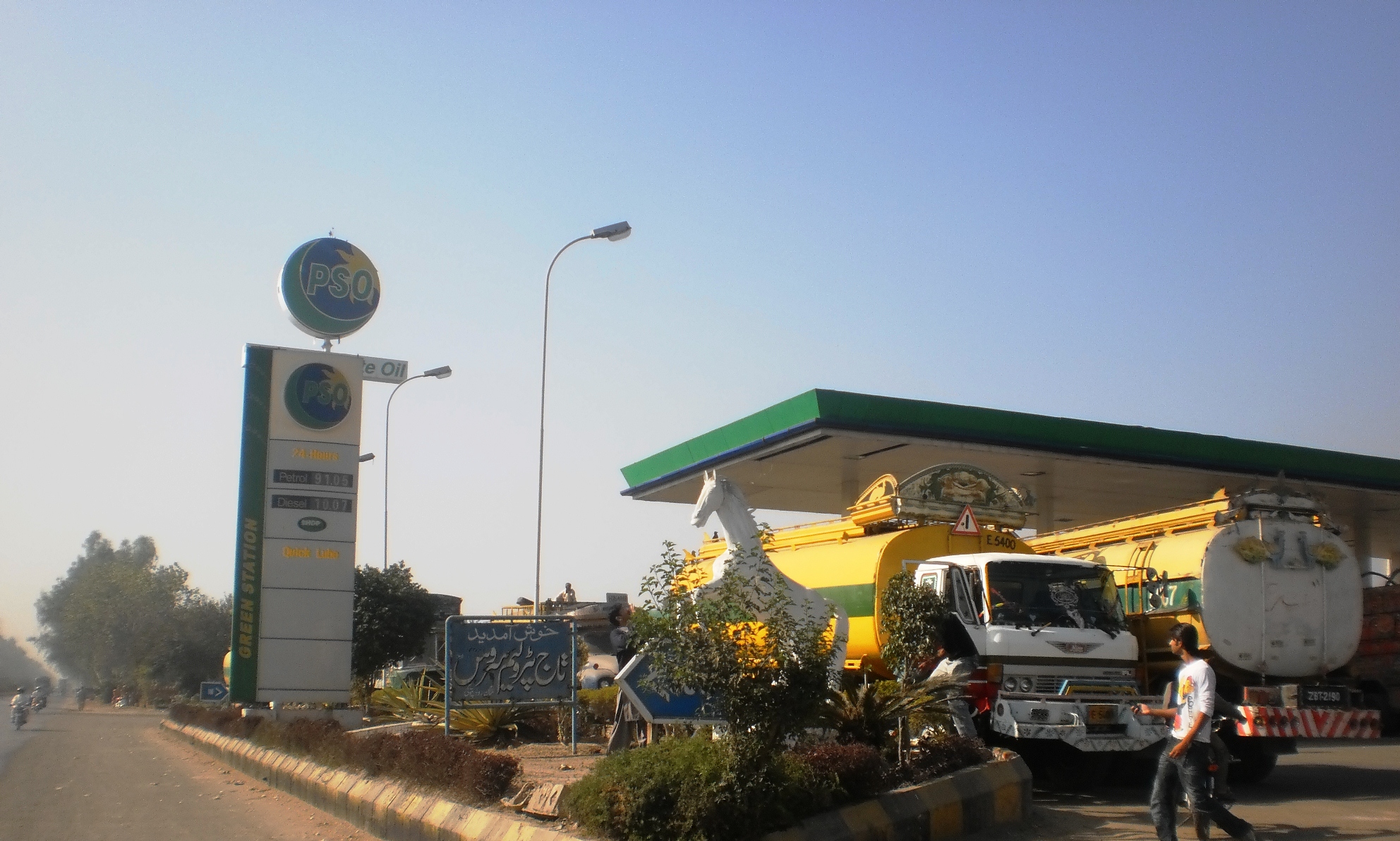
The scheme, formally the Prime Minister’s Fuel Relief Scheme, was launched in September 2026 after petrol prices surged following the outbreak of the US-Iran war in February. It is run digitally through the Fuel Pass System, with registration and tokens handled through the 9771 SMS service, and is restricted to non-commercial users, with relief limited to one vehicle per owner.
Motorcycle and rickshaw users receive a weekly petrol token worth Rs500, equal to five litres at the Rs100-a-litre relief rate. Owners of cars with engines of up to 800cc get a discount of Rs100 per litre on up to 10 litres every 10 days, worth Rs1,000 per cycle within a monthly quota of 30 litres. Cars with larger engines, diesel vehicles and public transport are excluded entirely.
The scheme grew fast: about 7.6 million people had registered by 29 September 2026, and Petroleum Minister Ali Pervaiz Malik said more than 9 million were benefiting by 4 October. The government approved Rs75 billion for the programme, with the running cost put at Rs25–30 billion a month at launch, rising to Rs35–40 billion by late September.
Why the IMF wants the scheme phased out
The IMF’s objection is not new, but its language has hardened. In its statement last month, the Fund explicitly called for the fuel subsidy to be phased out promptly, citing its high cost and broad targeting. The spokesperson’s message to Arab News on 14 November repeated that position and tied it directly to the current review and the 7 October staff-level agreement.
“Broad targeting” is the heart of the complaint: the scheme reaches anyone who owns a motorcycle, rickshaw or small car and registers, rather than only the poorest households. The IMF’s preference is that any future fuel support be channelled through established social assistance programmes — the welfare systems that already identify low-income families — instead of a blanket discount at the pump. There is also a fiscal argument: under the EFF programme, Pakistan has committed to letting domestic fuel prices align with international rates while protecting only the most vulnerable, and a subsidy costing tens of billions a month sits uneasily with that commitment.
What happens to your Rs500 token now?
For now, token holders should carry on as normal. The scheme has not ended, no end date has been announced, and there has been no word from the government on an extension. The scheme was described by the government as a three-month programme, which on that description points to around mid-December — but that is not an announced closing date.
What is clear is the direction of travel. The IMF has now said twice in about a month that the scheme should go, and the December Executive Board meeting gives the Fund a moment to press the point. If the government agrees to wind the scheme down, the question becomes what replaces it for the poorest motorists — and the IMF’s answer is already on the record: something smaller, temporary and targeted through existing welfare programmes, not another broad petrol discount.
Motorists should also keep an eye on the price itself. Petrol hit Rs458.41 a litre on 3 April 2026 and now stands at Rs330 a litre under the OGRA notification in force from 14 to 16 November 2026, with high-speed diesel at Rs360 a litre. That fall, driven by easing regional tensions and the daily pricing mechanism, is part of the reason the subsidy looks less urgent to the IMF than it did at the peak. The latest petrol price in Pakistan is updated as OGRA issues each new notification.
The bigger picture: the $7 billion IMF programme
The fuel subsidy is one item in a much larger negotiation. Pakistan is working to move from stabilisation to growth with the help of the IMF’s $7 billion Extended Fund Facility. Last month the IMF reached a staff-level agreement with Pakistan, covering the fourth EFF review and the third RSF review, along with the 2026 Article IV consultation. That agreement now awaits approval from the Fund’s Executive Board, which is expected to meet in December, subject to programme requirements the spokesperson did not specify. On approval, Pakistan would receive about $1 billion under the EFF and $210 million under the Resilience and Sustainability Facility, taking total disbursements to approximately $5.7 billion.
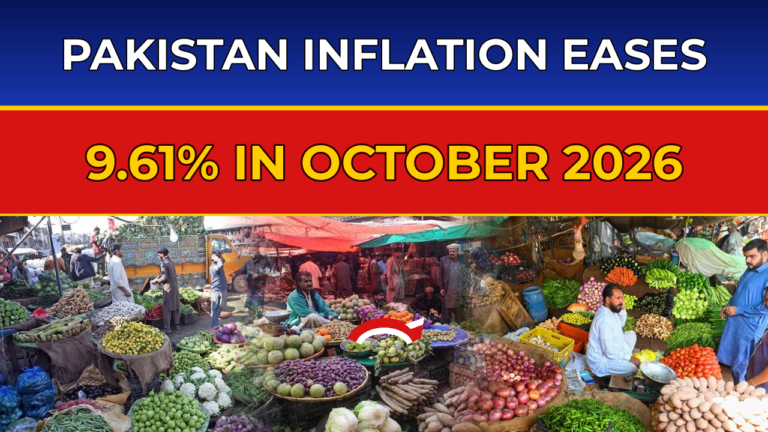
The backdrop is difficult. The IMF spokesperson described the war in the Middle East as “a significant headwind for Pakistan, given its reliance on oil and gas imports from the Gulf countries”. The US-Iran war has disrupted shipping routes, including threats to commercial shipping through the strategic Strait of Hormuz, and higher oil prices have already added to domestic inflation: consumer prices rose 9.6 per cent in October, according to the Pakistan Bureau of Statistics, against 10.3 per cent the month before. “Sustained volatility could weigh on the economic outlook,” the IMF official warned. The Fund also wants reforms to strengthen public finances and the energy sector — the same fiscal gap the government is trying to fill through privatisation, as our report on Pakistan’s plan to raise $1 billion from privatising five or six entities explains.
What motorists should do now
Keep using the scheme while it runs: tokens are issued through 9771, and an unused token expires, so do not let one lapse. Do not assume an extension — none has been announced, and the IMF is now publicly against one in the scheme’s current form. Watch what the government says after the IMF Board meeting in December, and check the notified petrol price before filling up, since OGRA is now revising prices daily. The same squeeze shows up elsewhere too: the Banking Mohtasib’s Rs1.2 billion in refunds to customers after complaints is worth knowing about when money is tight.
The scheme was a response to an emergency: a war pushed petrol to a record high, and the government moved to shield the people who felt it most. The IMF’s message is that the emergency has eased and the help should now be narrower, cheaper and aimed only at those who need it most. Whether the government agrees — and what replaces the Rs500 token if it does — is now the question to watch.
FAQs: IMF fuel subsidy Pakistan
Has the fuel subsidy scheme ended in Pakistan?
No. The IMF has asked Pakistan to phase out the fuel subsidy scheme, but no end date has been announced and the scheme has not ended. It was described as a three-month programme, which points to around mid-December, but that is not an announced closing date.
What is the Rs500 petrol token?
Under the Prime Minister’s Fuel Relief Scheme, motorcycle and rickshaw users receive a weekly petrol token worth Rs500, equal to five litres at the Rs100-a-litre relief rate. Registration and tokens are handled through the 9771 SMS service.
What discount do small cars get under the scheme?
Owners of cars with engines of up to 800cc receive a discount of Rs100 per litre on up to 10 litres every 10 days, worth Rs1,000 per cycle within a monthly quota of 30 litres. Cars with larger engines, diesel vehicles and public transport are excluded.
Why does the IMF want the fuel subsidy phased out?
The IMF says the scheme should be phased out because of its broad targeting and high cost. Any future fuel support should be limited, timebound and targeted at low-income groups through established social assistance programmes, and kept within the FY27 budget envelope.
When will the IMF Board decide on Pakistan’s programme?
The IMF Executive Board meeting on Pakistan’s EFF and RSF reviews and the 2026 Article IV consultation is expected in December 2026, subject to Pakistan fulfilling programme requirements. On approval, Pakistan would receive about $1 billion under the EFF and $210 million under the RSF.
The IMF has made its position plain twice in a month: phase the scheme out, and keep any future help small, temporary and targeted. The token is still working today, but motorists should plan as if it may not be there in its current form for long.