Trump, Xi and Putin to Hold First-Ever Trilateral Meeting in China Next Week
US President Donald Trump, Chinese President Xi Jinping and Russian President Vladimir Putin will meet in China next week in the first-ever trilateral meeting of the three leaders, the White House announced on Friday. The meeting is scheduled for Thursday, 19 November 2026, on the sidelines of the Asia-Pacific Economic Cooperation (APEC) summit in Shenzhen,…
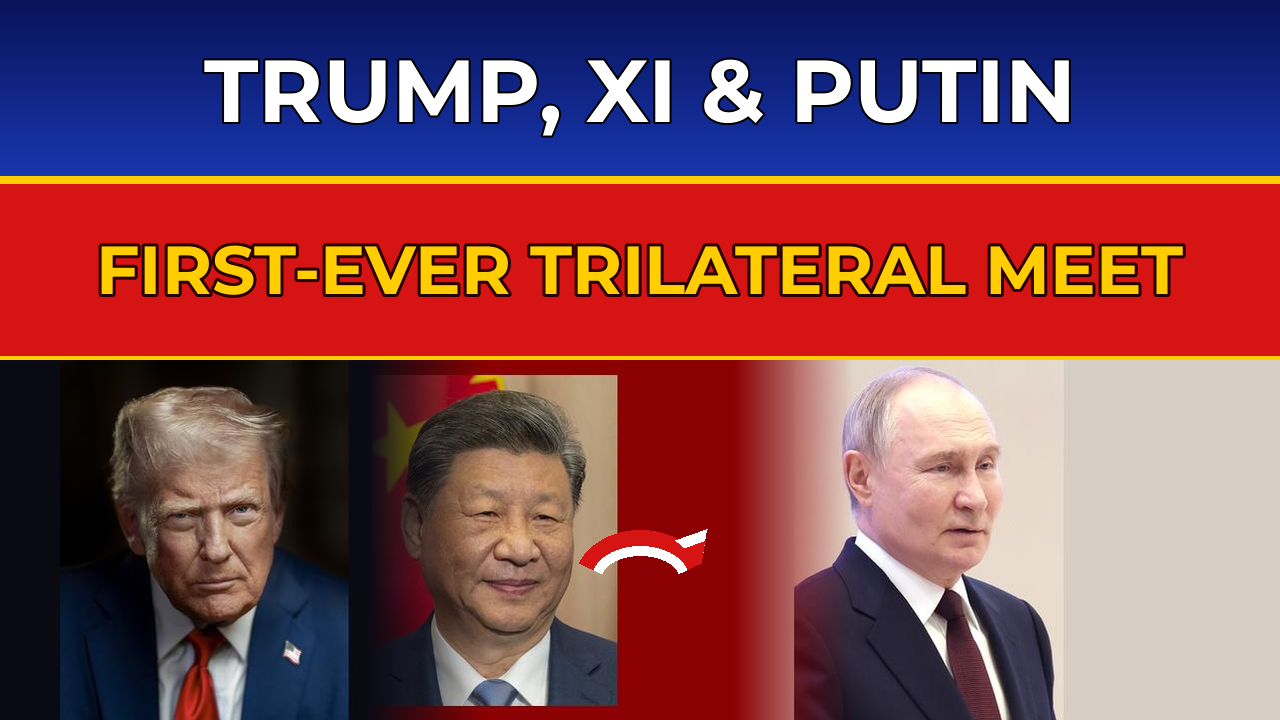
US President Donald Trump, Chinese President Xi Jinping and Russian President Vladimir Putin will meet in China next week in the first-ever trilateral meeting of the three leaders, the White House announced on Friday. The meeting is scheduled for Thursday, 19 November 2026, on the sidelines of the Asia-Pacific Economic Cooperation (APEC) summit in Shenzhen, with reducing nuclear weapons and the Iran war on the agenda — and Russia’s war in Ukraine deliberately left off it.
By Hira Shahid | Updated: 16 November 2026
Update — 16 November 2026: China Confirms the Summit
China confirmed on Monday, 16 November 2026, that President Xi Jinping will host US President Donald Trump and Russian President Vladimir Putin for their first-ever trilateral summit in Shenzhen on Thursday, 19 November. “On November 19, Chinese President Xi Jinping will hold a China-Russia-U.S. heads of state meeting with Russian President Vladimir Putin and U.S. President Donald Trump in Shenzhen,” the Chinese Foreign Ministry said in a brief statement, giving no further details on the agenda. The White House schedule lists the meeting at 2:30pm local time at Kylin Villa in Shenzhen.
With Beijing’s confirmation, all three governments have now confirmed the meeting: the White House announced it on Friday, 13 November, the Kremlin confirmed it on Saturday, and China confirmed it on Monday. The summit takes place on the sidelines of the 33rd APEC Economic Leaders’ Meeting in Shenzhen on 18–19 November, which Xi will chair.
What is on the agenda, according to officials: President Trump will raise nuclear-arms reduction — the New START treaty between the US and Russia expired in February 2026, removing caps on the two largest atomic arsenals for the first time in more than half a century — and the US war with Iran. US officials say Russia’s war in Ukraine is NOT expected to be discussed at the trilateral meeting, with Washington pursuing a separate negotiating track. Artificial intelligence is also expected to feature in the discussions.
Trump leaves Washington on Monday, 16 November, for a four-day trip to Asia that also includes the ASEAN summit in the Philippines on Tuesday before he travels to Shenzhen. He will hold a bilateral working lunch with Xi on Thursday; no separate one-on-one meeting with Putin is planned, and he is not scheduled to meet North Korean leader Kim Jong Un. Analysts quoted in the reporting caution that expectations for a breakthrough are low and the meeting will be heavier in symbolism than substance — but as the first-ever gathering of the leaders of the world’s three largest nuclear powers, it is already historic.
| Key fact | Detail |
|---|---|
| Meeting | First-ever trilateral meeting of the US, Chinese and Russian leaders |
| Date | Thursday, 19 November 2026 |
| Venue | Shenzhen, China, on the sidelines of the APEC summit |
| Announced by | The White House on Friday, 13 November 2026; spokeswoman Olivia Wales |
| On the agenda | Reduction of nuclear weapons; the Iran war |
| Not on the agenda | Russia’s war in Ukraine |
| Treaty background | The New START treaty between the US and Russia lapsed in February 2026 |
| Confirmation status | Beijing and Moscow had not confirmed participation when the White House announced it |
What has been announced
The White House confirmed on Friday that Trump will sit down with Xi and Putin in Shenzhen, in the first meeting of its kind between the leaders of the world’s three largest nuclear-armed states. Spokeswoman Olivia Wales told reporters that Trump will use the meeting to discuss reducing nuclear weapons, which he believes pose a serious danger through proliferation.
“The president has made it clear that, among other topics, he will discuss the reduction of nuclear weapons in the world. This proliferation, President Trump believes, is very dangerous,” Wales said.
One important caveat sits alongside the announcement: at the time the White House spoke, neither Beijing nor Moscow had officially confirmed that Xi and Putin would attend. Their embassies in Washington did not immediately respond to requests for comment, and it remained uncertain whether they would agree to discuss nuclear weapons reductions. The meeting should be treated as announced by Washington, not yet confirmed by all three sides.
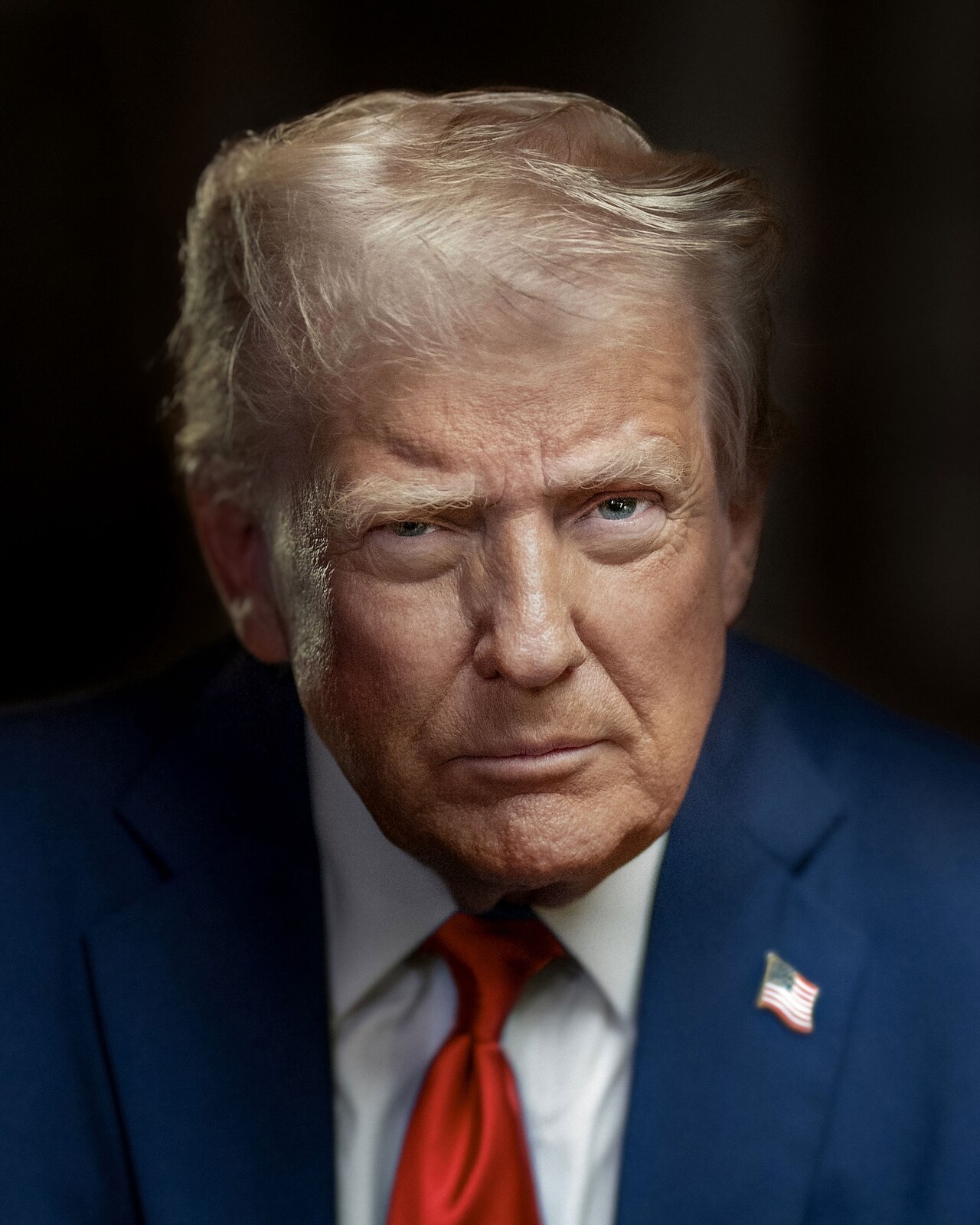
What is on the agenda: nuclear weapons
Nuclear arms reduction is the centrepiece of the meeting. Trump has said the session is a chance for all three countries to reach a deal on nuclear stockpiles, and the White House has made disarmament the headline item for the first-ever trilateral.
The timing is shaped by the collapse of the last arms-control framework between Washington and Moscow. The New Strategic Arms Reduction Treaty, known as New START, lapsed in February 2026. Trump rejected Russia’s proposal to extend it for another year and demanded a “new, improved and modernized” deal including China. The Shenzhen talks come nine months after the treaty expired, leaving the two largest atomic arsenals without caps for the first time in more than 50 years.
According to the Stockholm International Peace Research Institute, Russia holds the world’s largest stockpile of stored nuclear warheads, followed by the United States, with China third and expanding. That gap is central to Beijing’s position: China has repeatedly resisted US efforts to draw it into disarmament talks, maintaining that nuclear negotiations should primarily involve Russia and the United States given the difference in arsenal sizes.
The Iran war — and the war that is not on the agenda
Apart from nuclear disarmament, Trump is also expected to discuss the Iran war with the two leaders. A senior US official confirmed the president does intend to raise Iran, making it the second confirmed item on a short agenda.
Russia’s war in Ukraine, by contrast, will not be discussed. The senior official said Washington has a “whole other track” of negotiations with Kyiv and Moscow aimed at ending that war, and that China is not part of it. “China is not really a part of that track, so it doesn’t seem appropriate to have the Ukraine discussion there,” the official said.
Trump is also not expected to discuss Ukraine’s access to satellite communications services provided by Elon Musk’s SpaceX, and he is not scheduled to hold a separate one-on-one meeting with Putin during the visit. The exclusion of Ukraine is the most sensitive part of the agenda: it means the three leaders will meet while one of the world’s major wars is deliberately kept outside the room.
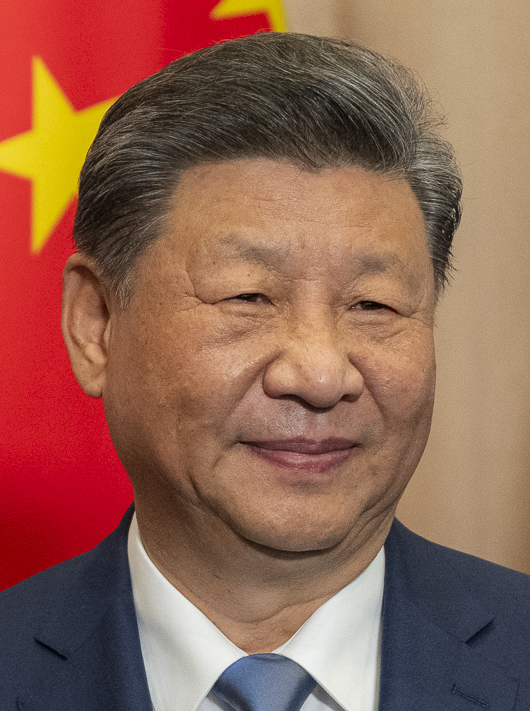
The three arsenals at a glance
| Country | Nuclear stockpile (SIPRI ranking) | Treaty position |
|---|---|---|
| Russia | Largest stockpile of stored nuclear warheads | New START lapsed February 2026; Moscow proposed a one-year extension |
| United States | Second-largest stockpile | Trump rejected the extension and wants a new deal including China |
| China | Third-largest stockpile, and expanding | Not party to New START; resists joining disarmament talks |
The road to Shenzhen: Trump’s Asia trip
The trilateral is the centrepiece of a four-day regional visit. Trump leaves Washington on Monday and arrives in the Philippines on Tuesday for the ASEAN summit in Manila, before heading to Shenzhen for APEC.
Before the three-way meeting, Trump will hold a bilateral working lunch and meeting with Xi on Thursday — their fourth meeting since Trump returned to office. He has no separate one-on-one scheduled with Putin, and is not expected to meet North Korean leader Kim Jong Un during the trip.
Elon Musk will travel with Trump to China but will not attend the trilateral meeting, US officials said. Officials also said neither Nvidia chief executive Jensen Huang’s resignation nor US export controls on sensitive chip technology are expected to come up in Trump’s meetings with Xi.
Why expectations are deliberately low
US officials have been blunt that the meeting is unlikely to produce anything concrete. “We do not expect to get to any kind of agreement,” a senior Trump administration official told Reuters, describing it as the start of a conversation. The official urged China to take a more active role on global nuclear security, while acknowledging that disarmament is a difficult issue for Beijing.
“This is the beginning of hopefully a conversation that can be productive going forward,” the official said. The White House is presenting Shenzhen as an opening, not a summit designed to deliver a signed outcome — so nobody should expect a treaty or a joint statement on Thursday.
Reactions: Yalta comparisons and Kyiv’s concern
The planned summit has drawn comparisons with the 1945 Yalta Conference, where the leaders of the US, Britain and the Soviet Union shaped the post-war order. Kremlin spokesman Dmitry Peskov dismissed the parallel, saying any agreements in Shenzhen cannot be imposed on others, but called the meeting “extremely significant”.
Ukrainian President Volodymyr Zelenskyy has voiced concern that the meeting could become a platform to discuss a Ukraine deal behind Kyiv’s back — a fear sharpened by the fact that Ukraine is explicitly not on the agenda. The White House position is that Ukraine is handled on a separate track.
Why it matters for Pakistan
Pakistan has direct stakes in how the three powers manage their rivalries, and its diplomacy with all three has been active in recent weeks. Russian Interior Minister Vladimir Kolokoltsev visited Pakistan in October — the first visit of its kind — for talks on organised crime, cybercrime and counter-terrorism, as covered in our report on the Russian interior minister’s visit to Pakistan. China remains Pakistan’s closest strategic partner, with party-to-party engagement continuing through the recent visit of senior Chinese Communist Party official Liu Haixing, while Pakistan has also deepened Gulf ties through the visit of Oman’s foreign minister for the joint ministerial commission. Any shift in the US-China-Russia triangle reaches Islamabad quickly.
What happens next
Attention now turns to three moments: Trump’s departure from Washington on Monday, his arrival in Manila on Tuesday for the ASEAN summit, and Thursday’s meeting in Shenzhen. Confirmation from Beijing and Moscow, if it comes, will be the first test of whether the trilateral goes ahead as Washington announced it. Afterward, the key questions will be what was discussed, whether follow-up talks were agreed, and whether China shows any movement on joining nuclear discussions. This article will be updated as details are confirmed.
Frequently asked questions
When is the Trump-Xi-Putin trilateral meeting?
Thursday, 19 November 2026, on the sidelines of the APEC summit in Shenzhen, China. Trump leaves Washington on Monday and arrives in Manila on Tuesday for the ASEAN summit first.
Is this the first meeting of its kind?
Yes. It is the first-ever trilateral meeting between the leaders of the United States, China and Russia.
What is on the agenda?
Reducing nuclear weapons stockpiles and the Iran war. Russia’s war in Ukraine is not on the agenda; Washington says it is handled on a separate track that does not include China.
Will the meeting produce a nuclear deal?
US officials say no. A senior Trump administration official said, “We do not expect to get to any kind of agreement,” describing the meeting as the beginning of a conversation rather than a negotiation.
Have China and Russia confirmed they will attend?
Not officially. When the White House announced the meeting, neither Beijing nor Moscow had confirmed participation, and their embassies in Washington did not immediately respond to requests for comment.
What is New START and why does it matter?
New START was the nuclear arms-control treaty between the US and Russia. It lapsed in February 2026, leaving the two largest arsenals without caps for the first time in more than 50 years. Trump rejected a one-year extension and wants a new deal including China.