Solar Cost in Pakistan 2026: Net Billing, Panel Prices and Payback
By Daniyal Sheikh | 13 November 2026 Solar panels in Pakistan got more expensive to justify on 9 February 2026, and most of the calculators still online have not caught up. On that day, NEPRA replaced net metering with net billing under the Prosumer Regulations 2026, S.R.O. 251(I)/2026. The units your panels export to the…
By Daniyal Sheikh | 13 November 2026
Solar panels in Pakistan got more expensive to justify on 9 February 2026, and most of the calculators still online have not caught up. On that day, NEPRA replaced net metering with net billing under the Prosumer Regulations 2026, S.R.O. 251(I)/2026. The units your panels export to the grid now earn about Rs 10 each instead of about Rs 26, while every unit you import is still billed at your full tariff. Any calculator that still values your exports at the old rate is telling you a payback that no longer exists.
This guide explains the new rules in plain language, gives you the current prices for panels and full systems in November 2026, works through two real examples, and shows you how to use the TimelyUps solar cost calculator, which is built on the February 2026 rules. Where sources disagree on a figure, the guide says so.
Solar Cost in Pakistan: Key Facts
| Fact | Detail |
|---|---|
| Current system | Net billing since 9 February 2026, under the NEPRA Prosumer Regulations 2026, S.R.O. 251(I)/2026 |
| Export buy-back rate | About Rs 10 a unit, reported at Rs 8 to Rs 11 in 2026. The rate is the national average energy purchase price, revised from time to time |
| Old export value | About Rs 26 a unit in the final net-metering years |
| Import tariff | Your normal slab tariff, about Rs 45 to Rs 65 a unit at upper slabs |
| Tier-1 N-type panel price | Rs 36 to Rs 46 per watt, November 2026. One 585W panel costs Rs 21,900 to Rs 27,000 |
| 5 kW on-grid, installed | Rs 5.2 lakh to Rs 8.9 lakh, November 2026. Trackers disagree by up to Rs 3 lakh on this size |
| 10 kW on-grid, installed | Rs 9.6 lakh to Rs 15.5 lakh, November 2026 |
| Generation per kW | About 4.0 to 4.5 units a day, or 120 to 135 units a month, annual average |
| Payback under net billing | About 3 to 5 years for a home that uses most power in the daytime, 5 to 7 years if most generation is exported |
| Contract length | 5 years, renewable. Old net metering contracts were 7 years |
| Concurrence fee | Rs 1,000 per kW, non-refundable, paid to NEPRA |
| Size caps | Up to 1 MW, no bigger than your sanctioned load, and no new connection if your transformer is 80 percent full of solar |
What Changed on 9 February 2026
For a decade, Pakistan ran net metering under NEPRA’s 2015 regulations. The deal was simple: your meter ran backwards, in effect. The units your panels exported offset the units you imported, one for one, and you paid only for the difference. If your panels made 600 units in a month and your home used 600, your bill for energy was close to zero.
On 9 February 2026, NEPRA notified the Prosumer Regulations 2026, S.R.O. 251(I)/2026, repealing the 2015 framework with immediate effect. The new system is called net billing, and the name is the whole story. Your imports and your exports are now billed separately. Every unit you take from the grid is charged at your normal slab tariff, exactly as if you had no panels. Every surplus unit you push back is bought by your DISCO at the national average energy purchase price, which is what the power system pays on average for a unit of energy. Your bill is the import charge minus the export credit, plus the usual taxes and fixed charges.
The regulations also changed the paperwork. The agreement term fell from seven years to five, renewable. A non-refundable concurrence fee of Rs 1,000 per kW appeared where there was none before. NEPRA must issue its concurrence within seven working days. Your system cannot exceed your sanctioned load, and no new connection is allowed if the generation already connected to your distribution transformer has reached 80 percent of its rated capacity. Systems of 250 kW or more need a mandatory load flow study. All interconnection costs, including the meter and any grid upgrade, fall on you.
One thing the original notification did not settle was the fate of people who already had net metering. The Nation’s report on the change said the new regulations would apply to existing prosumers as well, and the regulations said billing would switch from the cycle following February 2026. A later amendment, S.R.O. 547(I)/2026, protected signed agreements: if you hold a net metering agreement from before 9 February 2026, your old terms stand until that agreement expires. If your DISCO has already moved you to net billing, ask for the amendment in writing and check your agreement’s expiry date.
Net Metering vs Net Billing
| Rule | Old net metering (2015–2026) | New net billing (from 9 Feb 2026) |
|---|---|---|
| How units are settled | Exported units offset imported units one for one | Imports billed at tariff, exports credited separately at the national average energy purchase price |
| Export value | About Rs 26 a unit in the final net-metering years | About Rs 10 a unit, reported at Rs 8 to Rs 11 in 2026 |
| Import price | Normal tariff, after the one-for-one offset | Normal tariff on every imported unit |
| Contract length | 7 years | 5 years, renewable |
| Who it applies to | Agreements signed before 9 February 2026 keep the old terms until they expire | All new applications from 9 February 2026 |
| Concurrence fee | None | Rs 1,000 per kW, non-refundable |
| System size cap | Up to 1 MW | Up to 1 MW, and no bigger than your sanctioned load |
| Transformer rule | No transformer cap in the 2015 rules | No new connection if generation on your transformer has reached 80 percent of its rated capacity |
Rs 8 or Rs 10? The Buy-Back Rate, Honestly
Search for the new buy-back rate and you will find two figures quoted with equal confidence, Rs 8.13 and Rs 10 to Rs 11. Both are right, and understanding why tells you how the rate works.
The regulations fix no rupee figure at all. They link exports to the national average energy purchase price, and NEPRA can revise that benchmark by notification at any time. When the rules were notified in February 2026, the press rounded the benchmark to about Rs 10 to Rs 11 a unit, because a range reads better than a precise decimal. The specific figure in IESCO’s internal circular of 25 February 2026 was Rs 8.13 a unit, and NEPRA’s own power purchase price forecast for 2026 put the same benchmark at about Rs 8.13. The rate for April to June 2026 was reported at Rs 8.13 a unit and is revised quarterly.
For your decision, the exact figure matters less than the order of magnitude. Whether it is Rs 8 or Rs 11, an exported unit earns roughly a fifth of what an imported unit costs at upper slabs. The TimelyUps calculator defaults to Rs 10 and lets you change it, because the figure in force in the week you apply is the one that decides your payback.
What Solar Costs in Pakistan Now
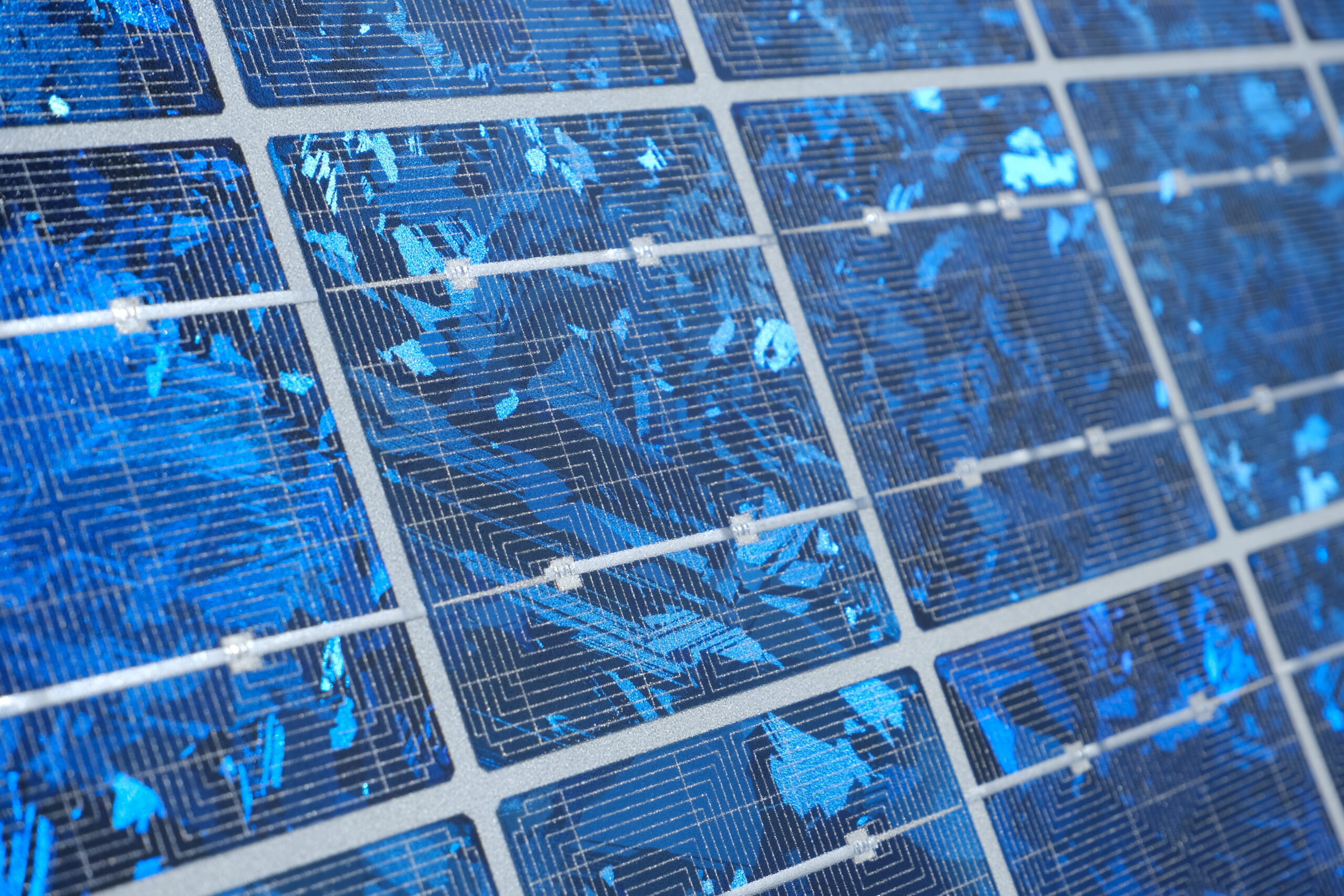
Panel prices are the most quoted number in solar, and the least useful on their own. In November 2026, A-grade Tier-1 N-type panels from Jinko, JA Solar, Trina, Longi and Canadian Solar sold for Rs 36 to Rs 46 per watt across the wholesale markets of Lahore and Karachi, including the 10 percent sales tax on imported modules. A single 585W Tier-1 panel cost Rs 21,900 to Rs 27,000. Budget B-grade panels were Rs 26 to Rs 28 a watt. Prices are higher in Islamabad and Rawalpindi, by about Rs 3 to Rs 5 a watt, because of freight and showroom costs, and they soften from November to January, when crews have time and demand is lower.
But panels are only about a third of a finished system. On a 10 kW hybrid costing Rs 13.2 lakh, the panels were about Rs 4.2 lakh, the lithium battery about Rs 3.3 lakh, the hybrid inverter about Rs 2.5 lakh, the mounting structure about Rs 1.4 lakh, and labour, cabling and protection the rest. That is why two quotes for the same 5 kW system can differ by Rs 3 lakh: the panels are nearly the same, and the inverter, the battery and the quality of the structure are not.
Installed on-grid prices in November 2026 ran about Rs 3.8 lakh to Rs 5.2 lakh for 3 kW, Rs 5.2 lakh to Rs 8.9 lakh for 5 kW, and Rs 9.6 lakh to Rs 15.5 lakh for 10 kW. The wide ranges are real, not errors: trackers that price Tier-1 inverters and proper mounting sit at the top of each range, and trackers that price budget inverters sit at the bottom. Hybrid systems cost far more, and trackers disagree sharply there too: a 5 kW hybrid with a 10 kWh lithium battery was quoted anywhere from Rs 6.5 lakh to Rs 13.1 lakh. If you are quoted a hybrid price, ask for the battery size in kWh in writing, because a small battery at a low price is not the same system as a large battery at a high one.
Panel prices move with the dollar, because panels are priced in dollars at the factory. A 5 percent fall in the rupee adds roughly 5 percent to panel prices within weeks. Treat every price in this guide as a November 2026 snapshot, and get itemised quotes from at least three installers before you pay any advance. If you need to finance the system, work out the monthly payment first with our loan EMI calculator, and check what one unit actually costs you on your current bill with our electricity bill calculator.
How Many Units Does 1 kW Generate?
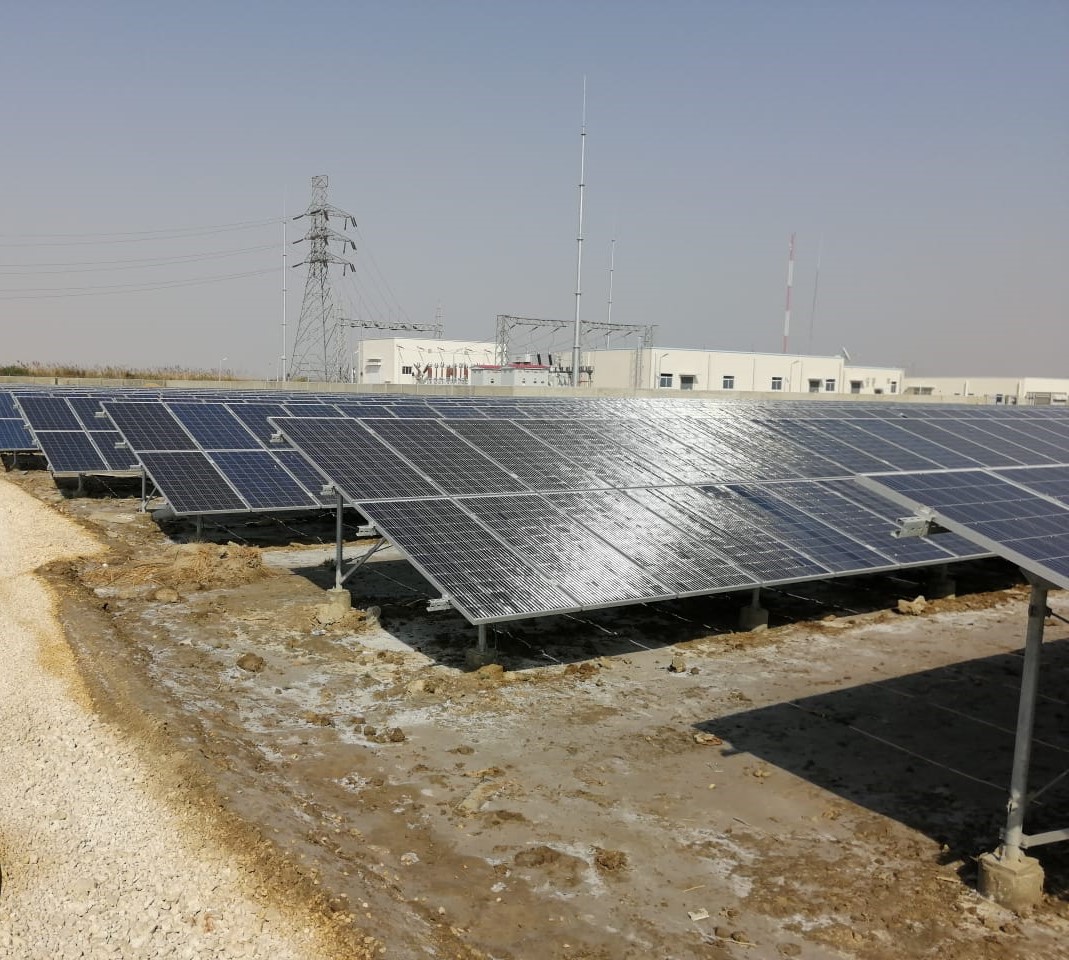
Pakistan has excellent sun, and the honest figure is about 4.0 to 4.5 units per kW per day on average over the year, or about 120 to 135 units a month per kW. The European Commission’s PVGIS solar data, averaged over Islamabad, Karachi and Lahore, gives Karachi about 4.7 units per kW per day, Lahore about 4.4 and Islamabad about 4.4, with April the best month at about 5.0 and July, with monsoon cloud, the weakest at about 3.6. A 5 kW system therefore makes about 600 to 675 units a month, and a 10 kW system about 1,200 to 1,350.
The TimelyUps calculator uses slightly lower city figures, from peak sun hours adjusted for real-world losses: Lahore 4.0, Karachi 4.2, Islamabad 4.1, Multan 4.3 and Quetta 4.5 units per kW per day. They sit about 10 percent below the laboratory-style figures some sellers quote. If a seller promises you 5.5 units a day per kW all year round, ask them to put it in writing, because no city in Pakistan averages that over twelve months.
Worked Example: 5 kW in Lahore
Take a medium home in Lahore using 600 units a month at Rs 50 a unit, so a bill of about Rs 30,000 before taxes and fixed charges. A 5 kW on-grid system costs about Rs 750,000 installed at Rs 150,000 per kW, plus the Rs 5,000 NEPRA concurrence fee, for a total of Rs 755,000. The panels alone are about Rs 200,000 of that at Rs 40 a watt.
The system generates about 600 units a month. If the home uses half of that power itself as it is generated, 300 units save the full tariff, Rs 15,000, and the other 300 units are exported at Rs 10, earning Rs 3,000. The monthly saving is Rs 18,000, the bill falls from about Rs 30,000 to about Rs 12,000, and the system pays for itself in about three and a half years. Over 25 years, with tariffs rising 5 percent a year and panels losing half a percent of output a year, the saving after the system cost is about Rs 8.8 million, before cleaning and maintenance.
Under the old net metering rules, the same system would have saved about Rs 22,800 a month, with the exports valued at Rs 26 a unit, and paid back in about two years and nine months. Net billing costs this home about Rs 4,800 a month, or about nine extra months of payback.
Now change one input: the same home, but empty in the daytime, using only 30 percent of its solar power itself. The saving falls to about Rs 13,000 a month and payback stretches past four and a half years. Or the same system in a home where someone is in all day, using 70 percent itself: the saving rises toward Rs 22,000 a month and payback drops under three years. The panels are identical in all three cases. What changes is when the power is used, and under net billing that is the whole game.
Worked Example: 10 kW in Karachi
A larger home in Karachi using 1,000 units a month at Rs 50 a unit pays about Rs 50,000 a month. A 10 kW system costs about Rs 1.51 million installed, including the Rs 10,000 concurrence fee, and generates about 1,260 units a month at Karachi’s 4.2 units per kW per day. At 70 percent self-use, 882 units save the full tariff and 378 exported units earn Rs 10 each, for a monthly saving of about Rs 47,880. The bill falls to about Rs 2,120 a month, and payback is about two years and eight months.
Notice what happened: the bigger system pays back faster than the smaller one, because the home is big enough to use most of what it makes. The same 10 kW system on a home using only 500 units a month would export most of its output at Rs 10 and pay back far more slowly. Under net billing, the right size is the size your daytime usage can absorb, not the size your roof can hold. Before you size a system, check the units on your last few bills with our electricity bill check tool, and size for your daytime load, not your total load.
How to Apply for Net Billing
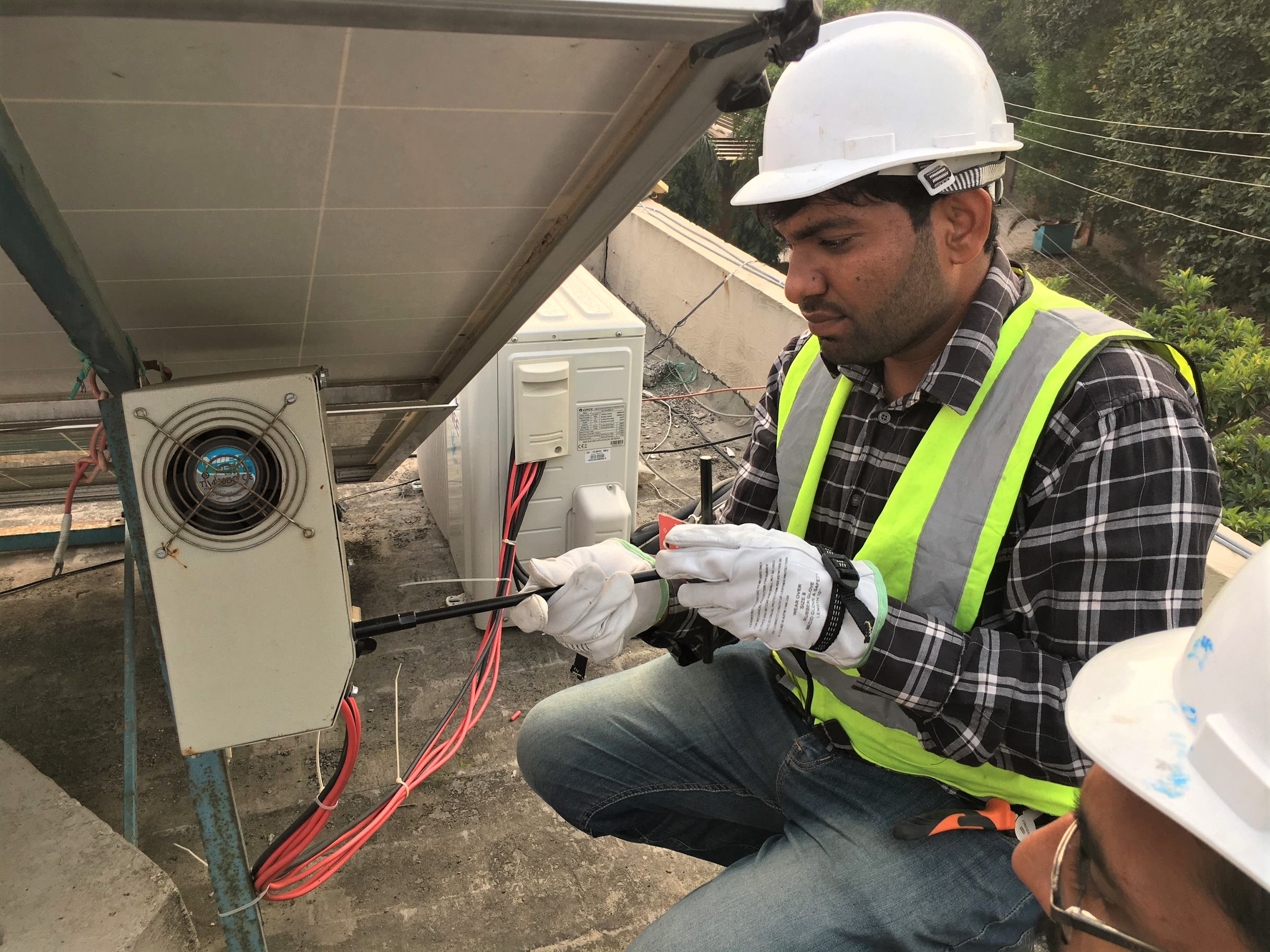
The application goes through your DISCO, and the steps are the same in every city. First, check your sanctioned load, because your system cannot be bigger than it. If you need a bigger system, apply for a load extension first. Second, check with your DISCO whether your distribution transformer already carries solar generation close to 80 percent of its rated capacity, because a full transformer means no new connection.
Third, get NEPRA’s concurrence. Your installer files for it, NEPRA must issue it within seven working days, and the non-refundable fee is Rs 1,000 per kW. One guide says the fee now applies only to systems above 25 kW, but the February 2026 reports and the regulation itself put it at Rs 1,000 per kW without that limit, so budget for it on any size and confirm with your DISCO. Fourth, your installer fits a bidirectional meter, which measures imports and exports separately, and your DISCO inspects and commissions the system. You pay all interconnection costs, including the meter and any grid upgrade. The agreement runs five years and is renewable.
Is Solar Still Worth It?
Yes, with the right expectations. The February 2026 change did not kill rooftop solar. It killed the idea that the grid is a free battery. Under net metering, oversizing was rational: every extra panel made extra exports, and exports were worth nearly as much as imports. Under net billing, an exported unit earns about a fifth of an imported unit’s price, so an oversized system is mostly a donation to your DISCO at Rs 10 a unit.
What still works is a system sized to your daytime use, in a home where the washing machine, the water pump and the air conditioner run while the sun is up. That home saves about Rs 18,000 a month on a 5 kW system and gets its money back in about three and a half years, then generates nearly free power for the twenty years after that. What works less well is a big system on a home that sits empty until evening, where payback stretches toward five to seven years. A battery changes that maths by pushing self-use toward 85 percent, but batteries are expensive, and the trackers disagree so sharply on hybrid prices that you should price the battery separately and check its size in kWh before you decide.
Use the calculator above with your own bill, your own city and your own quotes, and change the self-use slider first. If the payback still works at 30 percent self-use, it will work in real life. If it only works at 80 percent, it probably will not.
FAQs: Solar Cost and Net Billing in Pakistan
What changed on 9 February 2026?
NEPRA notified the Prosumer Regulations 2026, S.R.O. 251(I)/2026, which repealed the 2015 net metering regulations. For new applicants, net metering became net billing: imports are billed at your normal tariff and exports are credited separately at the national average energy purchase price, about Rs 10 a unit, instead of offsetting imports one for one. The contract term fell from 7 years to 5 years, and a non-refundable concurrence fee of Rs 1,000 per kW was introduced.
What is the buy-back rate — Rs 8 or Rs 10?
Both figures describe the same benchmark, the national average energy purchase price. Press coverage rounded it to about Rs 10 to Rs 11 a unit when the rules were notified, while the specific figure in IESCO’s February 2026 circular and in NEPRA’s own 2026 forecast was Rs 8.13 a unit. The rate is revised from time to time, so confirm the current figure with your DISCO in the week you apply.
Does net billing apply if I already have net metering?
No, not until your agreement ends. Agreements signed before 9 February 2026 keep the old net metering terms until they expire, under a later amendment, S.R.O. 547(I)/2026. The original notification had applied net billing to existing prosumers as well, so if your DISCO has already moved you to net billing, ask for the amendment in writing and check your agreement’s expiry date.
How much does a 5 kW solar system cost in Pakistan?
About Rs 5.2 lakh to Rs 8.9 lakh installed as an on-grid system in November 2026, depending on the panel and inverter brands. The panels alone are about Rs 2 lakh of that at Rs 40 a watt. A 5 kW hybrid with a 10 kWh lithium battery costs far more, and trackers disagree sharply, from Rs 6.5 lakh to Rs 13.1 lakh, so get a written quote that lists the battery size in kWh.
How many units does 1 kW of solar generate in Pakistan?
About 4.0 to 4.5 units a day on average over the year, or about 120 to 135 units a month per kW. Karachi averages about 4.7 units per kW per day and Lahore about 4.4, from European Commission PVGIS solar data. April is the best month and July, with monsoon cloud, is the weakest. A 5 kW system therefore makes about 600 to 675 units a month.
Is solar still worth it under net billing?
Yes, if you use most of the power yourself. A unit used at home saves you the full tariff, about Rs 50 at upper slabs, while a unit exported earns about Rs 10. A 5 kW system in Lahore, used half at home, saves about Rs 18,000 a month on a Rs 755,000 system and pays back in about three and a half years. The payback stretches toward five to seven years if most of your generation is exported, which is why oversizing no longer pays and why a battery, which pushes self-use toward 85 percent, is worth pricing.
Updated 13 November 2026. Rules, rates and prices are from NEPRA’s Prosumer Regulations 2026 (S.R.O. 251(I)/2026), February 2026 press reporting on the change, and dealer price trackers checked on 13 November 2026. Figures that sources disagree on are flagged in the guide. Confirm the current buy-back rate with your DISCO and the final price with your installer before you pay any advance, because both change by notification and by the market.