Sehat Card Eligibility Check 2026: Punjab, KP, Federal and Balochistan
By Daniyal Sheikh | 13 November 2026 There is no single Sehat Card for all of Pakistan. Each province and territory runs its own health programme, with its own rules, its own SMS code and its own helpline. Which one covers you depends on the permanent address on your CNIC and your family record at…
By Daniyal Sheikh | 13 November 2026
There is no single Sehat Card for all of Pakistan. Each province and territory runs its own health programme, with its own rules, its own SMS code and its own helpline. Which one covers you depends on the permanent address on your CNIC and your family record at NADRA.
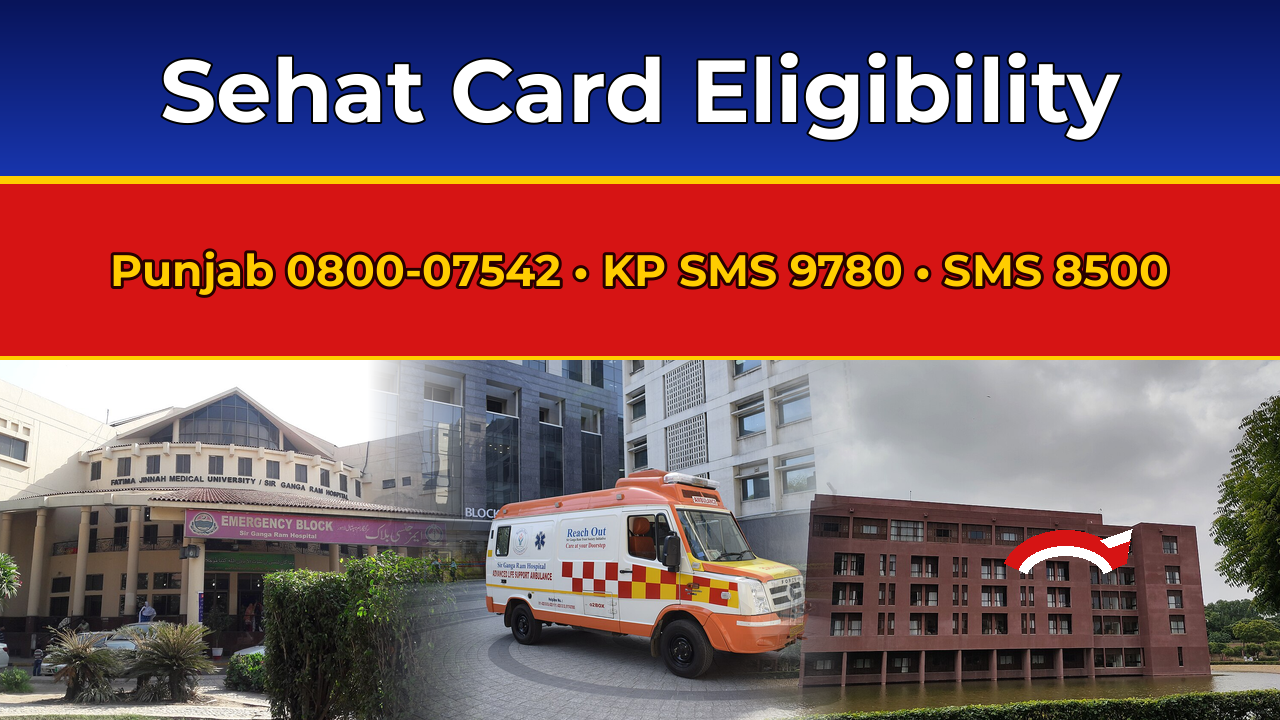
In every programme, your CNIC is the card. There is no separate card to carry and no registration fee to pay. The check takes a minute: Punjab residents call the PHIMC helpline on 0800-07542, Khyber Pakhtunkhwa residents send their CNIC by SMS to 9780, and residents of Islamabad, Azad Jammu and Kashmir and Gilgit-Baltistan send it to 8500. Sindh has no province-wide card at all.
This guide routes you by province: who is eligible, what the yearly limits are, what is free and what you pay half of, which hospitals take the card, and what to do if you are marked ineligible. Where sources disagree on a figure, the guide says so.
Sehat Card Eligibility: Key Facts
| Fact | Detail |
|---|---|
| One card or many | Four separate programmes: Punjab, Khyber Pakhtunkhwa, federal areas, and Balochistan. Sindh has no province-wide card |
| The card itself | Your original CNIC is the card everywhere; children under 18 use the NADRA B-Form |
| Registration fee | None. There is no registration and no fee in any programme |
| What is covered | Hospital admissions only (in-patient treatment). OPD visits are not covered anywhere |
| Punjab check | Call PHIMC helpline 0800-07542 (24/7) with your CNIC. PHIMC lists no SMS code for Punjab |
| KP check | Send your CNIC by SMS to 9780, or 8500; helpline 0800-89898 |
| Federal check | Send your CNIC by SMS to 8500, or check on pmhealthprogram.gov.pk; helpline 0800-09009 |
| Balochistan check | Send your CNIC by SMS to 8500, or check on balochistanhealthcard.gov.pk; helpline 0800-01001 |
| Sindh | No province-wide card. Only District Tharparkar is covered, under the federal programme |
| Family | Husband, wife and unmarried children, as per the NADRA family record |
| If marked ineligible | Update your family record at a NADRA office, then check again. NADRA helpline 1777 |
| Fraud warning | Nobody can add your name or activate your card for money. Never share an OTP with a caller |
The Trap: One Name, Four Programmes
The first mistake is the most common one. People search for “Sehat Card”, land on the wrong programme’s website, and follow instructions that do not apply to them. Several guides still send Punjab readers to the wrong portal, and the mistake is still live in November 2026.
The website sehatsahulat.com.pk belongs to Khyber Pakhtunkhwa’s Sehat Card Plus, not to Punjab. Its SMS code 9780 and its helpline 0800-89898 are for KP families only. A Punjab reader who checks eligibility there will get an answer that means nothing for Punjab.
The old federal address sehatsahulat.gov.pk did not resolve when it was tested in August 2026. The working federal site is pmhealthprogram.gov.pk, and the working Punjab site is phimc.punjab.gov.pk. Punjab’s official source is the PHIMC Health Insurance Program page, and its FAQ is the authority for Punjab rules.
The SMS codes are just as easy to mix up. The code 8500 belongs to the federal programme and to Balochistan. KP uses 9780 as its official code, though several guides say 8500 also works there. Punjab has no SMS code at all on the PHIMC site: the reliable route is the helpline 0800-07542. If a guide tells you to send your CNIC to 8500 for a Punjab check, it is repeating the federal code, not the Punjab one.
Punjab: PHIMC Health Insurance Program
Punjab’s programme is now officially called the Health Insurance Program, and it is run by the Punjab Health Initiative Management Company (PHIMC), a Government of the Punjab company. People still call it the Sehat Card, and that is fine, but the rules are PHIMC’s rules.
PHIMC’s FAQ says all permanent residents of Punjab are eligible, with no registration needed and no limit on family size or age. A family means husband, wife and their unmarried children. Married children are not part of their parents’ family for this programme. Newborns are added automatically if they are born in an empanelled hospital. The programme takes family data from NADRA, so your NADRA record must be correct for marriages, births and deaths.
One older rule is worth knowing about. In July 2023, the caretaker government decided to limit the Punjab scheme to people earning up to Rs 65,000 a month, Dawn reported at the time. PHIMC’s current FAQ, read in September and November 2026, says all permanent residents are eligible, with no income test mentioned. If you are unsure of your status, call 0800-07542 with your CNIC and ask directly, rather than relying on the 2023 report.
The yearly limits in Punjab are Rs 60,000 per family per year for secondary care and Rs 400,000 per family per year for priority care, extendable to Rs 1,000,000 in special cases.
Secondary care means ordinary treatment that needs a hospital stay. Priority care covers serious, high-cost conditions: heart disease, diabetes complications that need admission, accident injuries and burns, complications of chronic diseases such as hepatitis B and C, neurosurgery and thalassemia. The English FAQ also lists surgery, fractures, angioplasty, bypass and cancer treatment.
Here is the part most families miss: treatment is not always free. PHIMC’s FAQ says empanelled private hospitals give free treatment for cancer, ICU, CCU, NICU, medical cases, thalassemia and all emergency services. For other medical conditions, the programme pays 50 per cent and your family pays 50 per cent.
A medical case usually means an admission treated without an operation. Before you agree to admission, ask the Hospital Facilitation Officer how your case is classed, and ask for a written breakdown.
Pre-existing conditions are covered, and so are one day before and up to five days after your hospital stay. If your limit runs out while you are admitted, ongoing treatment continues until recovery, and life-threatening conditions are covered even after the limit is used.
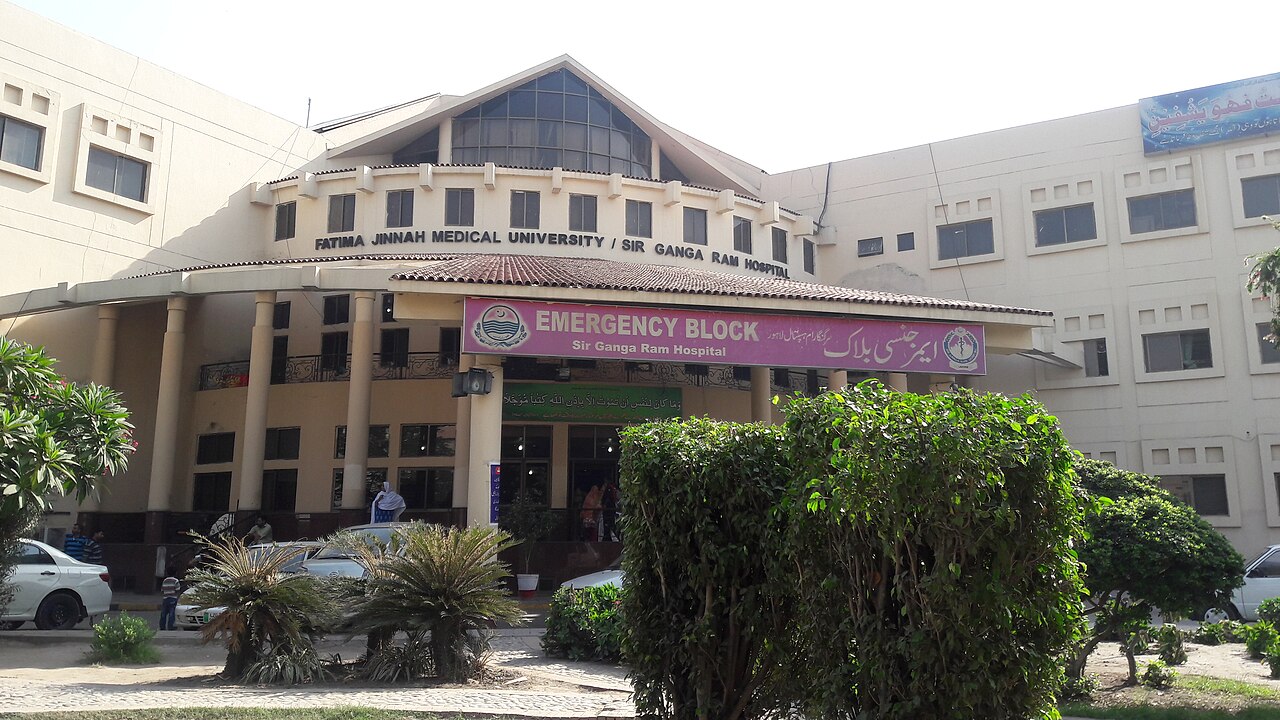
Since 30 June 2025, Punjab’s programme works only at empanelled private hospitals. Dawn reported the closure in all public sector hospitals, and PHIMC’s FAQ confirms the programme has only been discontinued in government hospitals, where treatment was already completely free and still remains free.
The official PHIMC list checked on 12 September 2026 had 153 hospitals in 34 districts, almost all private. Always check the current list on phimc.punjab.gov.pk before you travel, and call the hospital first to confirm it is still taking programme patients for your treatment.
The PHIMC helpline 0800-07542 runs 24 hours a day, 7 days a week. Other lines, Monday to Saturday from 8am to 11pm, are 0333-6756390, 042-99066000 and 042-99066001. Complaints go to [email protected].
Khyber Pakhtunkhwa: Sehat Card Plus
Khyber Pakhtunkhwa runs Sehat Card Plus, the oldest and broadest of the four programmes, with the KP government and State Life Insurance. Its official FAQ says all permanent residents of Khyber Pakhtunkhwa registered with NADRA are covered automatically. More than 10.6 million KP families are covered, according to the programme’s own website.
To check eligibility, send your 13-digit CNIC number, without dashes, by SMS to 9780. Several guides say 8500 also works for KP, and the programme’s FAQ is the source for 9780. You can also enter your CNIC and the captcha under Check Eligibility on sehatcardplus.gov.pk. The helpline is 0800-89898. New families’ NADRA data is added to the programme every 1 January and 1 July.
The limits changed on 1 July 2026, when balances renew each year. From that date, secondary care cover is Rs 40,000 for each family member and tertiary care cover is Rs 400,000 per family. A further Rs 400,000 reserve per family opens only for dialysis, cancer, heart and ICU patients, if funds allow. The programme’s home page still mentions up to Rs 1 million per family per year, which is the sum of those packages, not a separate limit.
One figure disagrees. The programme’s older FAQ, as archived in April 2025, gives secondary care as Rs 200,000 per family per year. The July 2026 renewal figures from the State Life-run site give Rs 40,000 per family member instead. The July 2026 figures are the current ones; the older FAQ figure is the one to stop quoting.
KP covers both public and private empanelled hospitals, unlike Punjab. The current Sehat Card Plus list shows 172 hospitals, all in Khyber Pakhtunkhwa, and 151 of them were marked empanelled on 25 October 2026. Only admission is covered; OPD is not.
Two small benefits are worth knowing. KP’s FAQ says Rs 1,000 is paid on discharge after a maternity case, normal or surgical, and Rs 10,000 burial allowance goes to the family if the patient dies during a covered admission. This is reported by one guide from the KP FAQ, so confirm it on 0800-89898 before relying on it.
On 16 October 2026, the KP Governor’s health adviser ordered a comprehensive financial audit of the Sehat Card programme. The announcement calls for an audit; it does not announce that the programme has been closed or that beneficiaries have lost coverage. Do not let audit headlines scare you away from a hospital visit.
Federal Areas: Islamabad, AJK and Gilgit-Baltistan
The federal programme, the Prime Minister’s Sehat Sahulat Programme, covers permanent resident families of Islamabad Capital Territory, Azad Jammu and Kashmir, and Gilgit-Baltistan. It is run by the Ministry of National Health Services, and your CNIC is your card.
The programme was suspended for about three years because the federal government had failed to clear its dues, and residents of the three areas were without cover from March 2024.
Prime Minister Shehbaz Sharif relaunched it on 16 January 2026, after the National Steering Committee approved a revised PC-I of around Rs 40 billion, extending the programme through 30 June 2027. The aim is free hospitalisation for eligible permanent resident families under a universal health coverage model, with no separate income test announced for this phase.
To check eligibility, send your 13-digit CNIC number, without dashes, by SMS to 8500, or enter it with the captcha under Check Your Eligibility on pmhealthprogram.gov.pk. The federal helpline is 0800-09009, also for complaints. About 70 hospitals were empanelled across Islamabad, AJK and GB at the relaunch, and cardholders from these regions living in Karachi can also get treatment at 16 designated hospitals in the city.
One figure we do not print: the exact 2026 per-family annual limit for the federal phase. Blog guides disagree, quoting anything from Rs 720,000 to Rs 1,000,000 per family, and the limit could not be verified on an official federal source. Confirm your entitlement on 0800-09009 before a planned admission, and do not plan around a blog figure.
Balochistan: Balochistan Health Card
Balochistan runs its own Balochistan Health Card programme. All permanent residents registered with NADRA get free in-patient care. Enrolment is automatic if your CNIC or B-Form has a Balochistan permanent address, but you may not be eligible until an unclear family status is fixed at NADRA. Widows and divorced women register as head of family with NADRA, and newly married couples update their NADRA records. A newborn is covered for 3 months after birth, then only with a NADRA B-Form.
To check eligibility, send your CNIC by SMS to 8500, or enter your 13-digit CNIC and the captcha under Check Eligibility on balochistanhealthcard.gov.pk. The helpline is 0800-01001, and complaints also go to the programme’s complaints email. The programme office is at House No 9-A, Rehman Baba Road, University Town, Quetta.
The limits, per the programme’s official Coverage page, are Rs 60,000 per family member a year for secondary care, Rs 400,000 per family a year for priority care, plus Rs 400,000 for cancer, kidney transplant, emergencies and ICU. The programme’s own FAQ gives secondary care as Rs 200,000 per family instead, so the two official pages disagree with each other. Confirm your entitlement on helpline 0800-01001 before a planned admission. OPD is not covered.
Sindh: No Province-Wide Card
Sindh is the one province with no province-wide Sehat Card. At the January 2026 relaunch, the federal health minister said Sindh was the only province where the card could not be utilised, and Dawn reported the same. The federal programme covers District Tharparkar in Sindh, and cardholders from the federal areas can use 16 designated hospitals in Karachi, but a Karachi or Hyderabad resident with a Sindh permanent address is not covered by any Sehat Card programme.
A plan exists on paper: 10 urban and rural districts of Sindh, at an estimated cost of Rs 24 billion for two years, after which the programme would become self-sustaining from the third year.
The Prime Minister said in January 2026 that he would take it up with the Sindh Chief Minister. It has not launched. If a guide or an agent tells you Sindh has a working Sehat Card, ask them which programme and which helpline, because no province-wide one exists as of November 2026.
Sehat Card by Province: At a Glance
| Province / area | Programme | Check eligibility | Yearly cover | Helpline |
|---|---|---|---|---|
| Punjab | Health Insurance Program (PHIMC) | Call 0800-07542 with CNIC; no SMS code | Rs 60,000 secondary, Rs 400,000 priority per family, up to Rs 1,000,000 special cases | 0800-07542 (24/7) |
| Khyber Pakhtunkhwa | Sehat Card Plus | SMS CNIC to 9780 (8500 also reported) | Rs 40,000 per member secondary, Rs 400,000 per family tertiary, Rs 400,000 reserve | 0800-89898 |
| Islamabad, AJK, GB | Federal Sehat Sahulat Programme | SMS CNIC to 8500, or pmhealthprogram.gov.pk | Not officially confirmed for 2026; guides quote Rs 720,000 to Rs 1,000,000 | 0800-09009 |
| Balochistan | Balochistan Health Card | SMS CNIC to 8500, or balochistanhealthcard.gov.pk | Rs 60,000 per member secondary, Rs 400,000 priority, plus Rs 400,000 reserve (FAQ says Rs 200,000 secondary) | 0800-01001 |
| Sindh | No province-wide card | Not applicable; only District Tharparkar under the federal programme | Not applicable | Not applicable |
What the Card Covers, and What It Does Not
Every programme covers hospital admissions only. You must be admitted. OPD visits, medicines bought outside an admission, and tests done without admission are not covered. In Punjab, PHIMC says medicines and lab tests are covered only when the patient is admitted.
In Punjab, the free list is cancer, ICU, CCU, NICU, medical cases, thalassemia and all emergency services. For other conditions, the programme pays 50 per cent and your family pays 50 per cent.
In KP, the packages are split into secondary care (ordinary admissions: emergencies, general medicine and surgery, orthopaedics, gynae and obstetrics, children, eye and ENT) and tertiary care (heart disease, diabetes complications, cancers, kidney disease with dialysis and transplant, neurosurgery), with the reserve for dialysis, cancer, heart and ICU patients.
What is not covered is broadly the same everywhere. OPD visits, normal delivery and C-sections, cosmetic procedures, routine dental treatment, eyeglasses, drug addiction treatment, self-inflicted injuries, and injuries from crimes are excluded in Punjab, and the same exclusions appear in the other programmes’ lists. Pre-existing conditions are covered in Punjab, which matters for families with a known illness.
The card pays for treatment at empanelled hospitals inside Pakistan only. It does not pay for treatment abroad. If you need a passport for treatment outside Pakistan, our e-passport guide explains what changed when machine-readable passports stopped.
How to Check Your Eligibility, Step by Step
1. Find your programme. It depends on the permanent address on your CNIC: Punjab, KP, the federal areas, or Balochistan. Sindh residents, except District Tharparkar, have no programme.
2. Punjab: call the helpline. Call PHIMC on 0800-07542, open 24 hours, with your CNIC ready. There is no SMS code for Punjab, and no online check on the PHIMC site. Do not send your CNIC to 8500 for a Punjab check.
3. KP: send an SMS. Send your 13-digit CNIC number, without dashes, to 9780. Several guides say 8500 also works. Or enter your CNIC and the captcha under Check Eligibility on sehatcardplus.gov.pk. Helpline: 0800-89898.
4. Federal areas: send an SMS. Send your 13-digit CNIC number, without dashes, to 8500, or enter it with the captcha under Check Your Eligibility on pmhealthprogram.gov.pk. Helpline: 0800-09009.
5. Balochistan: send an SMS. Send your CNIC to 8500, or enter your 13-digit CNIC and the captcha under Check Eligibility on balochistanhealthcard.gov.pk. Helpline: 0800-01001.
6. Read the reply. If you are eligible, keep your CNIC ready for hospital admission. The reply is about your family’s enrolment, not a balance. Unused balance cannot be taken as cash, and in KP the yearly limit refills to the full amount after a year.
7. Not eligible? Update your family data at NADRA first, then check again. The fix is almost always at NADRA, not at the hospital.
How to Use the Card at a Hospital
Take your original CNIC, plus the B-Form for any child under 18. Before you leave home, check that the hospital is on your programme’s empanelled list, and call first to confirm it is still taking programme patients for your treatment.
At the hospital, go to the Sehat Card or Health Card counter first. Every empanelled hospital has one, and its Hospital Facilitation Officer checks your eligibility with your CNIC and guides your admission. In KP and Balochistan, the counter verifies your CNIC and gives a referral letter for free treatment on admission.
Admission is covered only on the advice of the empanelled hospital’s doctor. OPD is not covered, in Punjab or in the federal programme. In Punjab, ask before you agree to admission: is this case free or 50 per cent, and how much of your family’s limit is left?
Keep every paper: the admission papers, the discharge papers, and every bill and receipt. They are your record for any follow-up or complaint. In Punjab, a baby born in an empanelled hospital is added to the family automatically. A baby born elsewhere needs a B-Form at the hospital helpdesk.
If You Are Marked Ineligible
Being marked ineligible when you are a permanent resident almost always means your NADRA record is wrong. PHIMC says to visit the nearest NADRA office to update your family data, and your eligibility is corrected once NADRA updates the record. The same fix applies in KP, Balochistan and the federal programme.
Common gaps: a spouse missing after marriage, a child missing after birth, or a death not recorded. The head of the family updates the family record at a NADRA Registration Centre.
Spouses must each have the other’s name and CNIC in their NADRA record. If the member still does not appear after the NADRA update, go to the Health Card counter at an empanelled hospital with the CNICs and the B-Form. If your CNIC needs renewal first, sort it out now, because an expired or incorrect CNIC record blocks the check.
Widows and divorced women register as head of family with NADRA. Newly married couples update their NADRA records. In KP, a newborn is covered for 1 month after birth, then only with a NADRA B-Form. In Balochistan, a newborn is covered for 3 months after birth, then only with a B-Form. In Punjab, a baby born in an empanelled hospital is added automatically.
Families who need a domicile certificate for other paperwork can read our domicile certificate guide, which covers the same Union Council paperwork that often supports a NADRA family record.
If a hospital refuses admission, first check three things in Punjab: your case needs admission, not OPD; your treatment is not on the excluded list; and your limit is not used up, which does not apply in emergencies. If the refusal is still wrong, speak to the Hospital Facilitation Officer at the hospital, then call 0800-07542 or email [email protected]. For the federal programme, complaints go to 0800-09009.
Fraud Warning: Registration Is Free
There is no registration and no fee for any Sehat Card programme. Your CNIC is enough. Nobody can add your name or activate your card for money, and nobody can increase your limit or recharge your card.
Never share an OTP or your CNIC details with a caller who says they are from the Sehat Card. Ignore messages offering to increase your limit. For Punjab, use only phimc.punjab.gov.pk and 0800-07542. Report fraud on the Pakistan Citizen’s Portal.
FAQs: Sehat Card Eligibility in Pakistan
Do I get a physical Sehat Card?
No separate card is needed. In Punjab, KP, Balochistan and the federal programme your CNIC is the card. For children under 18, the NADRA B-Form (CRC) is used instead.
How do I check Sehat Card eligibility by SMS?
It depends on your province. KP residents send their 13-digit CNIC, without dashes, to 9780. Residents of the federal areas (Islamabad, AJK, GB) and Balochistan send it to 8500. Punjab has no SMS code: call the PHIMC helpline 0800-07542 with your CNIC instead. Sindh has no province-wide card, except District Tharparkar under the federal programme.
Is OPD covered by the Sehat Card?
No. Punjab, KP, Balochistan and the federal programme all cover only in-patient admissions. Unused balance cannot be taken as cash. In KP, the yearly limit refills to the full amount after a year.
How much cover does a Punjab family get?
PHIMC lists Rs 60,000 per family per year for secondary care and Rs 400,000 for priority care, extendable to Rs 1,000,000 in special cases. Cancer, ICU, CCU, NICU, medical cases, thalassemia and emergencies are free; for other conditions the programme pays 50 per cent and your family pays 50 per cent.
Is the Punjab Sehat Card closed?
No. PHIMC says it was discontinued only in government hospitals, where treatment is already free. It continues at empanelled private hospitals. The closure in public hospitals took effect on 30 June 2025.
Does the Sehat Card work in Sindh?
There is no province-wide Sehat Card in Sindh. Only District Tharparkar is covered, under the federal programme. A 10-district plan costing about Rs 24 billion was proposed in January 2026, but it has not launched.
What should I do if I am marked ineligible?
Update your family data at a NADRA office. The head of the family updates the record at a NADRA Registration Centre, and eligibility is corrected once NADRA updates it. If the member still does not appear, go to the Health Card counter at an empanelled hospital with the CNICs and the B-Form. NADRA’s helpline is 1777.
Is there a fee to register for the Sehat Card?
No. There is no registration and no fee in any programme. Anyone asking for money to add your name, activate your card or increase your limit is running a fraud. Never share an OTP with a caller claiming to be from the Sehat Card.
Updated 13 November 2026. Programme rules, limits and helplines are from the PHIMC FAQ, the KP Sehat Card Plus FAQ, the federal Sehat Sahulat Programme, the Balochistan Health Card programme, and Dawn’s reporting on the January 2026 federal relaunch. Figures that sources disagree on are flagged in the article. Confirm your entitlement on the helpline for your province before a planned admission, because the rules have changed before.