Section 144 Imposed Across Sindh: Rallies, Protests Banned Province-Wide Till October 20
The Sindh government has imposed a complete ban on rallies, protests, sit-ins, and any gathering of five or more persons anywhere in the province until October 20, 2026. The restriction, announced on the night of Sunday, October 11, was imposed under Section 144 of the Criminal Procedure Code and applies across all of Sindh, from…
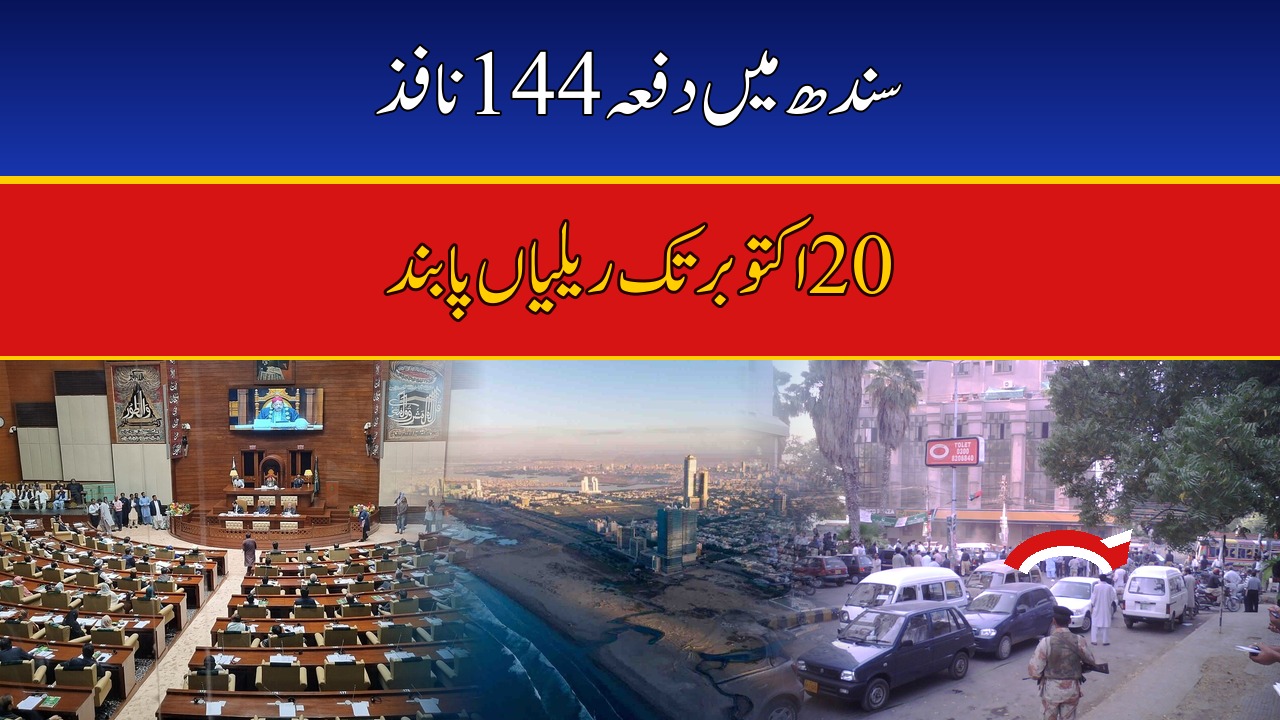
The Sindh government has imposed a complete ban on rallies, protests, sit-ins, and any gathering of five or more persons anywhere in the province until October 20, 2026. The restriction, announced on the night of Sunday, October 11, was imposed under Section 144 of the Criminal Procedure Code and applies across all of Sindh, from Karachi to Kashmore. The move comes a day after the federal government imposed an emergency and governor’s rule in Khyber Pakhtunkhwa.
What the Ban Says
According to the notification issued by the Sindh Home Department, holding rallies, demonstrations, protest sit-ins, or any gathering of five or more persons is prohibited in every district of the province until October 20. The order was issued late on Sunday night and took effect immediately, as reported by Dawn.
The order also makes it unlawful to assemble five or more people in one place — the standard threshold for public-order restrictions of this type. Organisers of any planned public event during this period should check with the district administration for the exact exemptions listed in the notification.
Section 144 Explained
Section 144 of the Criminal Procedure Code (CrPC) is one of the oldest and most frequently used tools available to district administrations in Pakistan for maintaining public order. It empowers a district magistrate or deputy commissioner to issue written orders in situations where immediate action is considered necessary to prevent nuisance, obstruction, or danger to human life and public safety.
Under Section 144, the administration can prohibit the assembly of five or more persons in a specified area, ban the carrying of weapons, or stop activities deemed likely to disturb public tranquillity. The orders are temporary by nature and must specify a time limit — they cannot remain in force indefinitely.
What makes Section 144 significant is that it takes effect the moment it is issued, with no court hearing required. Affected parties can challenge it before the relevant courts, but the ban remains legally binding until withdrawn or expired. Violation is punishable under Section 188 of the Pakistan Penal Code with imprisonment of up to six months, a fine, or both.
The provision has a long history of use in Pakistan — imposed in Rawalpindi and Islamabad around major protest calls, in Karachi during Muharram processions, and in various cities during periods of heightened political tension.
Scope and Duration
The key details of the Sindh notification:
- Area covered: The whole of Sindh province — every division and district.
- Prohibited: Rallies, processions, protests, sit-ins, and any gathering of five or more persons.
- Imposed on: The night of Sunday, October 11, 2026.
- Valid until: October 20, 2026.
- Legal basis: Section 144 of the Criminal Procedure Code.
- Issuing authority: The Sindh government, through the Home Department.
This is a time-bound administrative order, not a permanent law. Unless extended by a fresh notification, it automatically lapses after October 20. Extensions of Section 144 orders are common when the underlying situation has not changed, but each extension requires a new formal notification.
The KP Context — What Is Confirmed
The Sindh notification arrives one day after major developments in Khyber Pakhtunkhwa, where the President approved the federal cabinet’s decision to impose an emergency and governor’s rule in the province on October 11, 2026. The KP move has drawn strong reactions, including a ‘black day’ announced by lawyers in Karachi and rejection of the move by the now-suspended KP Chief Minister.
No official statement has linked the Sindh ban directly to the KP situation, and the Sindh notification does not cite a specific reason beyond the standard public-order grounds under which Section 144 is normally invoked. What is confirmed from published reporting is the sequence: the KP emergency and governor’s rule came first on October 11, and the Sindh-wide ban on gatherings followed on Sunday night.
Readers should be cautious about unverified claims circulating on social media about the ban’s purpose. As of this writing, no additional official explanation has been published beyond the notification itself.
What It Means for Citizens and Businesses
For most residents of Sindh, daily life will continue normally. Section 144 bans gatherings — it is not a lockdown, a curfew, or a shutdown of markets, schools, offices, or public transport. What it means in practice:
- Markets and shops: Business activity, bazaars, and shopping centres remain open.
- Schools and universities: Educational institutions operate as usual.
- Offices and transport: Government offices, banks, and transport services function normally.
- Planned events: Weddings and religious congregations are generally exempt, but organisers of large outdoor gatherings should confirm with the district administration.
- Political activity: Rallies, jalsas, corner meetings, and protest demonstrations are prohibited for the duration of the order.
Frequently Asked Questions
What exactly is banned under this order?
Rallies, protests, processions, sit-ins, and any gathering of five or more persons anywhere in Sindh — until October 20, 2026.
How long will Section 144 remain in force in Sindh?
Nine days. Imposed on the night of October 11, 2026, expiring October 20 — unless extended by a fresh notification.
Does the ban affect schools, markets, and daily business?
No. Only public gatherings are restricted. Schools, markets, offices, banks, and transport operate normally — it is not a curfew or lockdown.
What is Section 144 of the Criminal Procedure Code?
A provision letting a district magistrate issue immediate, time-bound orders against threats to public order — most often banning gatherings of five or more persons. Violation is punishable under Section 188 PPC with up to six months in prison, a fine, or both.
Can I still attend a wedding or religious gathering?
Weddings, funerals, and religious congregations are generally outside the scope of such orders. For large outdoor events, confirm with the district administration to be certain.
TimelyUps will update this story if the Sindh government issues a fresh notification or extends the ban beyond October 20.