IBCC Online Certificate Attestation from 1 January 2027
The Inter Boards Coordination Commission (IBCC) will launch a fully online certificate attestation service on 1 January 2027, so students will no longer need to visit an IBCC office or send their documents by courier. Qualifications from 29 examination boards across Pakistan, along with eligible qualifications from madaris, will be covered, and once a document…
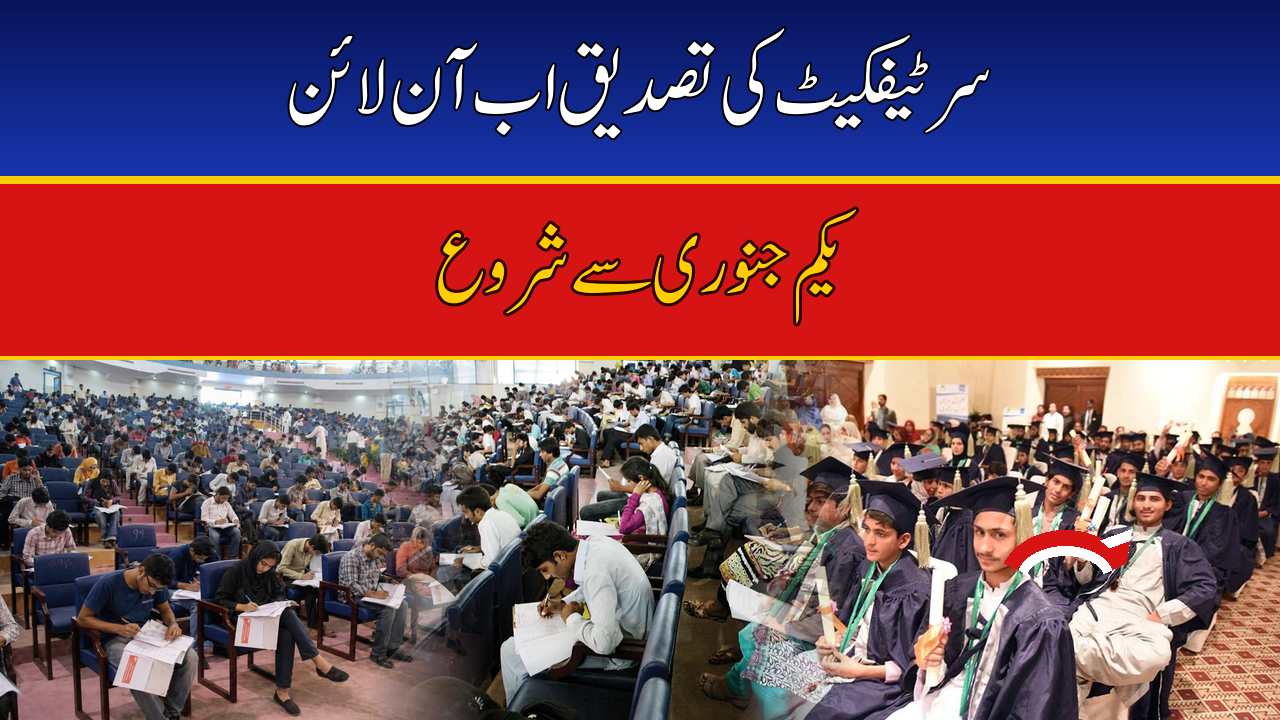
The Inter Boards Coordination Commission (IBCC) will launch a fully online certificate attestation service on 1 January 2027, so students will no longer need to visit an IBCC office or send their documents by courier. Qualifications from 29 examination boards across Pakistan, along with eligible qualifications from madaris, will be covered, and once a document is approved, the attested copy will be available in the applicant’s portal account to download and print. The announcement was made in an IBCC press release carried by Dawn, TechJuice, ProPakistani, Daily Pakistan, 24NewsHD and UrduPoint on 22 and 23 November 2026.
Until now, attestation has meant board verification first, then an online application, then an appointment at an IBCC office, a courier parcel, or an express visit, with original documents travelling back and forth. From 1 January 2027, IBCC says, the whole process will happen on the portal — a change that matters most for students outside the big cities, and for Pakistanis abroad.
Key facts
| Item | Detail |
|---|---|
| Launch date | 1 January 2027 — fully online attestation service goes live |
| Who is covered | Qualifications from 29 examination boards across Pakistan, plus eligible qualifications from madaris |
| How it works | Apply on the IBCC portal; the approved document appears in the applicant’s account to download and print |
| Office visit | No office visit and no courier needed, in either direction |
| Extra copies | No separate attestation fee for additional copies of the same certificate |
| Beneficiaries | An estimated 400,000 to 500,000 students (IBCC estimate) |
| Decided by | IBCC Board of Directors, chaired by Executive Director Dr Ghulam Ali Mallah |
| System ready by | End of December 2026 (IT team has started work) |
What IBCC announced
IBCC said the decision was taken at a meeting of its Board of Directors, chaired by Executive Director Dr Ghulam Ali Mallah. The system is being developed on the directions of Federal Secretary for Education and Professional Training Nadeem Mahbub, and the IBCC Board of Governors had earlier taken up the automation of the entire attestation process.
Dr Mallah told Dawn that the IT team has started work and will complete the task by the end of December. Once the service is launched, he said, IBCC will be fully automated. The commission estimates the change will benefit between 400,000 and 500,000 students, though no breakdown of that estimate has been published.
IBCC is the umbrella body for examination boards in Pakistan. It verifies matric and intermediate certificates and issues equivalence certificates for foreign qualifications, including O and A levels.
One note: every news report of this announcement carries near-identical wording, because all of them are based on the same IBCC press release, distributed through the Associated Press of Pakistan. The facts here are therefore attributed to IBCC, rather than presented as independently confirmed by several separate investigations.
How the online attestation will work
According to IBCC, students will submit their documents through the IBCC portal. After the application is processed and approved, the electronically attested document will be available in the applicant’s account for downloading and printing, with no office visit and no courier needed.
That is the full process as IBCC has described it so far. The announcement did not publish a step-by-step guide, a list of documents to upload, a processing time, or the exact portal screens. The existing IBCC attestation portal is attest.ibcc.edu.pk, but IBCC has not said whether the new service will run on that portal or a new one. Students should wait for IBCC’s own instructions before assuming any particular step.
| Step | What IBCC has confirmed | Status |
|---|---|---|
| Apply | Submit documents through the IBCC portal | Confirmed in the announcement |
| Processing | IBCC processes and approves the application online | Confirmed; processing time not stated |
| Receive | The attested document appears in the applicant’s account | Confirmed in the announcement |
| Use | Download and print the attested copy as needed | Confirmed in the announcement |
| Board verification | Whether the issuing board must still verify first | Not yet stated — see below |
One open question is board verification. Under the current process, an applicant must first get the document verified by the issuing board, and IBCC has not said whether that step will still be needed under the fully online system. Until IBCC clarifies this, keep your board verification ready.
No extra fee for extra copies
The most practical detail in the announcement is about copies. IBCC said students will be able to print multiple copies of an attested certificate without paying a separate attestation fee for each copy, so one approved attestation should cover every printout of the same certificate.
This matters because students commonly need the same attested certificate in several places at once: a university, a scholarship application, a visa file, and one spare. Under the current system, each original document is attested and charged separately. From 1 January 2027, IBCC says, that will no longer be the case for copies of the same certificate.
IBCC vs MOFA vs HEC — which attestation you actually need
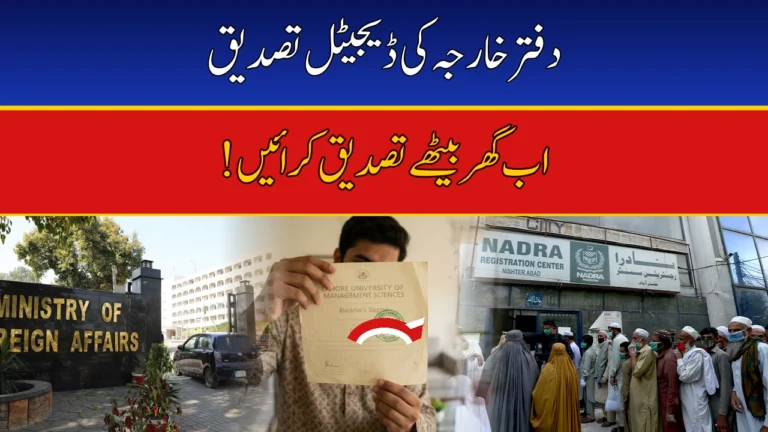
This is the point most students get wrong. IBCC attests school-level educational certificates: matric, intermediate, diplomas, mark sheets and school-leaving certificates. It is a different authority from the Ministry of Foreign Affairs (MOFA), which attests consular documents, and from the Higher Education Commission (HEC), which attests university degrees.
The three are steps in a chain, not alternatives. For a school certificate used abroad, the usual order is board verification, then IBCC attestation, then MOFA attestation where the foreign authority requires it. IBCC said the downloaded copies can be used for universities and, where required abroad, for the Ministry of Foreign Affairs, subject to its requirements. The new system replaces only the IBCC leg; it does not remove the MOFA step, and it does not cover university degrees.
Students heading abroad should read our separate guide on MOFA digital attestation and the online e-certificates portal, which covers the Foreign Affairs side of the process. That is a different service, for different documents, run by a different ministry. An IBCC-attested matric certificate still needs MOFA attestation before a foreign embassy will accept it, and a MOFA-attested document is no substitute for IBCC attestation of the underlying certificate.
University degrees follow a third route. IBCC does not attest bachelor’s, master’s or higher degrees; those go to HEC. If you hold a degree from a Pakistani university, IBCC is not the authority you need, before or after 1 January 2027.
Fees: what it costs now, and what is not confirmed for 2027
Under the current system, the standard fee on IBCC’s official attestation FAQ page is Rs 1,200 per original certificate or detailed marks certificate. That is the existing fee for applications made now. It is not the fee for the new online service, which IBCC has not announced.
| Fee item | Amount and status |
|---|---|
| Current standard fee | Rs 1,200 per original certificate or detailed marks certificate, per IBCC’s official FAQ page |
| Extra copies of the same certificate | No separate attestation fee from 1 January 2027, according to IBCC |
| Online service fee for 2027 | Not announced yet — do not rely on the current fee as the 2027 figure |
| Courier and travel cost | Removed under the online system |
The fee is only one part of the current cost. Travel to an IBCC office, courier charges, and days lost waiting have often cost more than the attestation fee itself, especially for students in smaller cities. The online system removes those costs entirely, which is where most of the saving will come from, whatever the 2027 fee turns out to be.
What to do until 31 December 2026
The new service starts on 1 January 2027. Until then, the current process still applies, and students who need an attested certificate in December should not wait. The current process, as described on IBCC’s official attestation FAQ page, is: get the document verified by the issuing board first; apply online; choose appointment, courier or express; pay the fee through a mobile banking app or a bank challan; then submit the original certificate with one copy for the office record, the printed application form, the paid challan or fee receipt, photocopies of the student’s and father’s CNIC, and the board-verification printout. Lamination must be removed before submission.
| Current mode | How long it takes | Notes |
|---|---|---|
| Appointment | Same day | Visit an IBCC office in person |
| Courier | Within 10 working days | Islamabad Secretariat and Karachi Regional Office |
| Express | Within one hour of submission | In-person submission |
IBCC has offices in Islamabad, Lahore, Karachi, Peshawar, Bahawalpur and Quetta. If your deadline falls in December, apply now under the current system rather than waiting for 1 January — an admission or visa deadline will not wait for the new portal.
Who is covered — and who is not
The announcement covers qualifications from 29 examination boards across Pakistan, plus eligible qualifications from madaris. IBCC has not published the list of the 29 boards, and the word “eligible” for madaris qualifications has not been defined. Students with a madrasa qualification should check with IBCC whether their particular qualification is covered, rather than assuming it is.
Under the current system, IBCC attests SSC and matric certificates, HSSC and intermediate certificates, diplomas, mark sheets, transcripts and result cards for grades 9 and 11, school-leaving certificates for classes 1 to 8, and foreign qualifications equivalent to SSC or HSSC. Those categories are the natural scope of the new service, but IBCC has not confirmed the full list for it yet.
Just as important is what IBCC does not attest: bachelor’s, master’s or higher degrees (those are HEC’s job), migration, character or provisional certificates, and documents issued by private educational institutions. None of that changes on 1 January 2027.
QR codes and how attested documents are verified
IBCC said attested copies under the new system will carry QR codes, so a university, employer or embassy can check that a certificate is genuine. QR codes are not entirely new: IBCC’s own FAQ page already states that current attestations carry a lifetime QR code, valid for life unless the issuing authority cancels the document. What changes in January is that the code will sit on a document the student downloads and prints at home, rather than on a paper copy stamped at an IBCC office.
For students, the practical point is simple. A printed copy with a valid QR code should be verifiable by whoever receives it, but that depends on the receiving institution accepting a printout, and on MOFA’s requirements where the document goes abroad. If an embassy or university insists on an original stamped copy, ask them directly whether a downloaded printout is acceptable, before relying on it for a deadline.
Timeline: from decision to launch
| When | What happened |
|---|---|
| Earlier | IBCC Board of Governors takes up automation of attestation |
| November 2026 | IBCC Board of Directors, chaired by Dr Ghulam Ali Mallah, decides to launch the online service |
| 22–23 November 2026 | IBCC announcement carried by Dawn, TechJuice, ProPakistani, Daily Pakistan, 24NewsHD and UrduPoint |
| End of December 2026 | IBCC IT team to complete work on the online system |
| 1 January 2027 | Online attestation goes live for 29 boards and eligible madaris qualifications |
What this means for Pakistani students
For most students, the change removes the hardest part of attestation: the travel. A student in a small city has previously had to travel to a regional office or trust original certificates to a courier, and a student abroad has had to ask family back home to carry the process. From January, IBCC says, nothing physical is submitted at all.
The change also matters for timing. Admissions, scholarships and visa applications often need an attested certificate at short notice, and the current courier route takes up to 10 working days. An online system removes that wait, provided the processing time is short — a detail IBCC has not yet published.
Students can prepare now. Keep your original matric and inter certificates safe and unlaminated, keep your board verification in order, and keep a copy of your CNIC ready. When IBCC publishes the portal instructions in December, check this page again: we will update it with the exact steps, the fee, and the processing time as soon as IBCC confirms them. For the related step after IBCC, see our MOFA digital attestation guide. Students checking board results can use our BISE result checker, and those planning ahead can read the pairing scheme 2027 for Punjab boards.
Checked on 23 November 2026.
Frequently asked questions
When will IBCC online attestation start?
IBCC will launch its fully online certificate attestation service on 1 January 2027, covering qualifications from 29 examination boards and eligible qualifications from madaris. The IT work is due to finish by the end of December 2026, according to IBCC.
Do I still need to visit an IBCC office after 1 January 2027?
No, according to IBCC. From 1 January 2027, students will apply through the IBCC portal and the attested document will be available in their account to download and print, with no office visit and no courier needed. Until 31 December 2026, the current process still applies.
Will I have to pay for every extra copy of my attested certificate?
No. IBCC said there will be no separate attestation fee for additional copies of the same certificate. The fee for the online service itself has not been announced yet.
Is IBCC attestation the same as MOFA attestation?
No. IBCC attests school-level certificates such as matric and inter, while the Ministry of Foreign Affairs attests consular documents. For use abroad, a school certificate usually needs IBCC attestation first, then MOFA attestation. University degrees are attested by HEC.
What is the current IBCC attestation fee?
The standard fee on IBCC’s official FAQ page is Rs 1,200 per original certificate or detailed marks certificate, under the current process. The fee for the new online service has not been announced yet.
Does IBCC attest university degrees?
No. University degrees are attested by HEC, not IBCC. IBCC also does not attest documents from private educational institutions, or migration, character and provisional certificates.
Will my board need to verify my certificate first?
Under the current process, yes. IBCC has not yet said whether board verification will still be required under the fully online system, so keep your board verification ready until IBCC clarifies this.
What is not yet known: the exact portal steps, the fee for the online service, the processing time, whether board pre-verification will still be required, the full list of the 29 boards, and what “eligible” means for madaris qualifications. We will update this article as soon as IBCC publishes those details, and re-check the portal when the service goes live on 1 January 2027.