South Florida Floods: Record Rain Swamps Fort Lauderdale as State of Emergency Declared
By Daniyal Sheikh | Published: November 19, 2026 | Updated: November 19, 2026 | Weather Record-breaking rain has flooded South Florida, swamping streets across Fort Lauderdale and Hollywood, forcing Broward County, Hollywood and Fort Lauderdale to declare states of emergency, and closing every public school in Broward County for a second straight day on Thursday,…
By Daniyal Sheikh | Published: November 19, 2026 | Updated: November 19, 2026 | Weather
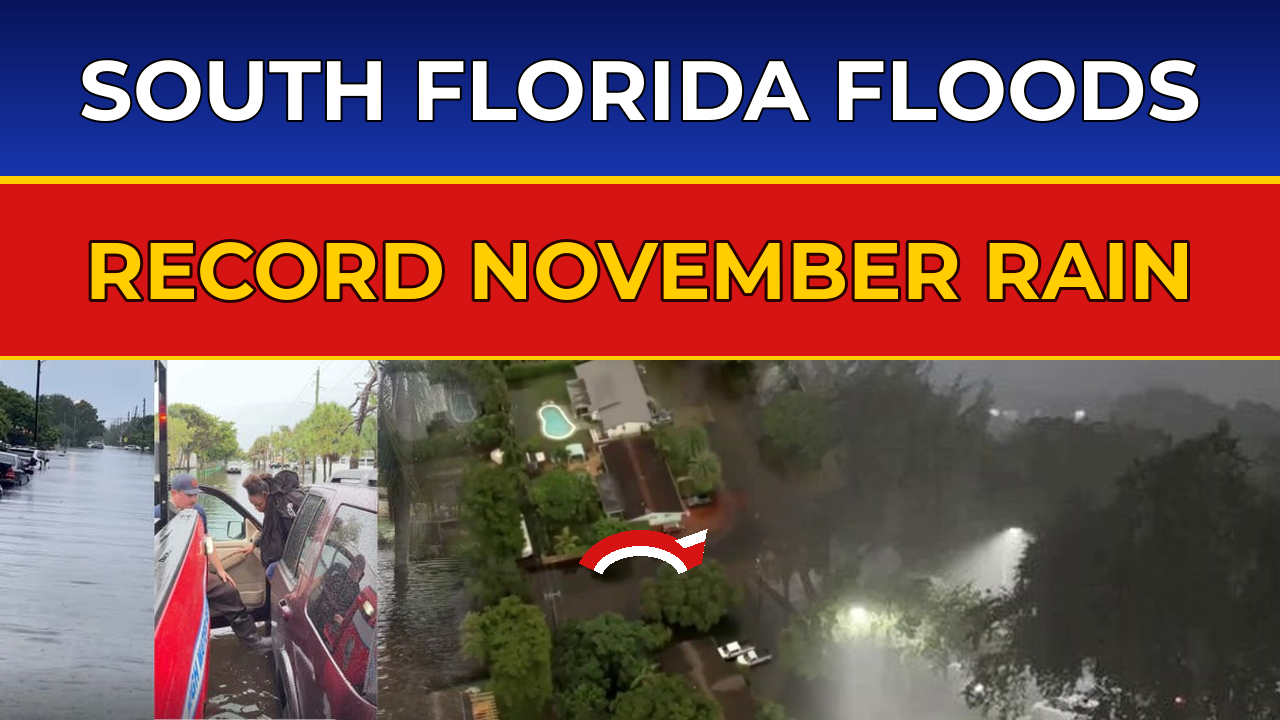
Record-breaking rain has flooded South Florida, swamping streets across Fort Lauderdale and Hollywood, forcing Broward County, Hollywood and Fort Lauderdale to declare states of emergency, and closing every public school in Broward County for a second straight day on Thursday, November 19. Fort Lauderdale has now recorded 15.18 inches of rain this month, according to the FOX Forecast Center, making it the city’s wettest November on record, and a Flood Watch remains in effect for all of Southeast Florida through Thursday evening.
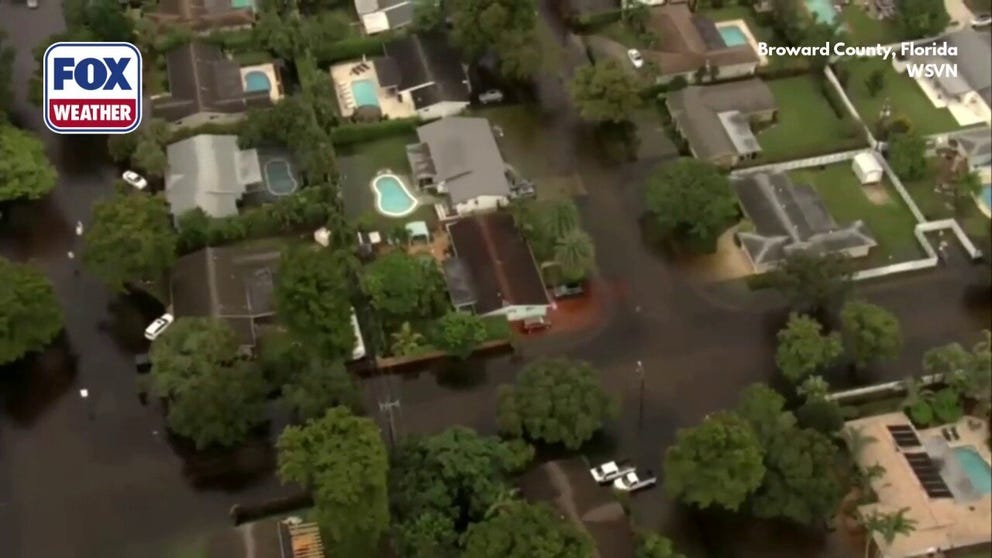
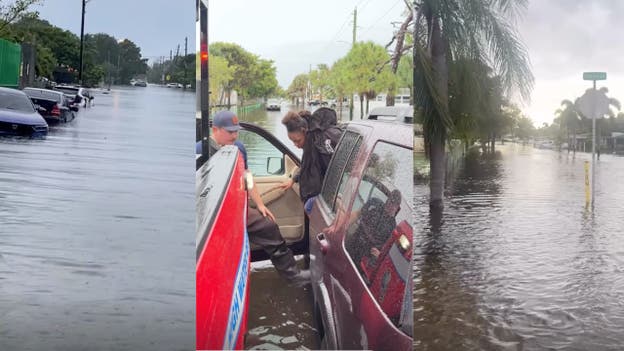
The rain started on Tuesday, November 17, and barely stopped. In about 12 hours overnight, parts of Broward County received between 8 and 15 inches of rain, according to the National Weather Service in Miami. Cars were submerged on flooded roads, drivers had to be rescued by high-water vehicles, and a synagogue roof collapsed in Hollywood. More rain is still coming, with forecasters warning of another 2 to 4 inches, and possibly much more, before the week is over.
How Much Rain Fell in South Florida?
The numbers are staggering. Hollywood recorded more than 14 inches of rain since Tuesday, and preliminary National Weather Service figures put the 24-hour total at 15.3 inches in the hardest-hit parts of Broward County. Fort Lauderdale received 5.72 inches in a single downpour ending early Wednesday, smashing the old daily record of 1.8 inches set in 1959.
Here are the preliminary 24-hour rainfall totals released by the National Weather Service in Miami on Wednesday morning:
| Location | Rain in 24 Hours |
|---|---|
| Plantation (2 miles south) | 12.16 inches |
| Hollywood (3 miles north-west) | 10.38 inches |
| Lauderhill (2 miles south) | 10.35 inches |
| Dania Beach (2 miles north-west) | 8.89 inches |
| Fort Lauderdale (1 mile south-west) | 7.42 inches |
These are preliminary figures and may be revised as more reports come in. Radar estimates from the National Weather Service put the heaviest band of rain, covering Davie, Hollywood, Fort Lauderdale, Dania Beach and Plantation, at 8 to 15 inches in about 12 hours. At one weather station in Davie, more than 5 inches fell in a single hour on Tuesday night.
Fort Lauderdale’s monthly total now stands at 15.18 inches, according to the FOX Forecast Center, passing the previous November record of 14.60 inches set in 1994, in station records going back to 1912. That is more than four times the city’s average November rainfall of 3.69 inches, with nearly two weeks of the month still to go.
State of Emergency Declared in Broward County, Hollywood and Fort Lauderdale
Broward County Administrator Monica Cepero signed a local state of emergency on Wednesday morning after torrential overnight rain left large parts of the county under water. County government offices, libraries, parks and government centres closed for the day, and non-essential county employees were told to stay home. The City of Fort Lauderdale declared its own state of emergency on Wednesday because of localised flooding, and the city of Hollywood declared one just before midnight on Tuesday.
Hollywood Mayor Josh Levy called the deluge “a historically significant rainfall event in the city” and urged drivers to stay off the roads. The city received more than 300 calls for service overnight. Fort Lauderdale crews helped rescue 12 people from flooded cars overnight, according to the Miami Herald, mostly in the Hollywood area.
The flooding also damaged buildings. The roof of Temple Sinai, a synagogue in Hollywood that has stood since the 1960s and survived several hurricanes, collapsed on Wednesday morning after hours of torrential rain. No one was inside the sanctuary at the time and no injuries were reported, but city officials declared the building unsafe.
Schools Closed Across South Florida
All Broward County Public Schools and district offices will remain closed on Thursday, November 19, extending Wednesday’s closures. Before- and after-school care, school activities and all school-related events are cancelled too. District officials said they will keep monitoring the weather and roads before deciding on Friday, November 20.
Miami-Dade County Public Schools will also be closed on Thursday. The district said it will decide on Thursday whether schools reopen on Friday. Several colleges closed as well, including Florida Atlantic University’s Davie campus and Keiser University campuses in Fort Lauderdale, Pembroke Pines and Port St. Lucie.
Palm Beach County schools, by contrast, will be open on Thursday, though the district said it is watching conditions closely.
| Area | School Status — Thursday, Nov 19 |
|---|---|
| Broward County Public Schools | Closed (second day) |
| Miami-Dade County Public Schools | Closed |
| Palm Beach County schools | Open, conditions monitored |
| FAU Davie campus, Keiser University | Campuses closed |
Miami-Dade Hit by 5 Inches of Rain in One Hour
The rain moved south during Wednesday afternoon, hammering Miami-Dade County. Radar estimated 3 to 5 inches of rain in a single hour, and 5 to 8 inches over six hours, according to the FOX Forecast Center. A flash flood warning was issued for central Miami-Dade County, including Homestead, Cutler Bay and Palmetto Bay.
Miami-Dade Fire Rescue sent a strike team with high-axle water rescue vehicles to help Hollywood firefighters reach neighbourhoods cut off by floodwater. The military-style trucks can drive through standing water that normal emergency vehicles cannot cross.
Roads, Airports and Power Hit by the Storm
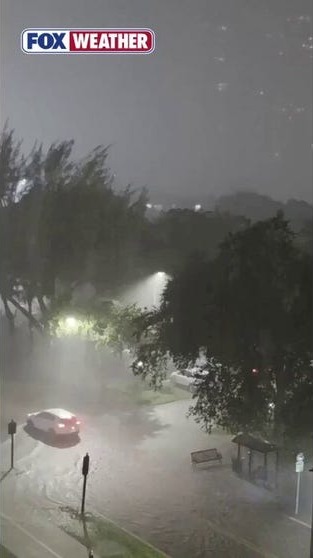
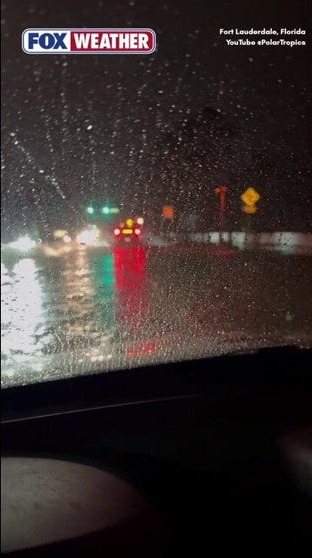
Widespread road closures remain in place because of standing water. Interstate 95 was closed near Fort Lauderdale-Hollywood International Airport early on Wednesday morning, and parts of the Florida Turnpike in Hollywood were shut because of high water and stalled vehicles. The airport had a brief federal ground stop on Wednesday morning, but it has since reopened, and Port Everglades stayed open. More than 300 flights were delayed into and out of Fort Lauderdale and Miami international airports, according to Fox Weather.
Gusty winds are adding to the trouble. A wind advisory covers coastal and metropolitan parts of Miami-Dade, Broward and Palm Beach counties until 1am on Thursday, with sustained winds of 25 to 30 mph and gusts up to 45 mph reported in places. Strong winds could bring down tree limbs and cause isolated power outages. According to PowerOutage.us, more than 8,500 customers were without power across Florida as of 5pm on Wednesday. Residents are being told to treat every downed power line as live and dangerous.
Why Is It Raining So Much? El Niño Explained
The root cause is a stalled weather pattern supercharged by El Niño. The natural warming cycle has disrupted Florida’s usual dry season, which normally runs from October to May. “El Niño is helping bring these low pressure systems down toward the southeastern United States, which in turn is causing these heavy precipitation events,” said Alejandra Garcia, a meteorologist with the National Weather Service in Miami.
A cut-off low near the Florida Panhandle is feeding moisture into the region, and easterly winds are funnelling that moisture over the coast again and again. With so much water vapour in the air, rainfall rates of 1 to 2 inches per hour have been observed at several places, the National Weather Service said. The same kind of stalled pattern produced historic flooding in Brevard County, further north on Florida’s east coast, earlier this month, when nearly two feet of rain fell in places.
The St. Johns River in northern Florida remains at major flood stage, according to the FOX Forecast Center, after that earlier deluge, because the river flows south to north and drains very slowly.
More Rain Coming: What Happens Next
The danger is not over. The National Weather Service has a Flood Watch in effect for Palm Beach, Broward and Miami-Dade counties through Thursday evening. Forecasters expect most areas to get another 2 to 4 inches of rain, with 6 to 8 inches in some places and isolated totals above 10 inches possible. The FOX Forecast Center has raised its forecast further, warning that the highest additional totals could approach 2 feet through Saturday in the hardest-hit areas.
NOAA’s Weather Prediction Center has placed parts of Florida’s Atlantic coast under a Level 3 out of 4 flash flood risk through Friday. The same system could then move off the coast and strengthen into some kind of coastal storm by Saturday. The National Hurricane Center is also watching a low-pressure system expected to form near the northern Bahamas, giving it a 40 percent chance of becoming a subtropical or tropical storm within seven days. Strong winds, dangerous surf and coastal flooding are likely along parts of the south-east and mid-Atlantic coasts into early next week regardless of whether it develops. South Asia has seen its own share of extreme weather this season, including Cyclone Akvan in the Bay of Bengal.
There is some relief in sight. Drier air is expected to arrive over the weekend as a cold front sweeps across the central United States, pushing the low out to sea. Rain chances should fall to 10 to 20 percent a day through the weekend and early next week, according to the National Weather Service. Until then, officials are urging South Florida residents to stay home, stay off flooded roads, and keep checking official updates.
Staying Safe During the Flooding
Broward County officials have urged residents to remain home and stay off the roads while floodwater covers streets and highways. The National Weather Service’s advice is simple and direct: never drive, walk or wade through flooded roadways. Just a few inches of fast-moving water can sweep a person away, and most flood deaths happen in cars.
If you see a downed power line, stay away from it and from anything touching it, and report it to Florida Power and Light at 1-800-4-OUTAGE. Keep phones charged, avoid unnecessary travel, and do not drive around barricades or through standing water, even if the road looks passable.
Frequently Asked Questions
How much rain fell in Fort Lauderdale?
Fort Lauderdale received 5.72 inches of rain in a single downpour ending early Wednesday, November 18, breaking the daily record of 1.8 inches set in 1959. The city’s total for November has now reached 15.18 inches, according to the FOX Forecast Center, making it the wettest November on record there.
Is Fort Lauderdale under a state of emergency?
Yes. The City of Fort Lauderdale declared a local state of emergency on Wednesday, November 18, because of localised flooding. Broward County and the city of Hollywood have also declared states of emergency.
Are Broward County schools closed on Thursday?
Yes. All Broward County Public Schools and district offices will remain closed on Thursday, November 19, extending Wednesday’s closures. Miami-Dade County Public Schools are also closed on Thursday. Palm Beach County schools will be open.
How much more rain is expected in South Florida?
Another 2 to 4 inches is expected in most areas through Thursday, with 6 to 8 inches in some places and isolated totals above 10 inches possible, according to the National Weather Service. The FOX Forecast Center warns additional totals could approach 2 feet in the hardest-hit areas through Saturday.
Why is Florida flooding in November?
Florida’s dry season normally runs from October to May, but El Niño has disrupted it this year, steering low-pressure systems toward the south-eastern United States. A stalled, cut-off low is funnelling deep moisture over Florida’s Atlantic coast, producing repeated rounds of torrential rain.
Is it safe to travel to South Florida right now?
Officials are urging people to stay home and avoid unnecessary travel. Roads are flooded, Interstate 95 was closed near Fort Lauderdale airport, and hundreds of flights have been delayed. Check your airline and local authorities before travelling, and never drive through flooded roads.