Punjab Smog to Worsen in Next 3 Days, Suparco Warns
Pakistan’s space agency has warned that smog across Punjab will get worse over the next three days, with seven districts facing high or severe smog and Lahore already the world’s most polluted major city. The Pakistan Space and Upper Atmosphere Research Commission (Suparco) detected 690 active fire incidents across Punjab and adjoining areas in a…
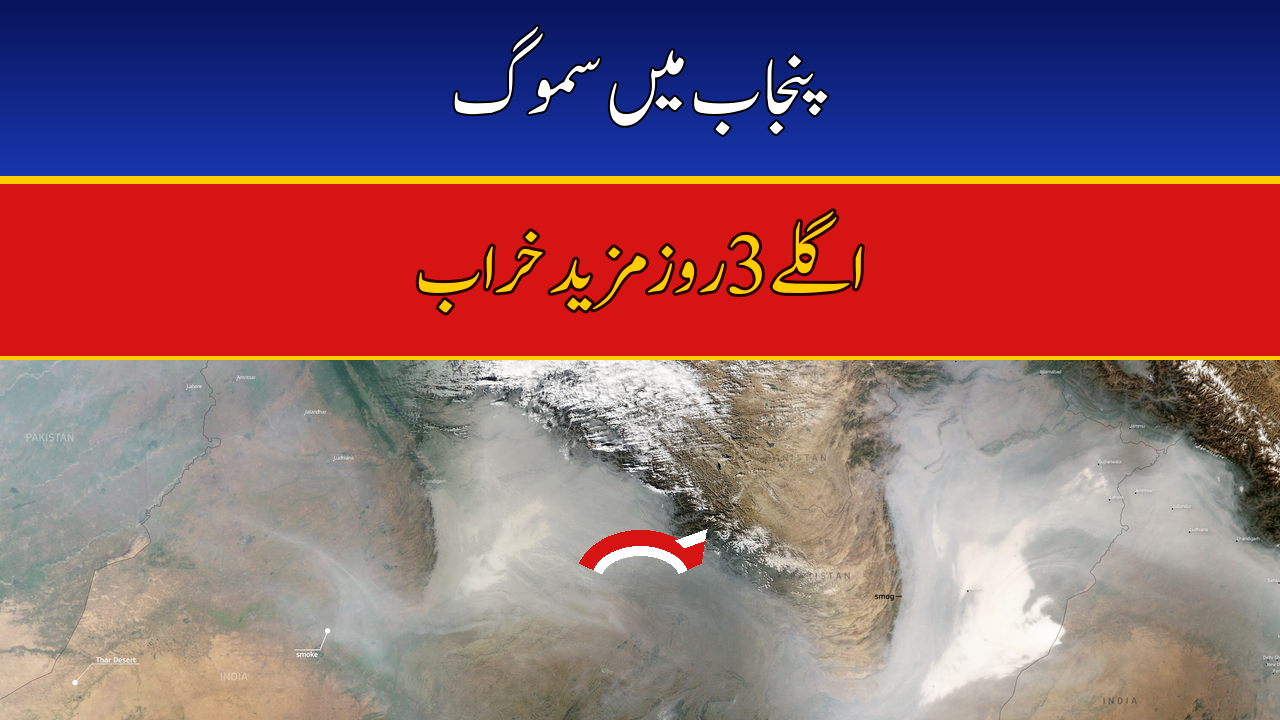
Pakistan’s space agency has warned that smog across Punjab will get worse over the next three days, with seven districts facing high or severe smog and Lahore already the world’s most polluted major city. The Pakistan Space and Upper Atmosphere Research Commission (Suparco) detected 690 active fire incidents across Punjab and adjoining areas in a single day. Faisalabad recorded the worst air in the country, with an air quality index (AQI) of 686 — deep into the hazardous range. Checked on 19 November 2026.
Update, 21 November 2026: The National Disaster Management Authority’s National Emergency Operations Center warned on Thursday, 19 November, that smog would intensify over the next two days across 17 Punjab districts, including Lahore, Kasur, Gujranwala, Hafizabad, Nankana Sahib, Sargodha, Sheikhupura, Sialkot, Narowal, Okara and Faisalabad, with smog also expected in Jhang, Khanewal, Multan, Khanpur, Kot Addu and Bahawalpur. On Friday, Lahore recorded an hourly air quality index reading of 465 between 7am and 8am, while Gujranwala registered 661 and Multan 641, according to Dawn. The Met Department expects no rain in Lahore over the next few days, so the smog is likely to persist.
Latest — 20 November: Lahore world’s most polluted city again
Lahore ranked as the world’s most polluted major city again on Friday, 20 November 2026, as heavy smog pushed air quality across Punjab into the hazardous category. Lahore recorded an hourly air quality index (AQI) reading of 465 between 7am and 8am, according to real-time air quality data reported by Dawn. Gujranwala recorded 661 and Multan 641 on the same morning — higher than Lahore. A separate ranking of Pakistani cities placed Gujranwala first at 661, followed by Multan at 641 and Lahore at 426. Other Punjab cities also reported elevated readings, including Sargodha (289), Sialkot (232), Rahim Yar Khan (228) and Bahawalpur (198). Readings vary by station and hour: the Punjab EPA’s ten-station average for Lahore was 431 at 10am, while the provincial dashboard showed 402 at 7am.
The worst-hit localities in Lahore were Gulberg, at 600, and Burki Road, at 550, The Nation reported. Multan Road, DHA Phase 6 and GT Road recorded AQI levels of 500, Egerton Road stood at 470, Gulberg III at 439 and Shahdara at 434.
Enforcement continued across the province. In the first 18 days of November, enforcement teams conducted 7,509 visits, demolished 101 kilns, sealed 161 and registered 96 FIRs, while imposing fines totalling Rs27.6 million, Dawn reported.
Checked on 20 November 2026.
Key facts at a glance
| Fact | Detail |
|---|---|
| Warning | Smog to worsen over next three days |
| Assessment | 17 November 2026, covering 36 districts |
| Active fires | 690 in 24 hours — 386 in Punjab, 304 transboundary |
| Worst-hit districts | Jhang, Narowal, Sheikhupura, Sialkot, Hafizabad, Gujranwala, Dera Ghazi Khan |
| Mean AOD | 0.25 — highest over Chiniot, Jhang, Faisalabad |
| Nitrogen dioxide | 21% below the 2019–2025 average |
| PM2.5 projection | 51–71 micrograms per cubic metre (CAMS model) |
| Lahore AQI | 339 at 10–11am Wed — world’s most polluted major city |
| Worst city AQI | Faisalabad at 686 (above 300 is hazardous) |
Seven districts face high or severe smog
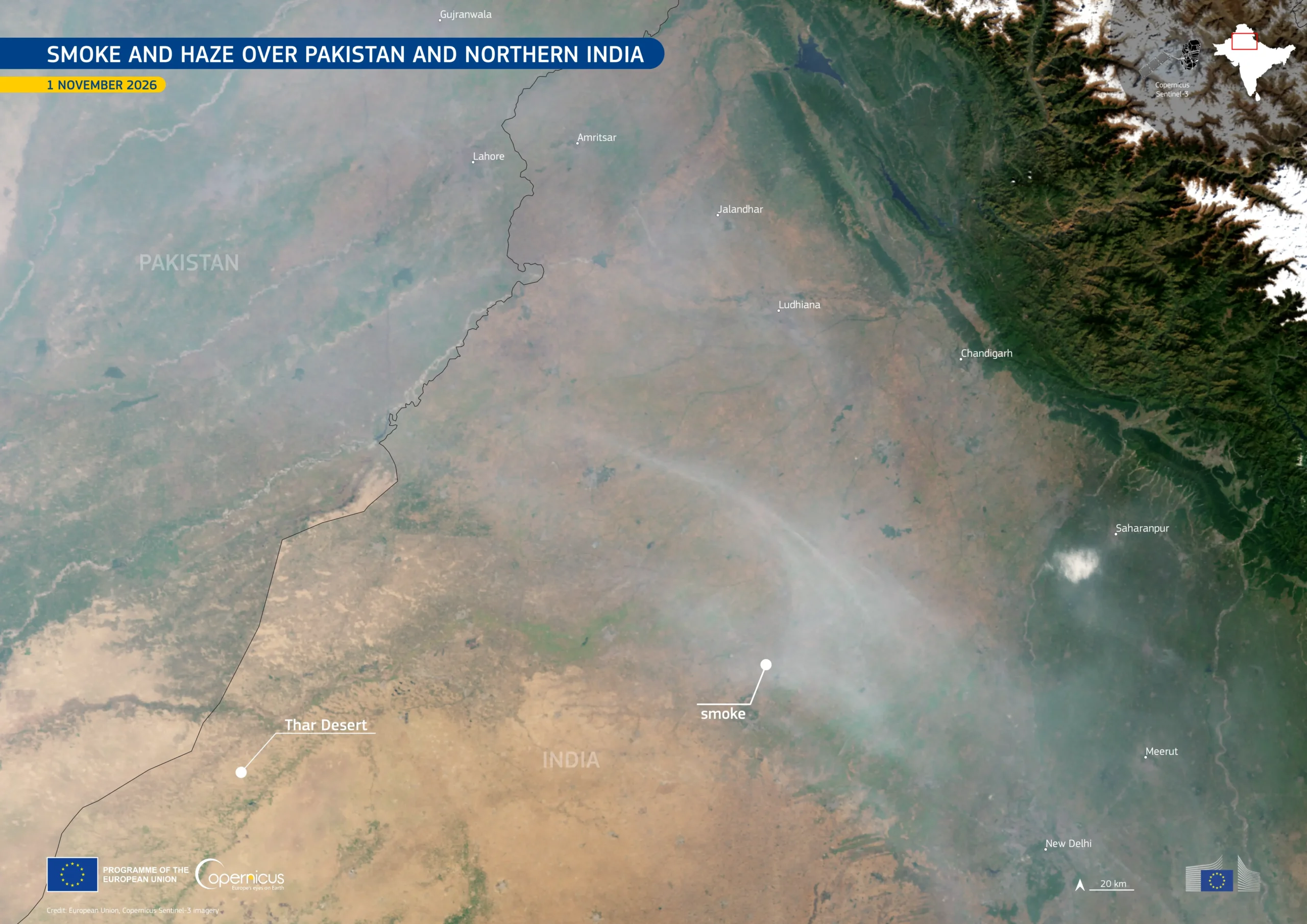
Suparco’s bulletin names seven districts where smog is expected to be high or severe: Jhang, Narowal, Sheikhupura, Sialkot, Hafizabad, Gujranwala and Dera Ghazi Khan. The 17 November assessment covered all 36 districts, using VIIRS and MODIS satellite observations.
| District | Expected level | Why at risk |
|---|---|---|
| Jhang | High or severe | Highest aerosol levels in Punjab |
| Narowal | High or severe | Exposed to transboundary smoke |
| Sheikhupura | High or severe | Close to Lahore’s pollution belt |
| Sialkot | High or severe | Industrial city; in the PMD forecast |
| Hafizabad | High or severe | Worst-affected earlier this month |
| Gujranwala | High or severe | AQI of 550 on Wednesday |
| Dera Ghazi Khan | High or severe | Worst in earlier assessments |
What the satellites found: 690 fires, trapped pollution
The headline number is 690 active fire incidents in 24 hours — 386 inside Punjab and 304 in adjoining transboundary areas. The fires are the main source: crop-residue burning, garbage burning and other open fires sending fine particles into still air.
Three measurements explain why it is expected to worsen. Mean aerosol optical depth (AOD) was 0.25, highest over Chiniot, Jhang and Faisalabad. Nitrogen dioxide was 21% below the 2019–2025 average. And atmospheric dispersion was rated very poor, so pollutants stay trapped near the ground.
The Copernicus Atmosphere Monitoring Service (CAMS) model projected PM2.5 of 51 to 71 micrograms per cubic metre. Suparco cautioned that model estimates run lower than ground readings in winter. The World Health Organization’s daily PM2.5 guideline is 15 — the projection alone is three to five times that.
Lahore tops the world ranking again; Faisalabad worst in Pakistan
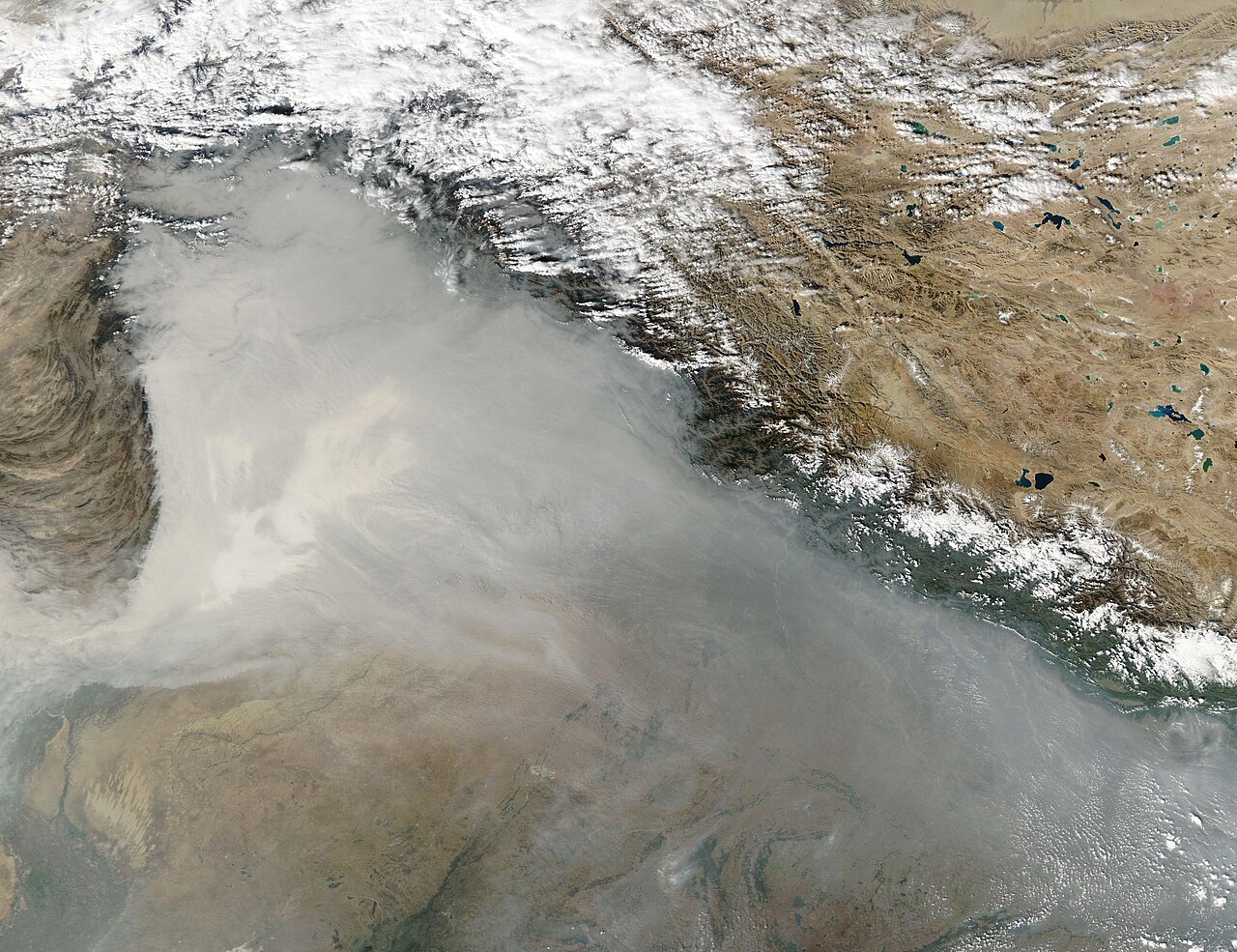
Lahore topped IQAir’s global ranking of major polluted cities on Wednesday morning, with an AQI of 339 at 10–11am. It fell to 167 at 5pm, then rose to 178 at 6pm. Lahore was followed by Dhaka at 221, Baghdad at 199, Tashkent at 182 and Kolkata at 178. Karachi ranked sixth globally at 174.
Inside Punjab it was worse: Faisalabad 686, Gujranwala 550, Kahna Nau 516, Multan 437, Kasur 371, Lahore 339, Khanewal 327 and Sargodha 314. Above 300 is hazardous — every city listed was in it. Lahore has topped the world ranking repeatedly this month.
Rain offered little relief: despite a day of rain in the twin cities and parts of Punjab, pollution declined only marginally, according to the Express Tribune. In Rawalpindi, nearly 2,700 patients with respiratory problems visited the three allied hospitals in two days.
PMD forecast: fog and smog for 48 hours, no rain
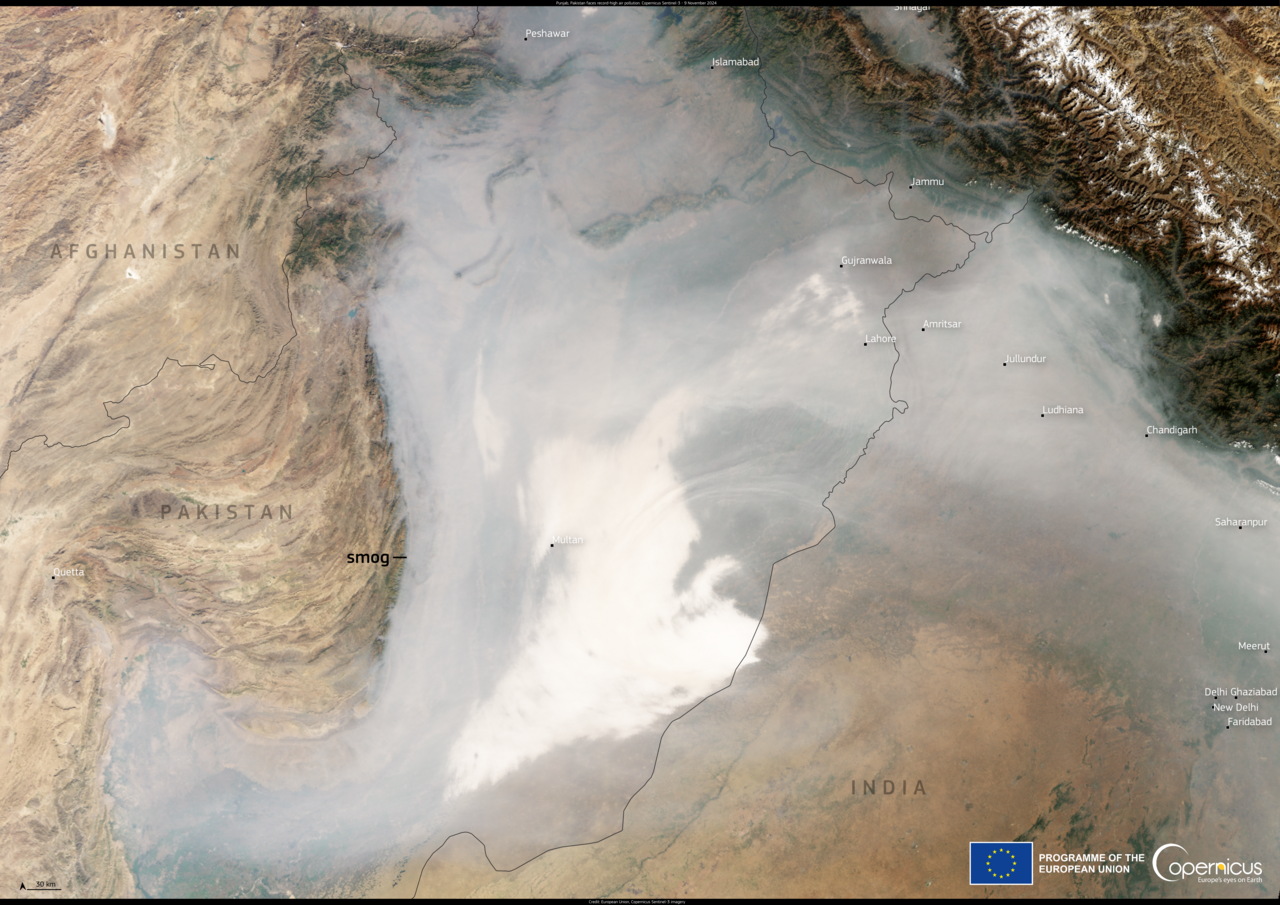
The Pakistan Meteorological Department (PMD) forecasts fog and smog at isolated places in Lahore, Sialkot, Narowal, Sheikhupura, Okara, Kasur, Faisalabad, Jhang, Khanewal, Multan and nearby areas, morning and night, over the next 48 hours. Dry weather is expected, with no significant rain. Drivers should slow down, keep a greater following distance, use lights and check motorway advisories.
What the government is doing
The Punjab Environment Protection Agency (EPA) has deployed five senior directors across divisions to supervise anti-stubble-burning operations with agriculture officials and district administrations. Director General Abdullah Nayyer Sheikh said the aim was direct supervision, verifying reported fires and ensuring timely action.
In Multan, the administration has received two anti-smog gun vehicles on Chief Minister Maryam Nawaz’s directives. Deputy Commissioner Dr Faisal Saleem said they would operate round the clock, spraying water morning and evening. The crackdown extends beyond Punjab: Islamabad has barred vehicles without fitness and emission tests, and enforcement against smoke-emitting vehicles, brick kilns and factories is under way in Rawalpindi too.
How to protect yourself during the smog
- Wear a mask outdoors — masks are mandatory for schoolchildren in Lahore and Rawalpindi; adults should wear one too.
- Stay indoors when smog is thickest — morning and night — and keep doors and windows closed.
- Drink water and warm fluids — green tea, soup and broth are advised.
- Watch for symptoms — sore throat, eye irritation, coughing and breathlessness. Asthma and heart patients should keep medication at hand.
- Drive carefully — slow down in fog, keep a safe distance and use fog lights.
Schools in Punjab remain open — an earlier rumour about smog holidays was rejected — so children will travel in the smog; parents should make sure they wear masks.
The Pakistan angle: a recurring winter crisis
This is not a one-off event. Punjab’s smog returns every winter, when cold air, low wind and temperature inversion trap smoke from crop fires, vehicles, industry and brick kilns near the ground. A week earlier, a 13 November Suparco assessment had already found severe smog across 32 of Punjab’s 36 districts, with 499 fires in 24 hours. The fires are continuing, and the forecast is for worse. The National Disaster Management Authority rates smog risk in the Punjab plains as low to moderate in November and moderate to high in December — the worst may still be ahead. Winter has now arrived across the country.
Confirmed vs reported vs rumour
Confirmed: Suparco’s warning; 690 fires (386 in Punjab, 304 transboundary); the seven worst-hit districts; AOD of 0.25; NO2 21% below the 2019–2025 average; the CAMS PM2.5 projection of 51–71; Lahore’s AQI of 339; Faisalabad’s AQI of 686; the PMD forecast; the EPA deployment and Multan’s anti-smog guns. Each is reported by Dawn and PakWheels.
Reported: About 2,700 hospital visits in Rawalpindi over two days, and the 18 November AQI readings for the twin cities (Islamabad 155, Rawalpindi 161), come from the Express Tribune alone — not independently confirmed.
Rumour: No school closure has been announced with this warning, and an earlier rumour about Punjab smog holidays was rejected by the authorities. Check any such claim against an official announcement first.
What is not yet known
Suparco’s assessment is a forecast, not a guarantee: conditions are likely to deteriorate over three days, but the exact AQI in each city will depend on wind, temperature and whether the fires continue. No district-wise AQI forecast has been published, and no new restrictions have been announced. We will update this article when Suparco publishes its next assessment or the Punjab government announces new measures.
Frequently asked questions
Which districts will face the worst smog in Punjab?
Jhang, Narowal, Sheikhupura, Sialkot, Hafizabad, Gujranwala and Dera Ghazi Khan — the worst affected of the province’s 36 districts.
How long will the smog last?
The next three days from 19 November 2026, with fog and smog forecast for 48 hours and no significant rain. The season typically runs through November and December.
What is Lahore’s AQI today?
On Wednesday 18 November, Lahore recorded 339 between 10am and 11am, topping IQAir’s world ranking. It improved to 167 by 5pm, then rose to 178 by 6pm.
What causes smog in Punjab?
Crop-residue burning, vehicle emissions, industrial smoke and brick kilns, trapped by cold, still winter air. Suparco detected 690 active fires in 24 hours.
Are schools closed because of the smog?
No. No closure has been announced, and an earlier rumour about smog holidays was rejected. Masks are mandatory for schoolchildren.
Is it safe to drive in the smog?
Drive only if necessary, slowly. Fog and smog cut visibility sharply in the morning and at night. Reduce speed, keep distance, use lights and check motorway advisories first.