
Voyager 1 Reaches One Light-Day From Earth, NASA Says
NASA’s Voyager 1 spacecraft crossed one light-day from Earth at 3:16 p.m. PKT on Wednesday, 18 November 2026, becoming the first human-made object ever to travel that far. At that moment it was about 16.1 billion miles (25.9 billion kilometres) from home, and a radio signal sent from Earth now takes a full 24 hours…
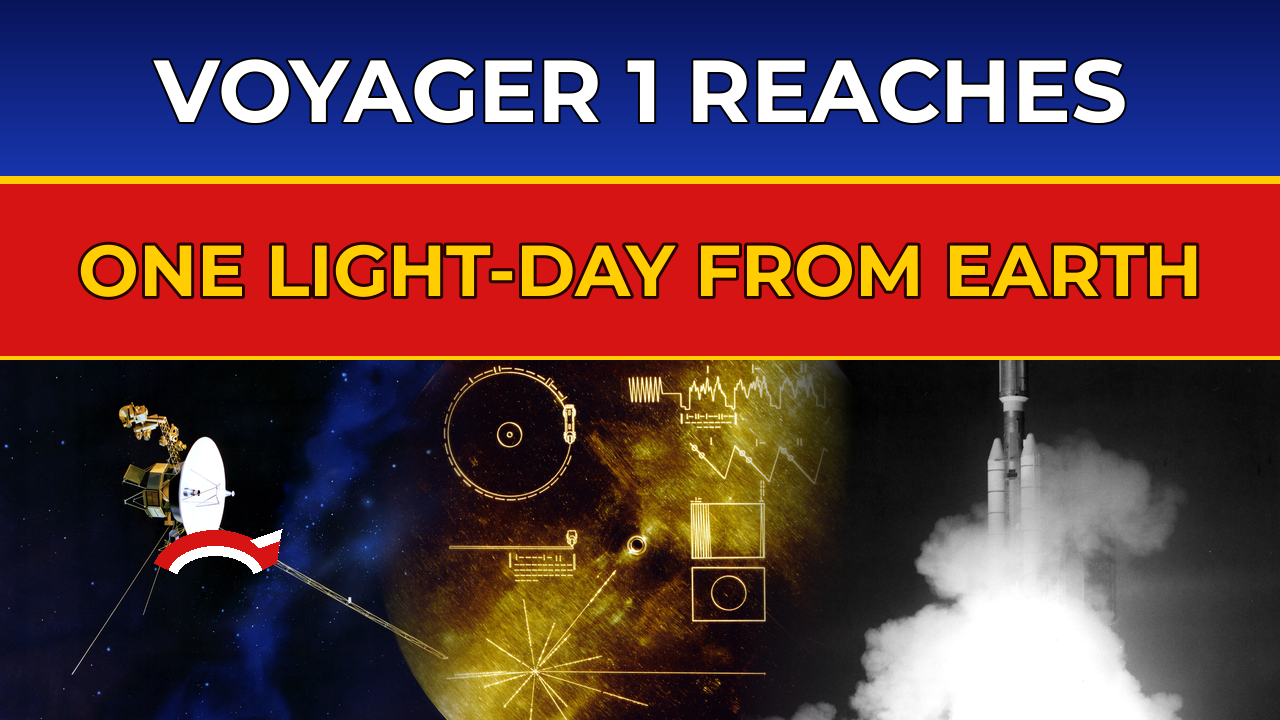
NASA’s Voyager 1 spacecraft crossed one light-day from Earth at 3:16 p.m. PKT on Wednesday, 18 November 2026, becoming the first human-made object ever to travel that far. At that moment it was about 16.1 billion miles (25.9 billion kilometres) from home, and a radio signal sent from Earth now takes a full 24 hours to reach it. NASA formally confirmed the milestone at an event on Thursday, 19 November, at 10 p.m. PKT.
The crossing is a distance marker, not a physical boundary. As NASA has explained, the spacecraft itself will not feel any change as it passes the mark. What changes is the scale of the achievement: no object built by humans has ever been this far away, and the light from the Sun that left Earth yesterday is only now arriving at the probe.
NASA confirms the milestone
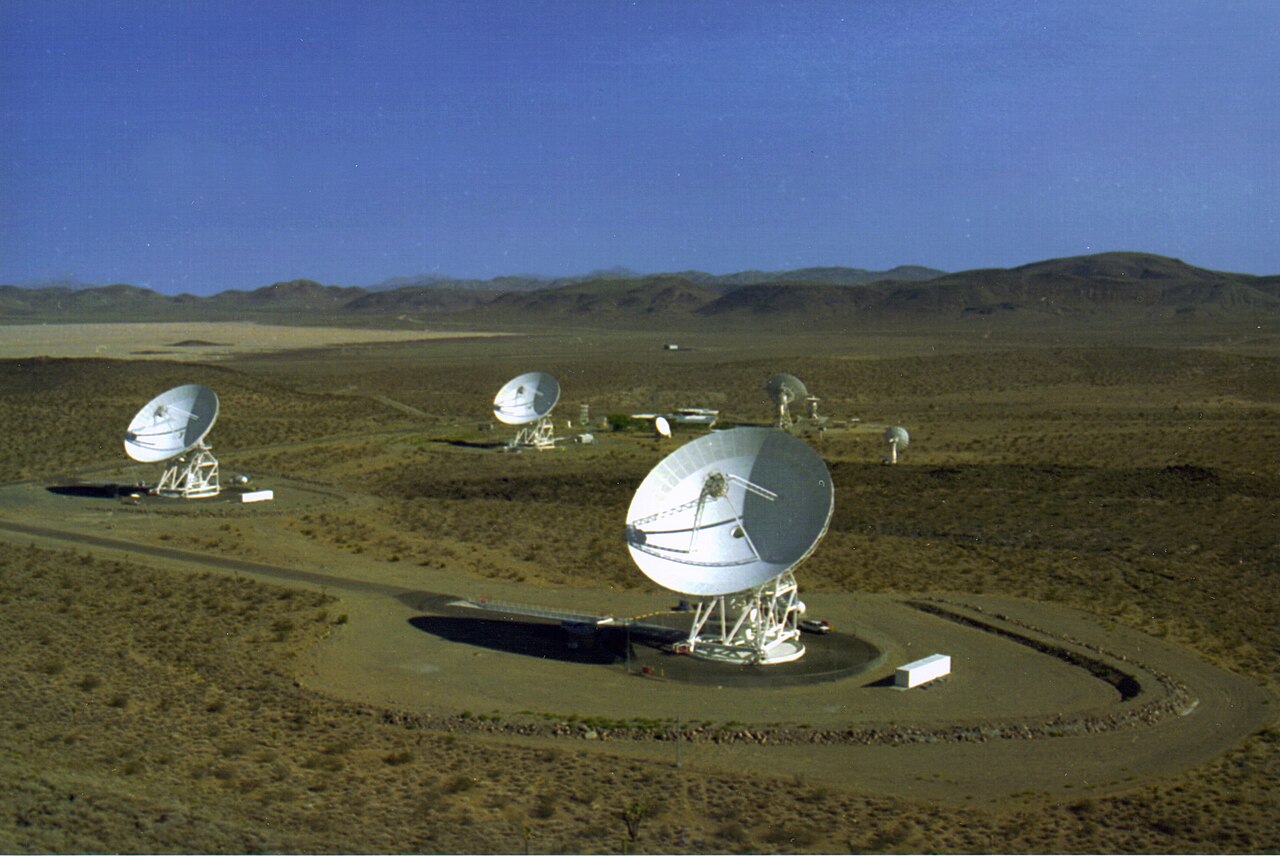
NASA confirmed on Thursday, 19 November 2026 that Voyager 1 has crossed one light-day from Earth, the first spacecraft ever to do so. The spacecraft passed the distance on Wednesday, 18 November at 5:16 a.m. EST, and the confirming signal was received through the Deep Space Network’s Madrid antenna about a day later, because the signal takes around 24 hours to reach Earth.
At the crossing, Voyager 1 was exactly 16,094,799,096 miles (25,902,068,356 km) from Earth, after a flight of 49 years, 2 months and 11 days since its launch in 1977. It is heading toward the star Gliese 445, and Voyager 2 is expected to reach one light-day in November 2035.
There is a caveat. Science and engineering data stopped reaching Earth on 14 November, and only the carrier signal is still arriving. NASA suspects a fault in the onboard computer, but the cause is unconfirmed and a diagnosis may take weeks. Power is expected to last until about 2036.
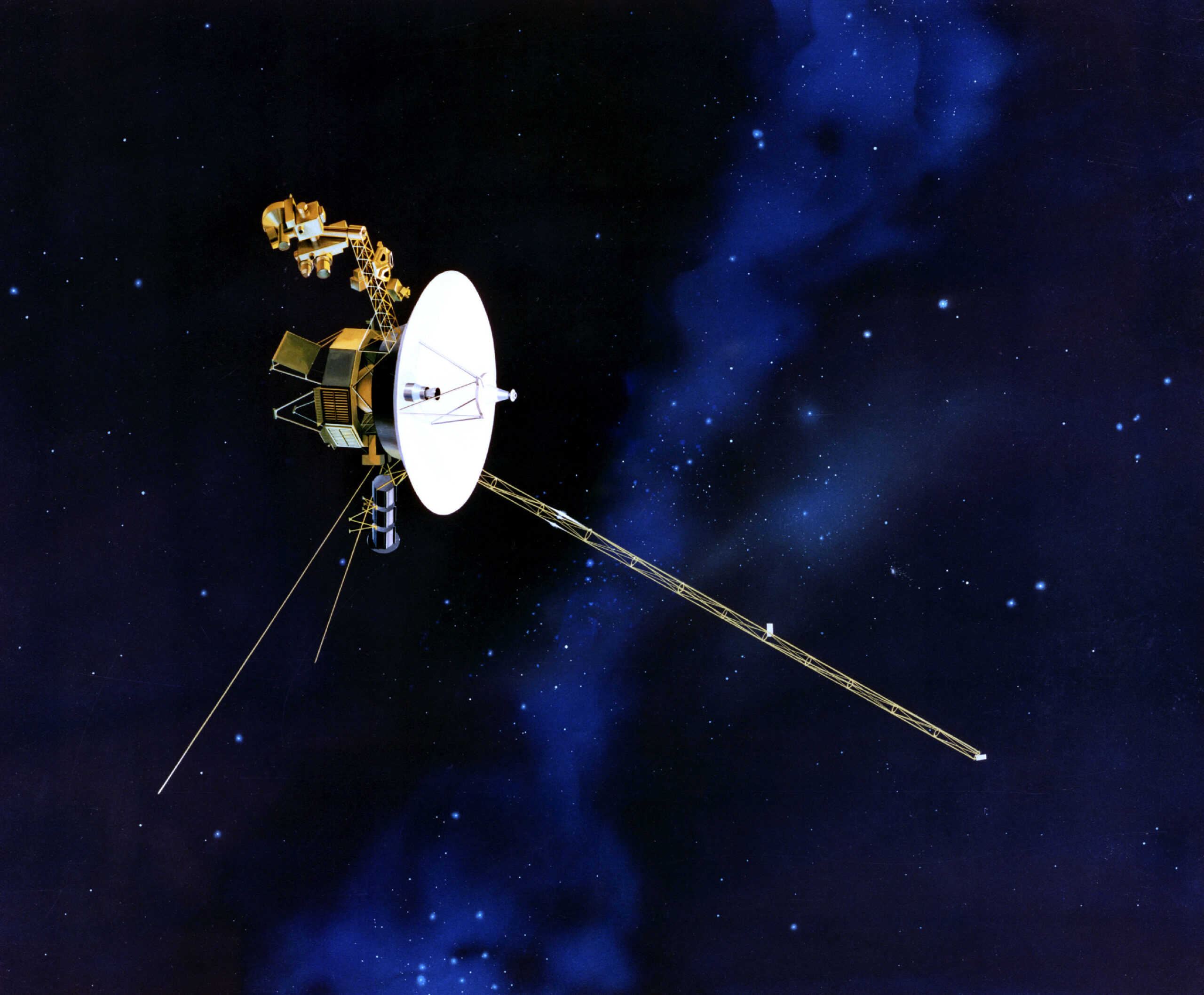
Key facts: Voyager 1 at one light-day
| Fact | Detail |
|---|---|
| Milestone reached | Wednesday, 18 November 2026, 5:16:07 a.m. EST (3:16:07 p.m. PKT) |
| Distance from Earth | About 16.1 billion miles (25.9 billion km), roughly 173 times the Earth–Sun distance |
| Signal time, one way | 24 hours; a command and its reply take 48 hours |
| Speed | About 38,000 mph (61,000 km/h) |
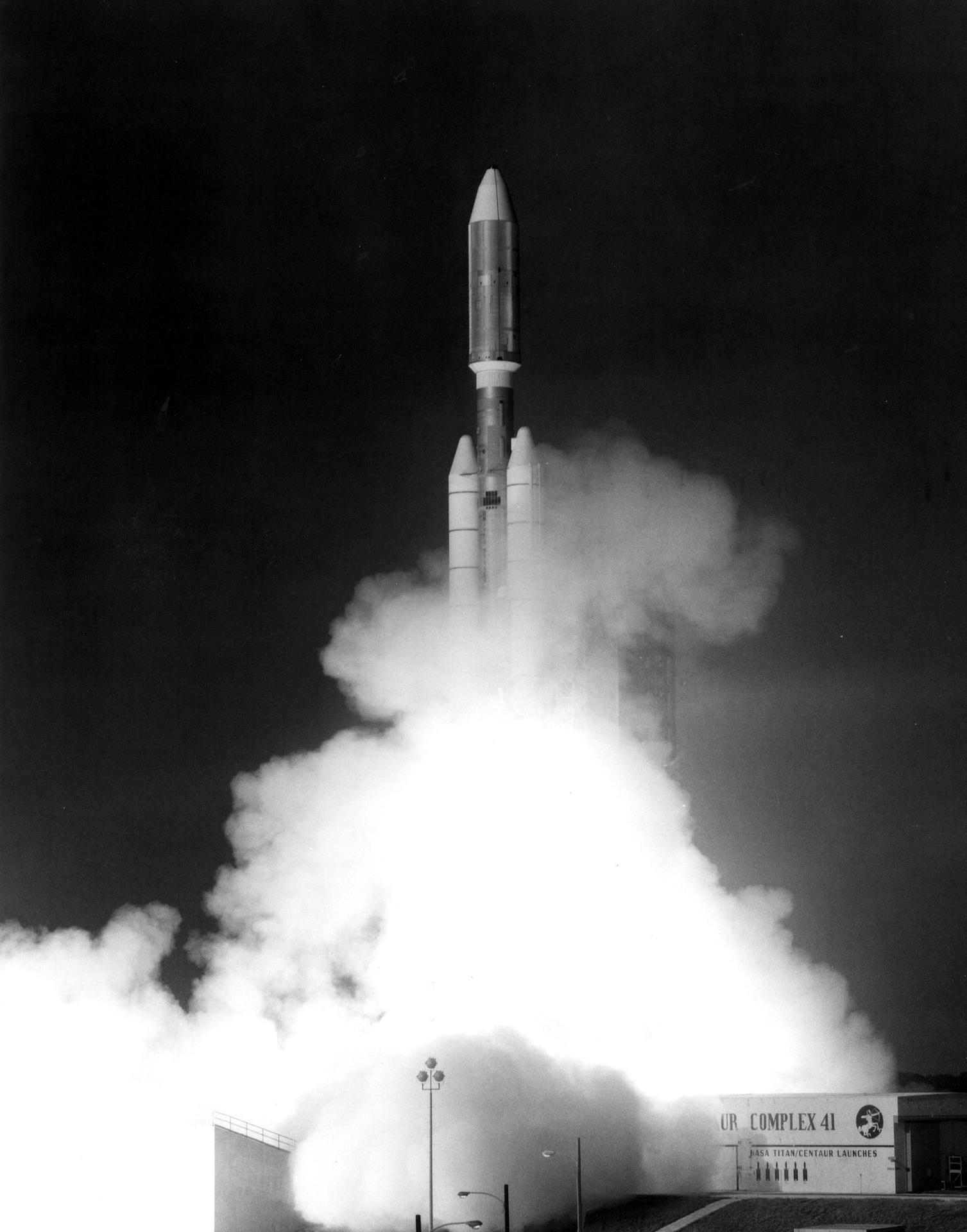
| Launched | 5 September 1977, on a Titan-Centaur rocket from Cape Canaveral, Florida |
| Journey so far | 49 years, 2 months and 11 days at the milestone |
| Instruments still running | 2 of the original 10: the magnetometer and the plasma wave subsystem |
| Power | About 210 watts now, down from 470 watts at launch; falling by about 4 watts a year |
| Heading toward | Gliese 445, a star more than 17 light-years away in Ursa Minor |
| Formal confirmation | Confirmed at NASA’s JPL event, Thursday 19 November, noon ET (10 p.m. PKT) |
What is a light-day?
A light-day is the distance light travels in 24 hours: 16,094,799,096 miles (25,902,068,356 km), according to NASA. Light is the fastest thing in the universe, so measuring distance in light-time is the simplest way to grasp how far Voyager 1 has gone. The table below shows how the delay grows with distance.
| Destination | Light travel time from Earth |
|---|---|
| The Moon | About 1.3 seconds |
| The Sun | About 8 minutes 20 seconds |
| Mars | About 3 to 22 minutes, depending on position |
| Neptune | About 4 hours 10 minutes |
| Voyager 1 | 24 hours |
At its current speed, Voyager 1 would need about 18,000 years to travel a full light-year. One light-day is only a small fraction of that, but it is still a distance no human-made object had ever reached before Wednesday.
The timing — and why confirmation came a day later
NASA calculated that Voyager 1 crossed the one-light-day mark at 5:16:07 a.m. EST on Wednesday, 18 November 2026 — 3:16:07 p.m. the same day in Pakistan (PKT). The crossing time comes from trajectory calculations and the probe’s steady speed, not from a live measurement, because any signal from the spacecraft takes a day to arrive.
That is why the formal confirmation came a day behind the event itself. NASA’s Jet Propulsion Laboratory discussed the milestone on Thursday, 19 November, at noon ET (10 p.m. PKT), with a public watch party at NASA’s Goddard Visitor Center.
A worrying silence: Voyager 1 has stopped sending data
The milestone comes with a serious concern. NASA said that on 14 November, four days before the crossing, the mission team became aware that Voyager 1 had stopped sending science and engineering data. An antenna in Canberra, Australia, locked on to the spacecraft and received its carrier signal — proof that the probe is still pointing at Earth and its radio still works — but no data came with it.
NASA said engineers suspect the onboard computer that collects and formats data, but the cause has not been confirmed and a diagnosis may take weeks or longer. The team is also checking whether there is any connection to a roughly 48-hour communications gap in late October, when contact was lost and then resumed by itself. That link is only under investigation; it has not been established.
This matters because the milestone itself was confirmed from trajectory calculations and the carrier signal, not from a fresh data downlink. The spacecraft is not back to normal: as of NASA’s latest update on 18 November, science data is still not flowing.
How Voyager 1 got this far
Voyager 1 launched on 5 September 1977, sixteen days after its twin, Voyager 2, which launched on 20 August 1977 on a slower trajectory. Both were built for a five-year tour of Jupiter and Saturn. Voyager 1 flew past Jupiter in 1979 and Saturn in 1980, then kept going, out of the plane of the planets and toward interstellar space.
In 2012 it became the first spacecraft to cross the heliopause — the boundary where the Sun’s influence gives way to interstellar space. Voyager 2 followed in 2018. The two probes are now the only human-made objects in interstellar space, and the farthest human-made objects of any kind. Voyager 1 has held the distance record since passing Pioneer 10 in 1998.
Keeping the probe alive has become an exercise in power management. Its three plutonium-powered generators produced about 470 watts at launch and now supply roughly 210 watts, losing about four watts a year. Engineers have switched off heaters and instruments one by one; eight of the original ten instruments are now off, leaving only the magnetometer and the plasma wave subsystem still sending science. In the summer of 2026, CNN reported, the team carried out a power reshuffle it nicknamed the “Big Bang”, switching off three devices and switching on three cheaper ones to save about 10 watts.
The Golden Record is still on board
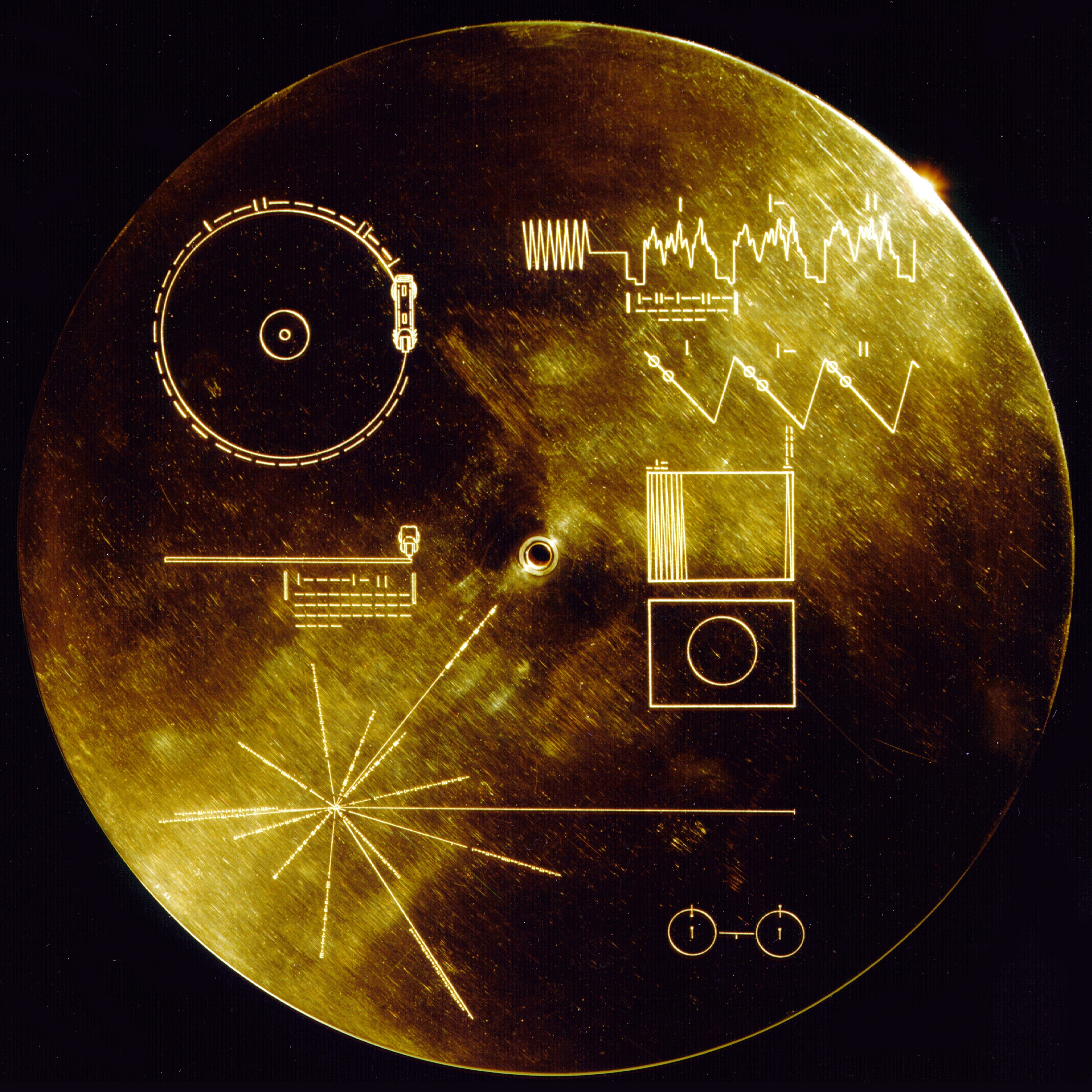
Both Voyager spacecraft carry a 12-inch gold-plated copper disc known as the Golden Record. It holds 115 images of life on Earth, greetings in 55 languages, 90 minutes of music from different cultures and eras, the sounds of surf, wind, thunder, birds and whales, and printed messages from US President Jimmy Carter and UN Secretary-General Kurt Waldheim. The record plays at 16⅔ rpm and was put together by a committee chaired by astronomer Carl Sagan.
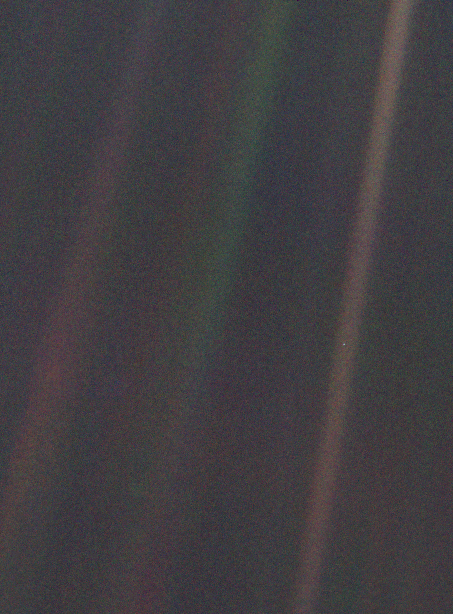
The record was a message in a bottle for any civilisation that might one day find the spacecraft. In 1990, before its cameras were switched off, Voyager 1 also took the famous “Pale Blue Dot” photograph, showing Earth as a tiny speck of light in a band of sunlight — a picture that has become one of the most reproduced space images ever taken.
Where is Voyager 1 going next?
Voyager 1 is heading in the direction of Gliese 445, also known as AC +79 3888, a star more than 17 light-years away in the constellation Ursa Minor. At its current speed it will make its closest approach — passing within about 1.7 light-years of the star — in roughly 40,000 years.
Its twin is a long way behind. Voyager 2, currently about 13.4 billion miles away with a signal delay of around 20 hours, is expected to reach one light-day in November 2035. NASA project scientist Linda Spilker has said the probe will probably no longer have enough power to send signals back to Earth by then, so that milestone may pass unobserved.
For Voyager 1, the end is also in sight. Power will keep falling by about four watts a year, and Nature has reported that contact is expected to be lost around 2029, when the generators can no longer run the radio. The mission team’s goal is to keep the spacecraft alive through its 50th launch anniversary on 5 September 2027.
What this means for Pakistan
For readers in Pakistan, the milestone is a reminder of how far a single mission can travel — and how small the distances in our own space programme still are by comparison. Pakistan’s first astronaut mission is scheduled for 25 November 2026, and the country is watching its own space ambitions grow just as Voyager 1 passes a mark that took 49 years to reach.
The practical lesson is closer to home. The same physics that makes a signal take 24 hours to reach Voyager 1 governs every satellite Pakistan relies on: the delay to the Moon is about 1.3 seconds, to a satellite in geostationary orbit about a quarter of a second. Voyager 1 shows what happens when the distance grows from seconds to a full day — commands must be planned a day ahead, and a fault can sit undiagnosed for weeks because every question and answer costs two days.
Students and space enthusiasts in Pakistan can follow the mission through NASA’s public Voyager pages and its “Eyes on the Solar System” tool, which shows both probes’ positions in real time. And the next skywatching date to note is the Beaver Supermoon on 24 November 2026 — the closest full Moon of the year, and a far easier target to watch from a rooftop in Lahore or Karachi than a spacecraft a light-day away.
Read more: Pakistan’s first astronaut space mission on 25 November, Beaver Supermoon on 24 November 2026: time in Pakistan and how to watch, NASA’s Curiosity rover finds pure sulfur on Mars, Artemis II Moon launch and the ionosphere GPS study, NASA’s $10 billion Moon base contracts.
Confirmed vs reported vs rumour
Confirmed: Voyager 1 crossed one light-day on 18 November 2026 at 5:16:07 a.m. EST (3:16:07 p.m. PKT); the distance of about 16.1 billion miles; the 24-hour one-way signal time; the 5 September 1977 launch; two of ten instruments still operating; power falling by about four watts a year; the Golden Record contents. NASA formally confirmed the milestone on 19 November 2026
Reported (single source, attributed): the data outage since 14 November and the suspected onboard computer fault (NASA); the possible link to the October communications gap (NASA, under investigation); the “Big Bang” power reshuffle saving 10 watts (CNN); contact expected to be lost around 2029 (Nature).
Not confirmed / do not repeat: that the data fault has a known cause; that science data has resumed; that Voyager 2 will still be transmitting when it reaches one light-day in 2035; and that Voyager 1 launched “50 years ago” — it is 49 years, 2 months and 11 days.
What is not yet known: whether NASA’s engineers can restore Voyager 1’s data flow, and what exactly caused it to stop. TimelyUps has updated this article with the confirmation and will update it again when the mission team reports progress on the data fault.
Checked on 19 November 2026.
Frequently asked questions
What is a light-day?
A light-day is the distance light travels in 24 hours: 16,094,799,096 miles (25,902,068,356 km), according to NASA. It is a way of measuring very large distances using the speed of light.
How far is Voyager 1 from Earth right now?
About 16.1 billion miles (25.9 billion km) as of 18 November 2026, when it crossed one light-day. It is moving away at about 38,000 mph (61,000 km/h), so the distance grows by roughly 900,000 miles every day.
How long does it take for a signal to reach Voyager 1?
24 hours one way. A command sent from Earth takes a full day to arrive, and the reply takes another day, so a round trip takes 48 hours.
When did Voyager 1 reach one light-day from Earth?
At 5:16:07 a.m. EST on Wednesday, 18 November 2026 — 3:16:07 p.m. PKT the same day. NASA formally confirmed the milestone at an event on Thursday, 19 November, at noon ET (10 p.m. PKT).
Is Voyager 1 still working?
Yes, but only just. Two of its original ten instruments still run — the magnetometer and the plasma wave subsystem — and NASA said on 18 November that the spacecraft stopped sending science and engineering data on 14 November. Only its carrier signal is being received while engineers investigate.
Where is Voyager 1 going?
It is heading toward Gliese 445, a star more than 17 light-years away in the constellation Ursa Minor. It will make its closest approach, passing within about 1.7 light-years of the star, in roughly 40,000 years.
When will Voyager 2 reach one light-day?
In November 2035. Voyager 2 launched first, on 20 August 1977, but on a slower trajectory, and it is currently about 13.4 billion miles away. NASA has said it will probably no longer have enough power to send signals back by then.
How much longer will Voyager 1 keep communicating?
Power falls by about four watts a year, from about 470 watts at launch to roughly 210 watts now. Nature has reported that contact is expected to be lost around 2029. The mission team aims to keep the spacecraft alive through its 50th launch anniversary on 5 September 2027.