Karachi Reports First Polio Case in Nearly Two Years — Pakistan’s 2026 Tally Hits Seven
By Fatima Raza | Health Desk | Published: October 20, 2026 Karachi has reported its first polio case in nearly two years. The National Emergency Operations Centre (NEOC) for Polio Eradication confirmed on Monday, October 19, 2026, that a six-month-old boy from Union Council Jamali Colony in Karachi East, Sindh, has been infected with wild…
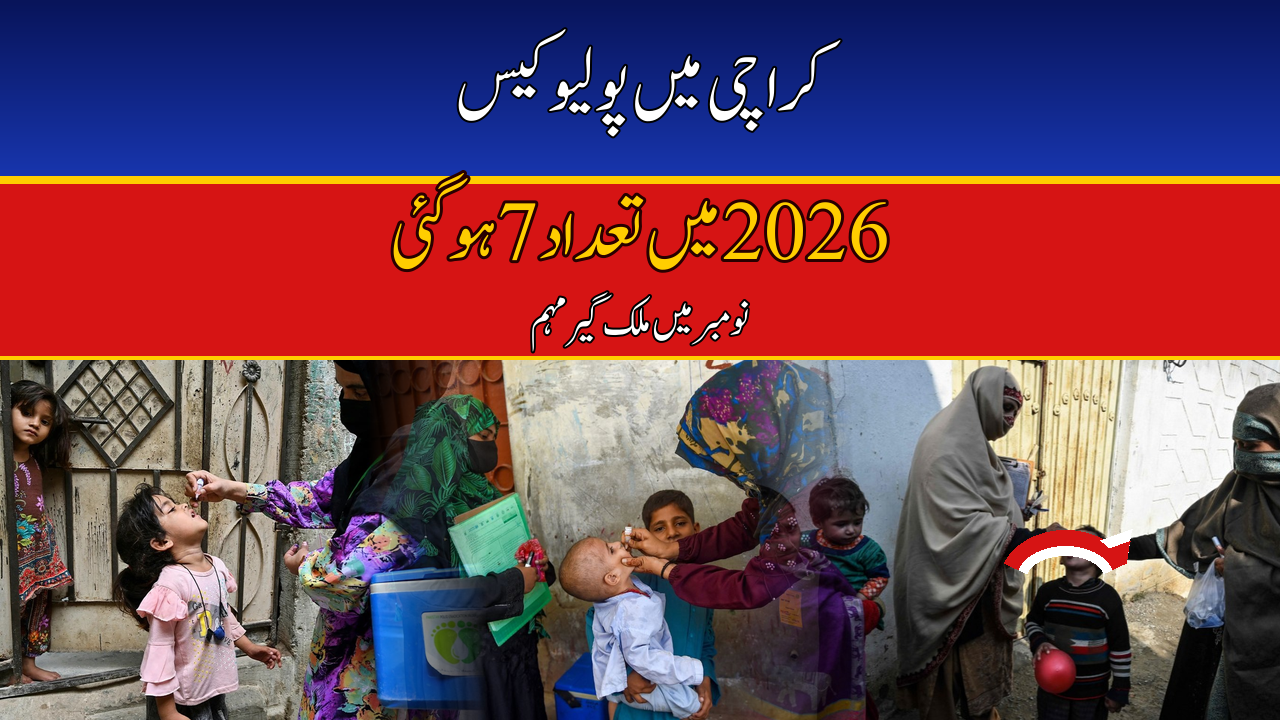
Karachi has reported its first polio case in nearly two years. The National Emergency Operations Centre (NEOC) for Polio Eradication confirmed on Monday, October 19, 2026, that a six-month-old boy from Union Council Jamali Colony in Karachi East, Sindh, has been infected with wild poliovirus type 1. The case — detected through the polio surveillance network and confirmed by the Regional Reference Laboratory for Polio Eradication at the National Institute of Health (NIH) in Islamabad — takes Pakistan’s 2026 tally to seven.
Karachi Polio Case — Quick Facts
| Patient | Six-month-old boy, Union Council Jamali Colony, Karachi East, Sindh |
| Virus | Wild poliovirus type 1 |
| Confirmed | October 19, 2026 (NEOC); lab confirmation by Regional Reference Laboratory, NIH Islamabad |
| Pakistan 2026 tally | 7 cases (5 in Khyber Pakhtunkhwa, 2 in Sindh) |
| Karachi’s last case | December 2024 — nearly two years ago |
| Next national campaign | November 2–8, 2026 — 97 districts, 23.9 million children targeted |
What We Know About the Karachi Case
The child, just six months old, was picked up by Pakistan’s polio surveillance network in Jamali Colony. NIH Islamabad’s Regional Reference Laboratory confirmed wild poliovirus type 1 — the strain Pakistan has been fighting for decades.
Health authorities have launched a comprehensive investigation, and the child’s vaccination history is being assessed — a critical detail, because it will show whether this was a missed child, a partially vaccinated child, or a refusal case.
What makes this case sting is the timing: Karachi had gone nearly two years without a confirmed case — a genuine achievement for a megacity of over 20 million people. One case does not erase it, but it is a warning shot.
The Warning Was Already There: Positive Sewage Samples
Karachi’s environmental surveillance samples kept testing positive for wild poliovirus through 2026 — including one site that came back positive in September. Environmental surveillance means testing sewage: when the virus shows up in wastewater, it is circulating in the community even before any child falls ill. Karachi had the signal for months; this case is the signal becoming a patient.
Pakistan’s 2026 Tally: Seven Cases So Far
With the Karachi case, the national count for 2026 stands at seven: five in Khyber Pakhtunkhwa — four of them in the province’s southern districts, long the stubborn core of transmission — and two in Sindh.
For perspective: Pakistan recorded 31 cases in all of 2025 (20 in Khyber Pakhtunkhwa), versus an estimated 20,000 a year in the early 1990s. The long arc is extraordinary progress — but the last mile is the hardest, because the virus retreats into the places hardest to reach: conflict-affected districts, mobile populations, and communities where trust in vaccination has frayed.
Pakistan and Afghanistan are now the only two countries in the world where wild poliovirus remains endemic. Every case anywhere in the world now traces back to these two countries, which is why each Pakistani case is also a global story.
The Campaigns: 45 Million Children Reached This Year
In 2026 alone, four nationwide polio campaigns have reached more than 45 million children multiple times, and last month’s nationwide drive vaccinated 29.3 million children.
The next push is already scheduled: a national campaign from November 2 to 8, 2026, covering 97 districts, with 23.9 million children to be administered polio drops. Parents in Karachi should mark those dates — when the vaccinators knock in the first week of November, the drops they carry are the direct answer to this week’s case.
Why Polio Is Still Here: Misinformation and Attacks
The virus survives on two things: unvaccinated children and the conditions that keep them unvaccinated. As Arab News has reported, Pakistan’s campaigns continue to be hampered by misinformation and vaccine refusals on one side and militant attacks on the other — last month, two police constables guarding a polio team were killed in Balochistan. You can vaccinate 29.3 million children in a month and still lose ground, because the virus only needs the few thousand you missed.
What Parents Need to Know
Three facts every parent should have straight: polio has no cure — paralysis from the virus is irreversible; vaccination is the only prevention — the oral polio vaccine is safe and free; and one dose is not enough — children under five need multiple OPV doses in every campaign plus full routine immunisation.
If your child is under five, the rule is simple: make sure they get the drops in every single campaign — including the November 2–8 round — and keep their routine EPI vaccinations up to date. If a vaccinator missed your street, take your child to the nearest vaccination point rather than waiting for the next round. And if you hear claims that the drops are unsafe, ask your doctor — not a forwarded message. The misinformation that keeps some parents from vaccinating is, quite literally, what keeps the virus alive.
Frequently Asked Questions
What is the latest polio case in Karachi?
A six-month-old boy from Union Council Jamali Colony, Karachi East, was confirmed with wild poliovirus type 1 on October 19, 2026, by the NEOC for Polio Eradication, with lab confirmation from the Regional Reference Laboratory at NIH Islamabad. A comprehensive investigation is underway and the child’s vaccination history is being assessed.
How many polio cases has Pakistan had in 2026?
Seven so far: five in Khyber Pakhtunkhwa (four in the southern districts) and two in Sindh. Pakistan recorded 31 cases in 2025, compared with an estimated 20,000 a year in the early 1990s.
When was Karachi’s last polio case before this one?
December 2024 — nearly two years ago. However, Karachi’s environmental (sewage) surveillance kept detecting wild poliovirus through 2026, including a positive site in September, showing the virus was still circulating.
When is the next polio vaccination campaign in Pakistan?
November 2–8, 2026 — a national campaign across 97 districts targeting 23.9 million children for polio drops. In 2026 so far, four nationwide campaigns have reached over 45 million children multiple times.
Is there a cure for polio?
No. Polio has no cure — paralysis caused by the virus is irreversible. Vaccination is the only prevention, which is why every child under five needs multiple oral polio vaccine doses in each campaign plus complete routine immunisation.
How can I protect my child from polio?
Ensure your under-five child receives polio drops in every campaign (next: November 2–8, 2026) and completes all routine EPI vaccinations. If vaccinators miss your home, take your child to the nearest health facility or vaccination point. Do not rely on a single dose — repeated doses build lasting immunity.
Seven cases in a country of this size is, by any historical measure, a triumph. But the Karachi case is a plain reminder: as long as the virus circulates anywhere, no child is safe on yesterday’s vaccination alone. The November campaign is the answer — make sure your child is in it.