Lahore–Faisalabad Train Service Resumes on November 15 After Flood-Hit Bridge Rebuild
Lahore–Faisalabad Train Service Resumes on November 15 After Flood-Hit Bridge Rebuild By Daniyal Sheikh | 9 November 2026 | Pakistan Train services between Lahore and Faisalabad will resume on 15 November 2026, Pakistan Railways has confirmed, ending nearly three months without a direct rail link between the two cities. The restored service will run over…
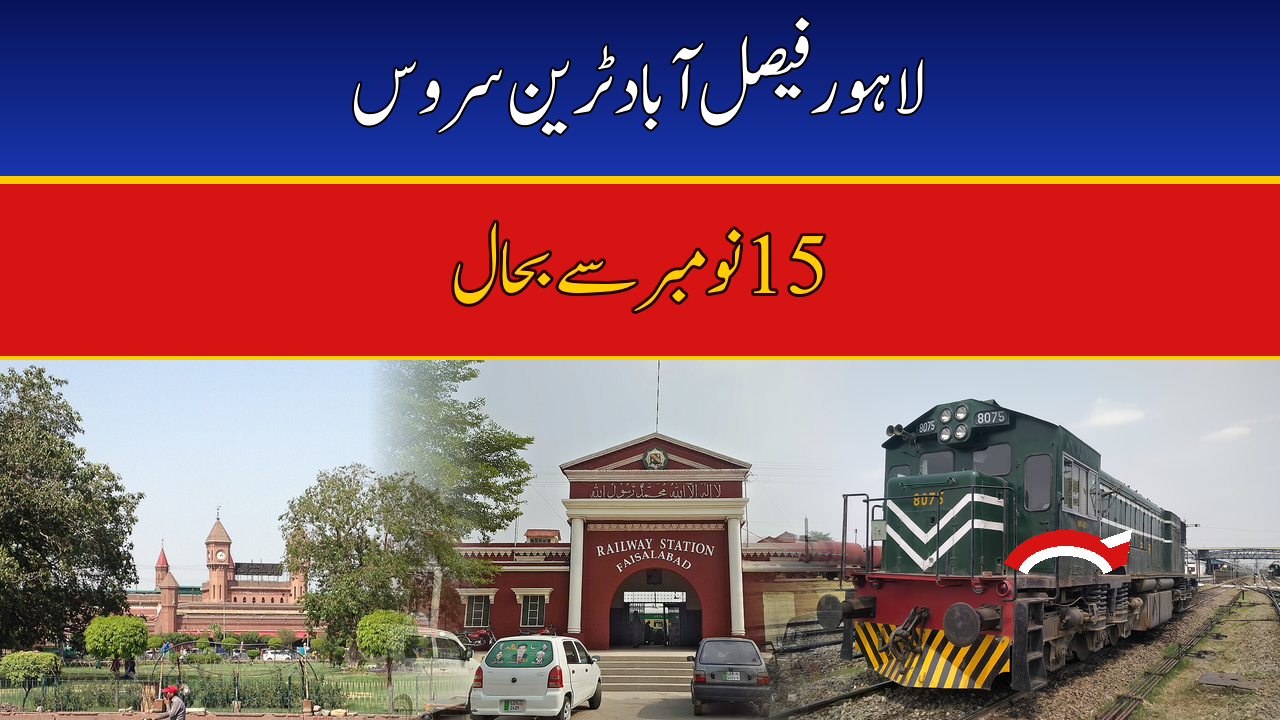
Lahore–Faisalabad Train Service Resumes on November 15 After Flood-Hit Bridge Rebuild
By Daniyal Sheikh | 9 November 2026 | Pakistan
Train services between Lahore and Faisalabad will resume on 15 November 2026, Pakistan Railways has confirmed, ending nearly three months without a direct rail link between the two cities. The restored service will run over the rebuilt Massan Kalar Bridge near Sheikhupura, which collapsed during the August floods, and Federal Minister for Railways Muhammad Hanif Abbasi will inaugurate the restored section on the day services restart.
Pakistan Railways Chief Executive Officer Hafeezullah told Dawn on Sunday that the new embankment and track laying were almost complete, civil work had finished, and engineering teams were inspecting the newly laid track. A trial train will run on the section within the next couple of days, and if the trial and final inspections go well, formal operations will begin on 15 November.
Key Facts: Lahore–Faisalabad Train Restoration
| Detail | What we know |
|---|---|
| Service resumes | 15 November 2026 (Sunday) |
| Route | Lahore–Faisalabad via Shahdara and Sheikhupura |
| Bridge rebuilt | Massan Kalar Bridge, near Sheikhupura |
| Project cost | Rs455 million |
| Work started | Third week of September 2026 |
| Trial train | Within days of 9 November 2026, before formal opening |
| Inauguration | Federal Minister for Railways Muhammad Hanif Abbasi, on 15 November |
| Trains returning | Shalimar Express, Badar Express, Ghauri Express, Karakoram Express, plus freight trains when goods are available |
| Why it stopped | August 2026 floods in the Ravi and Chenab rivers; breaches in Nullah Deg and Bherr eroded soil beneath railway bridges |
Which trains are coming back?
Four named passenger services that used this section are returning: the Shalimar Express, the Badar Express, the Ghauri Express and the Karakoram Express. Freight trains will also run on the section when goods are available for transportation, according to Lahore Railways Divisional Superintendent Inamullah Khan.
When the section closed, Pakistan Railways cancelled all departures from Lahore to Faisalabad, as well as Lahore–Karachi and Khanewal–Lahore trains that ran via Faisalabad. Some Karachi-bound services were diverted via Sahiwal, but Faisalabad itself lost its direct rail connection. The 15 November reopening restores the original route, not a workaround.
One thing to note before planning around the date: Pakistan Railways had not yet published the restored timetables when the reopening was announced. Check the timetable before travelling rather than assuming the old departure times still apply.
The bridge that broke: Massan Kalar
The section’s problem was the Massan Kalar Bridge near Sheikhupura. Floodwater in August damaged the bridge and the track around it so badly that the line had to be closed for safety, isolating the railway at two bridge locations on the Lahore–Shahdara–Sheikhupura–Faisalabad section, including a major bridge near Qila Sattar Shah.
The scale of the damage was clear from the start. In August, the railways minister said the flood had damaged a bridge and a portion of the track so badly that a new bridge and new track would be needed, and that restoration would take around four months. An earlier estimate of about one month was dropped once engineers had seen the full extent of the damage. Against that four-month estimate, finishing in time for a 15 November reopening — roughly three months after the floods — is fast, and the railways chief described the project as completed in record time.
How the rebuild was done
Work on the Massan Kalar Bridge began in the third week of September, once the floodwater had receded enough for engineering teams to reach the site. Before construction started, a consultant designed the project and suggested building a solid embankment, with water passages created under other bridges so that floodwater would have somewhere to go instead of piling up against the railway structures again.
That design choice is the most important part of the rebuild. The old bridge failed because floodwater eroded the soil beneath it; simply putting the same structure back would have left the same weakness in place. The new embankment and the extra water passages are meant to stop a repeat collapse the next time the Ravi and Chenab run high.
What the floods did to this section
The August floods hit the Lahore–Faisalabad section from two directions at once. The Ravi and the Chenab both flooded, and breaches in Nullah Deg and Bherr sent water across the catchment area around the railway. The water did not just cover the track; it washed away the soil beneath the bridges, leaving the structures standing on eroded ground.
The result was a full suspension of rail traffic on the section via Shahdara and Sheikhupura. For passengers, the cheapest and most direct way between Lahore and Faisalabad disappeared overnight, and the knock-on effects reached Karachi-bound and Khanewal-bound services that normally passed through Faisalabad. Those trains were diverted via Sahiwal and Khanewal on Main Line-1, a longer way round that left Faisalabad cut off from the main line.
Why this route matters so much
The railways themselves are blunt about the route’s value. DS Inamullah Khan said the Lahore–Faisalabad route is very important for Pakistan Railways because it brings in considerable revenue. A busy passenger section plus freight is exactly the combination a cash-strapped railway needs, and every week the line stayed closed was revenue lost.
For passengers, the train is the affordable option. Buses and private cars on the motorway cost more, and for the thousands of people who travel between Lahore and Faisalabad for work, study or family, the train’s return means the cheapest seat on the route is back. The railways chief made the same point when he said the restoration would provide an affordable travel facility to passengers at large.
There is also a freight angle. Faisalabad is Pakistan’s textile capital, and rail freight is far cheaper than road for bulk goods. Restoring the section gives traders a direct rail link again, and Pakistan Railways has been pushing freight hard — it recently added 14 freight trains to its network.
What passengers should do before 15 November
First, do not turn up at the station expecting the old timetable. Wait for Pakistan Railways to publish the restored timings for the Shalimar, Badar, Ghauri and Karakoram Express, and confirm your train before you travel. The trial run has to succeed first, and while the railway is confident, the 15 November date depends on the inspections and the trial going well.
Second, book early if you can. The first trains back on a popular route after a three-month gap are likely to be busy, especially with Faisalabad’s traders and students returning to rail. Advance booking is the simplest way to avoid a wasted trip.
Third, keep an eye on the weather as well as the railway. November is smog season in Punjab, and Punjab’s smog crisis has already pushed air quality to hazardous levels in Lahore and Multan this month, so leave extra time for the trip to the station. The reopening is part of a wider round of infrastructure work across the country, including the Islamabad Expressway expansion under way in the capital — but the Lahore–Faisalabad restoration is the one passengers will feel first, on 15 November, if the trial run goes as planned.
FAQs: Lahore–Faisalabad Train Service
When will Lahore–Faisalabad train service resume?
Train services on the Lahore–Faisalabad route are set to resume on 15 November 2026. Federal Minister for Railways Muhammad Hanif Abbasi will inaugurate the restored section that day. A trial train will run within days beforehand, and the formal opening depends on the trial and final track inspections going well.
Which trains will run between Lahore and Faisalabad?
The Shalimar Express, Badar Express, Ghauri Express and Karakoram Express will return to the route, along with freight trains when goods are available. These are the services that ran on the Lahore–Faisalabad section via Shahdara and Sheikhupura before the August floods closed it.
Why was the Lahore–Faisalabad train service suspended?
August 2026 floods in the Ravi and Chenab rivers, plus breaches in Nullah Deg and Bherr, eroded the soil beneath railway bridges near Sheikhupura. The Massan Kalar Bridge was damaged and the line was isolated at two bridge locations, including near Qila Sattar Shah, forcing Pakistan Railways to suspend all Lahore–Faisalabad services for safety.
How much did the Massan Kalar Bridge restoration cost?
The restoration project cost Rs455 million, according to Lahore Railways Divisional Superintendent Inamullah Khan. The work covered civil, mechanical and electrical works, including a new solid embankment and track laying, with water passages added under nearby bridges to reduce the risk of a future collapse.
How long did the rebuild take?
Work began in the third week of September 2026, after floodwater receded, and was almost complete by 9 November — roughly seven to eight weeks of construction, and about three months after the August floods. In August, the railways minister had estimated restoration would take around four months, so the work finished ahead of that estimate.
Have the new train timings been announced?
No. Pakistan Railways had not yet published the restored timetables when the 15 November reopening was announced. Passengers should check the official timetable closer to the date and confirm their train before travelling, rather than relying on the pre-flood departure times.